
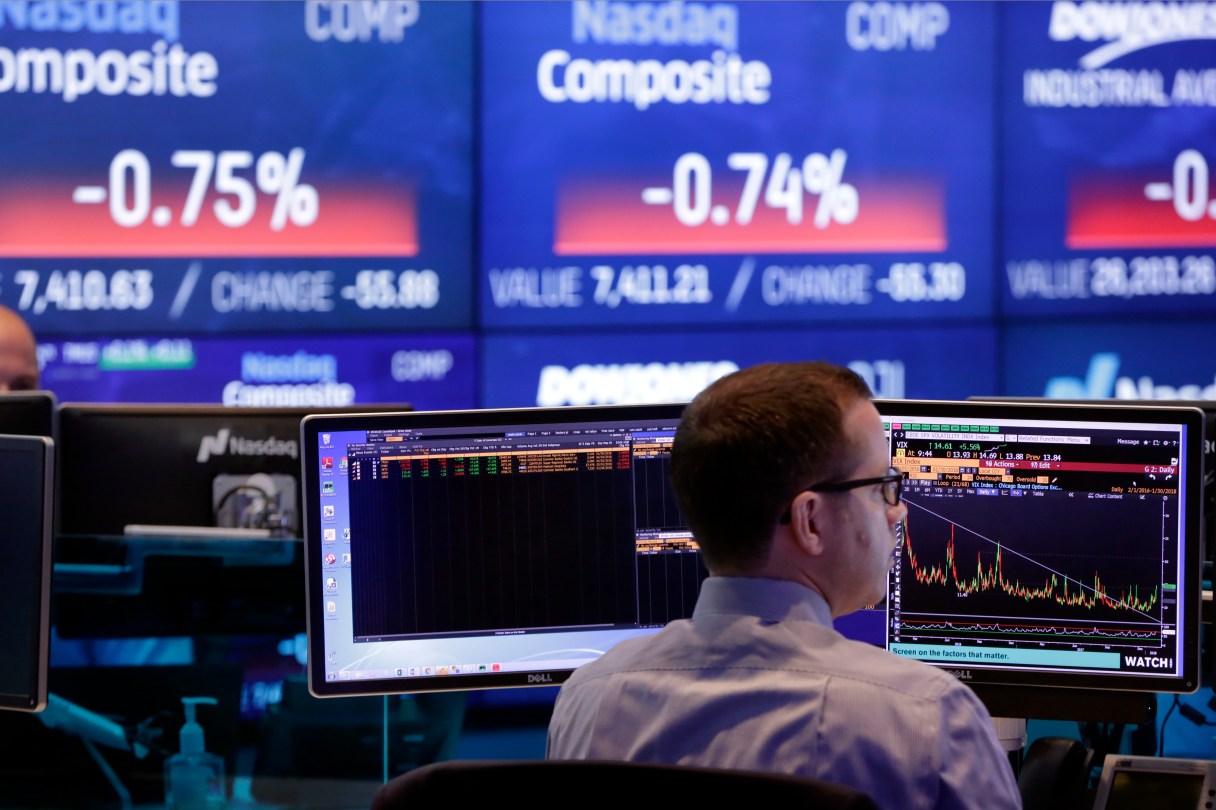
Goodbye iPhones and Facebook feed. Hello power plants and bleach.
Since stocks began tumbling two months ago, investors haven’t abandoned the market. At least, not all of it. In recent weeks, as they’ve pulled money out of funds that invest in go-go technology companies, they’ve also been buying utilities, companies that make everyday necessities for consumers and other stocks that tend to have smaller swings in price than the rest of the market.
It’s part of a big shift in investor behavior as fears about rising interest rates, a global trade war and slowing economic growth around the world have roiled markets. The S&P 500 plunged as much as 2.2 percent Tuesday, with technology stocks again suffering particularly sharp losses, and the index has lost nearly 10 percent since setting its record on Sept. 20.
 FILE – In this May 31, 2018, file photo, a customer enters an Apple store in New York. Since stocks began tumbling in September 2018, investors haven’t abandoned the market. At least, not all of it. Apple has slumped particularly hard on fears that its newest crop of iPhones isn’t as popular as expected after some phone-part suppliers gave discouraging forecasts. (AP Photo/Mark Lennihan, File)
Technology stocks’ fall marks a big turnaround from earlier this year, and from much of the bull market that began nearly a decade ago. After leading the market higher on the backs of their strong profit growth, Facebook and other big-name tech companies have recently stumbled on concerns that increased government regulation will dent their profits, on top of all the other concerns dragging on the rest of the market.
Apple has slumped particularly hard on fears that its newest crop of iPhones isn’t as popular as expected after phone-part suppliers gave discouraging forecasts. Apple has plunged 19.6 percent since the S&P 500 set its record two months ago, nearly double the loss of the index. Amazon, the third-most valuable U.S. company after Apple and Microsoft, has fallen 23.1 percent over the same time, during which it gave a forecast for revenue growth this holiday season that fell short of Wall Street’s high expectations.