
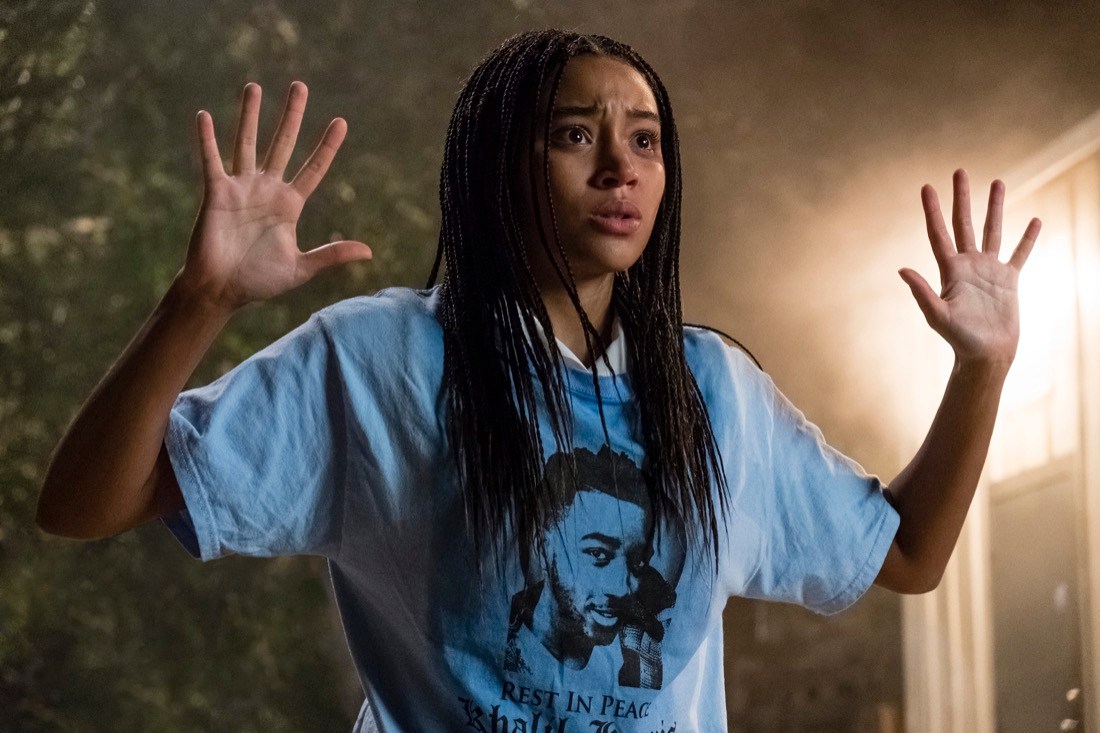
“The Hate U Give” begins with a scene at the family dinner table where a father is giving his young kids “the talk” – the one in which he explains to his 9-year-old daughter, Starr, and toddler son exactly what to do when they’re pulled over by a police officer. Hands on the dashboard. No sudden movement. Answer the questions directly. Don’t elaborate.
A teenage Starr (played by Amandla Stenberg, who gives an astonishing performance) is narrating this memory. She’s as surprised as the audience is that this “talk” was given at such a young age. But it’s one that will stay imprinted on her. For Starr and her family and friends, it’s a matter of life or death. And it’s a scenario that will come back in the most horrifying way imaginable.
“The Hate U Give,” a popular young adult novel by Angie Thomas, is adapted with deft skill by Audrey Wells, a prolific and deeply humane screenwriter and filmmaker who died last week from cancer, and lovingly directed by George Tillman Jr. It’s love that permeates every corner of this very prescient and effective drama that should be seen by moviegoers of all ages.
Starr Carter leads what she describes as a double life. Her home is in Garden Heights, a poor, predominantly black neighborhood that her father, Maverick (Russell Hornsby) loves and feels attached to. Her prep school, Williamson, is wealthy and predominantly white and something that her mother, Lisa (Regina Hall), deems necessary. And she navigates these two versions of herself with self-prescribed decorum for both.
“Williamson Starr doesn’t give anyone a reason to call her ghetto,” she says. “And I hate myself for doing it.”