
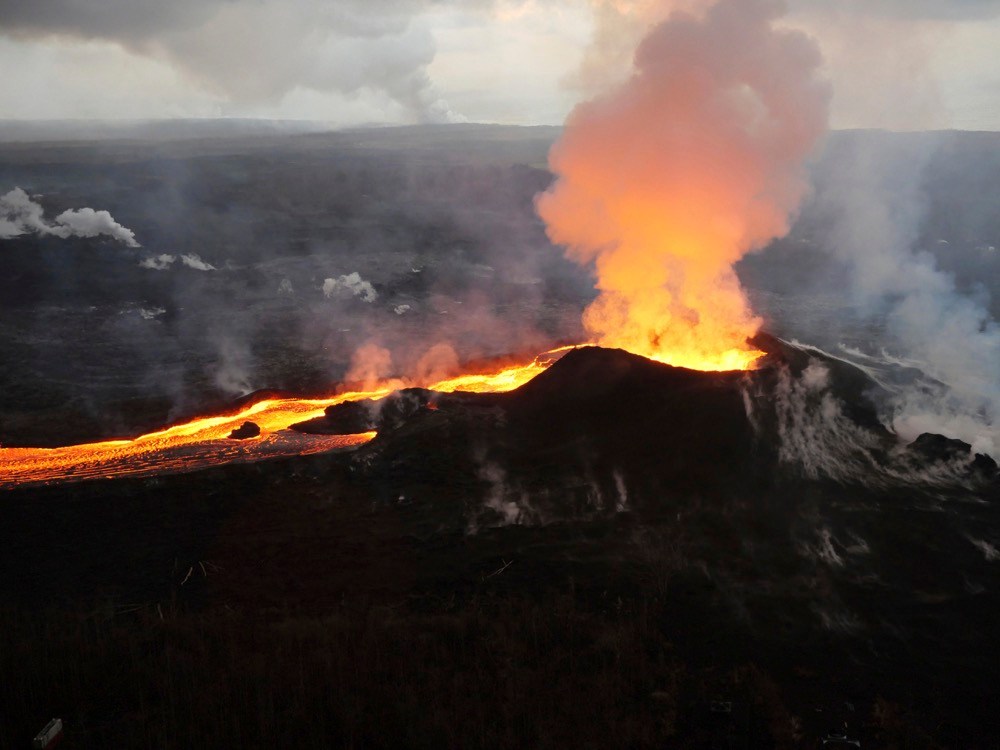
WASHINGTON (AP) – Government scientists have classified 18 U.S. volcanoes as “very high threat” because of what’s been happening inside them and how close they are to people.
The U.S. Geological Survey has updated its volcano threat assessments for the first time since 2005. The danger list is topped by Hawaii’s Kilauea , which has been erupting this year. The others in the top five are Mount St. Helens and Mount Rainier in Washington, Alaska’s Redoubt Volcano and California’s Mount Shasta .
“This report may come as a surprise to many, but not to volcanologists,” said Concord University volcano expert Janine Krippner. “The USA is one of the most active countries in the world when it comes to volcanic activity,” she said, noting there have been 120 eruptions in U.S. volcanoes since 1980.
Kilauea is the most active volcano in the United States “and it’s got a lot of development right on its flanks,” said government volcanologist John Ewert, the report’s chief author. He said Hilo, Hawaii, is probably the biggest city in the United States in a hazard area for a very high threat volcano, Mauna Loa.
Ewert said the threat rankings aren’t about what will blow next, but “the potential severity” of the damage.