
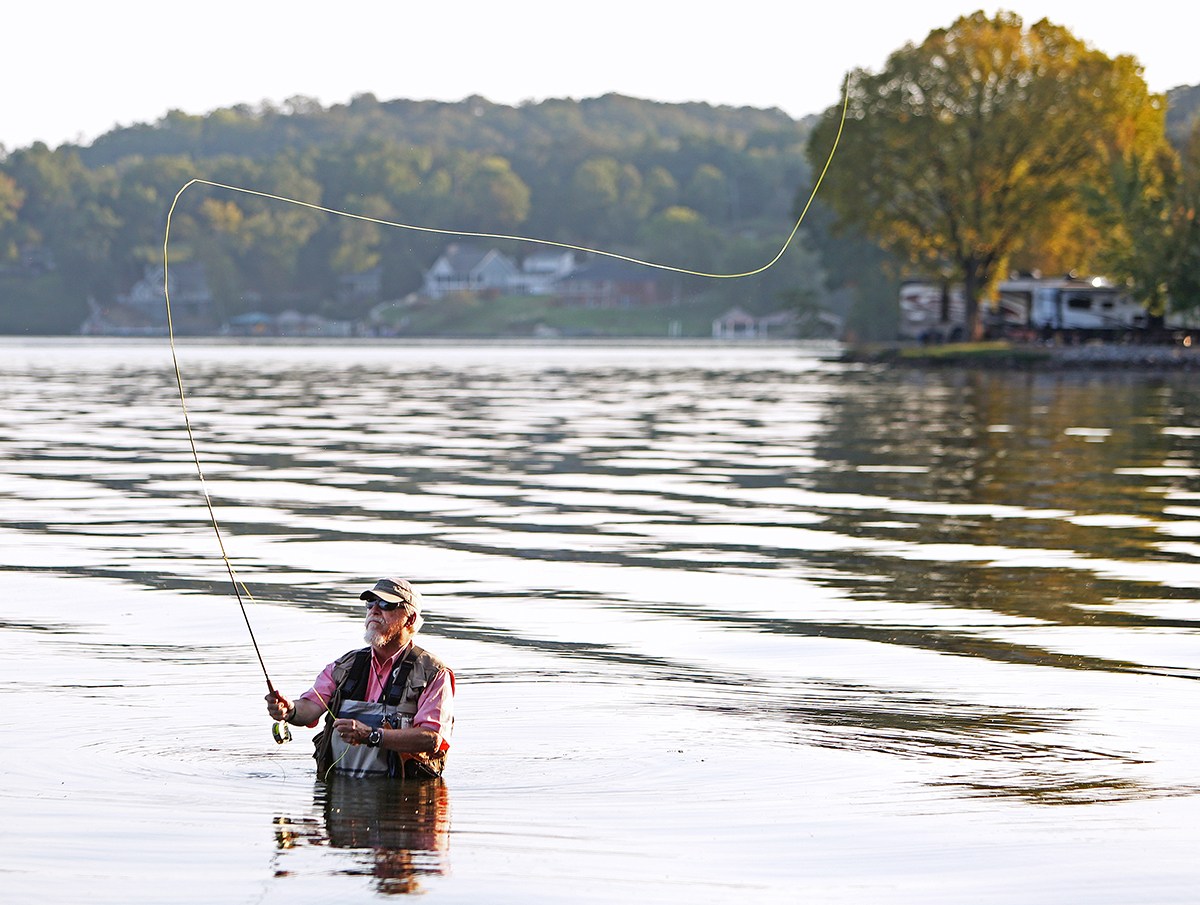
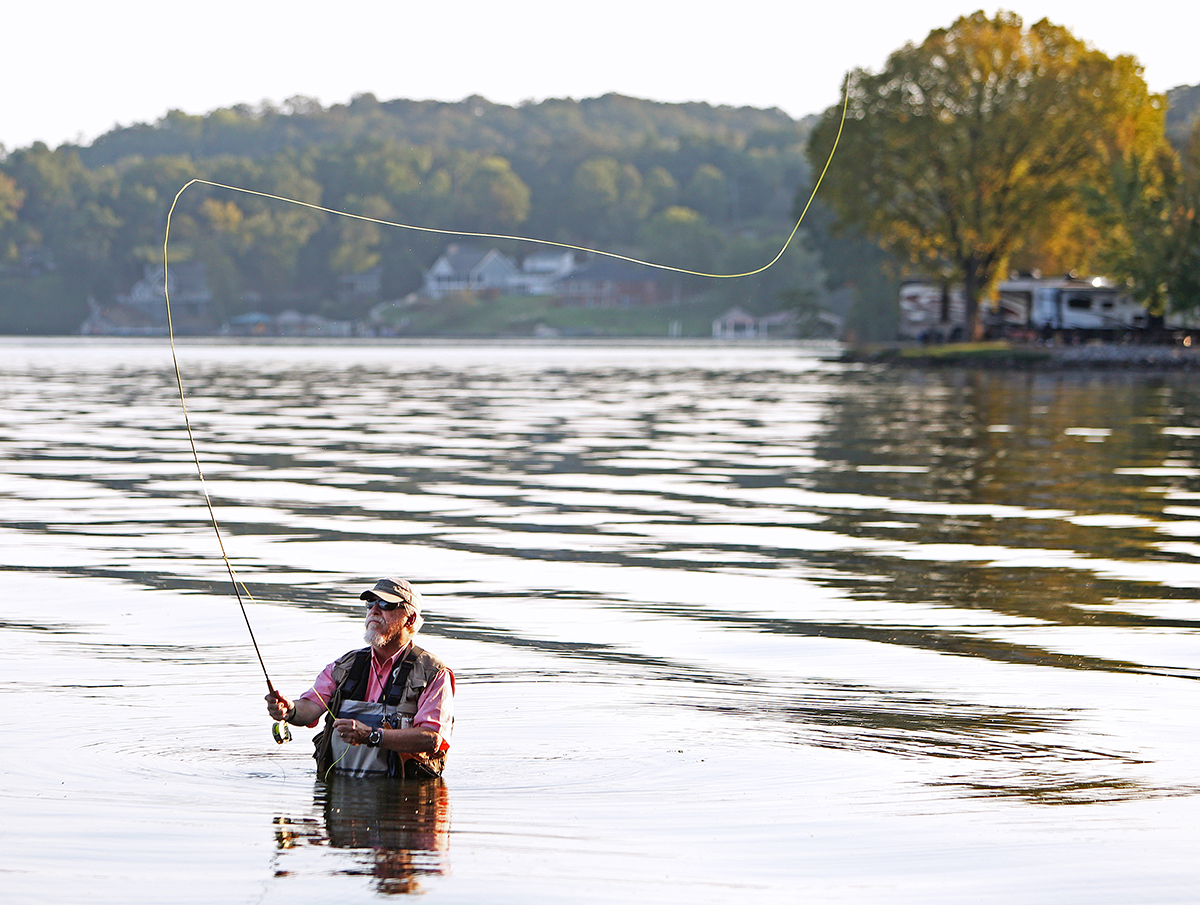
 Chattanooga’s Bill Neal fly fishes in waist-deep water at Chester Frost Park in Hixson in September 2017.
Izaak Walton had it going on. Most of us probably think of an English guy who lived in the 1600s as pretty boring. Quite the contrary – old Izaak may have been the first outdoors writer in history. He published the first version of his classic “The Compleat Angler” in 1653, and he continued to revise and publish later editions for 25 years.
I wonder if he had as many problems with editors as I do.
Walton was a big advocate of fly fishing, and fly fishing, you see, is as different from other forms of fishing – such as spin casting – as beans from cornbread. They go together, but they are very different.
The main and obvious mechanical difference in fly fishing is the manner in which the lure or the fly is casted and presented to the fish. Well, shoot, I guess I need to explain about the flies first.
In fly fishing, the lure you cast to catch a fish on is called a fly. These lures are usually quite small and made of any combination of different feathers, sometimes animal hair or fur and sometimes synthetic material. All of this is held on the hook by strands of thread wrapped by the angler in a process known as “tying flies.” This process is not to be confused with capturing small household pests and binding them in thread, prompting those who know nothing about fly tying to ask, “Tying flies? How do you get them to hold still?”