
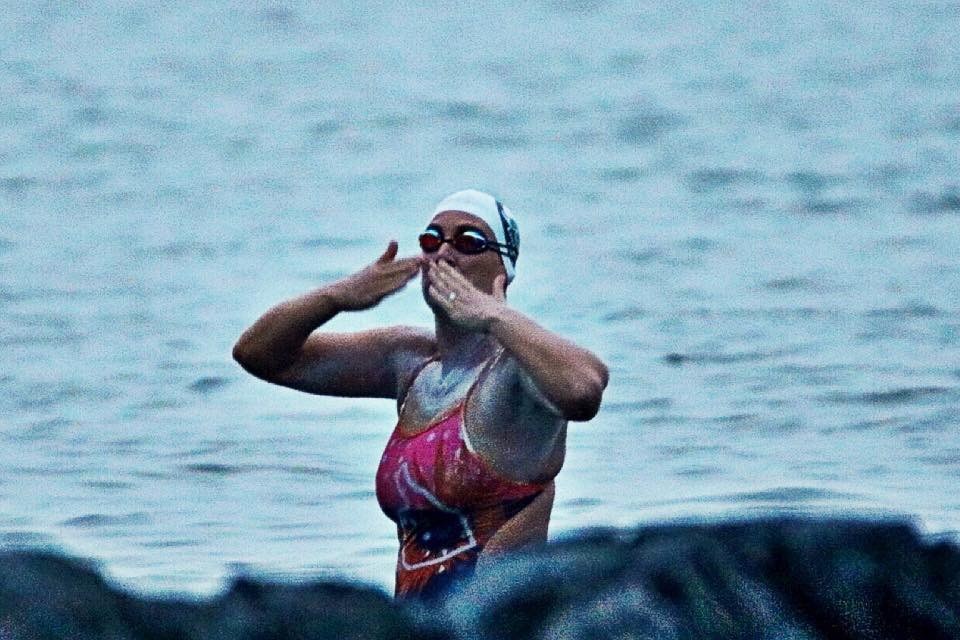
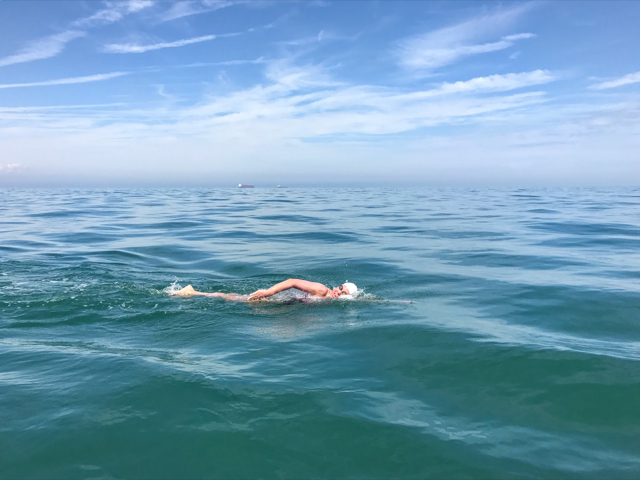
Swimming more than 13 hours straight in chilling water with strong, changing currents and hordes of the world’s largest jellyfish stinging, stinging, stinging her all over, Jenny Smith knows in painful detail why fewer than 50 people have completed the 21.5-mile North Channel swim from Northern Ireland to Scotland.
Yet she’s one of those who have.
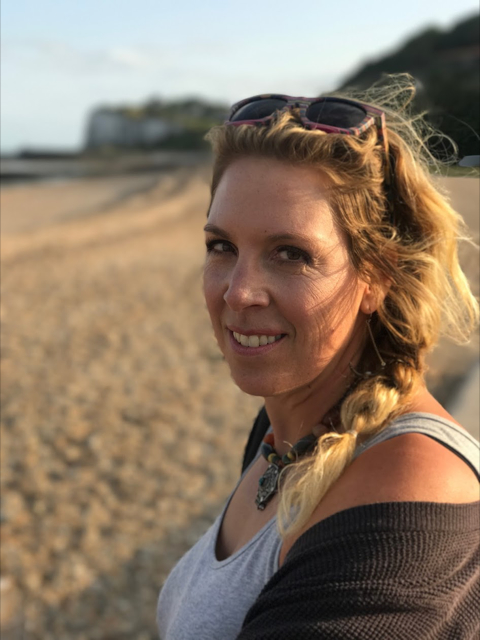
The 44-year-old Chattanooga yoga and meditation teacher, Baylor Swim Club masters coach, wife of a doctor and mother of two teenage sons swam the North Channel on Aug. 20 – one year and a week after she became the 1,212th person to propel herself across the 21-mile-wide English Channel.
In between she completed the Triple Crown of Open-Water Swimming by crossing the 20 miles from Santa Catalina Island to Rancho Palos Verdes in Southern California and making a 28.5-mile circumnavigation of Manhattan Island in New York City. When she did that 20 Bridges swim on June 30, she became the 174th person to be certified for the Triple Crown.
Each swim was nonstop, unaided, and each was witnessed by an official observer.
Different bodies of water, different challenges, different special memories, but never enough to be enough.
“The water kind of calls me. That’s how I decide where I want to swim,” Smith said with a smile a few days after returning home from Scotland. “I began thinking about the North Channel after doing the English Channel, which is the gateway swim – the historic swim you dream of. But the Irish Sea is magical water, and the idea of swimming to Scotland was alluring, too.”
New Zealand’s Cook Strait beckons for 2020 – its limited window for swim crossings is booked next year – but she has not yet made plans for a specific marathon swim in 2019.
“It’s usually around November when the water starts talking to me,” she said, again smiling. “There are some swims I’m thinking about. We’ll see.”
Smith was part of the Carmel (Indiana) High School girls’ swimming program that has won state titles the last 32 years – the longest streak in any sport in the country, according to the National Federation of State High School Associations – but did not compete at Indiana University, where she earned a B.S. degree in medical imaging technology and an associate’s in radiography. A board-certified ultrasound technologist, she met her husband, Will, at an Indianapolis hospital.
Jenny didn’t just jump into half-day ocean swims. She has completed four full triathlons, including Ironman competitions, three half-triathlons and double-digit 100-mile or longer bicycle rides. She has done the 10-mile Swim the Suck here in the Tennessee River six times.
“It’s not about the time for me. It’s about getting to the other shore,” she said. “And every time you get in it’s a different story, a different challenge. That’s part of the allure of swimming.”
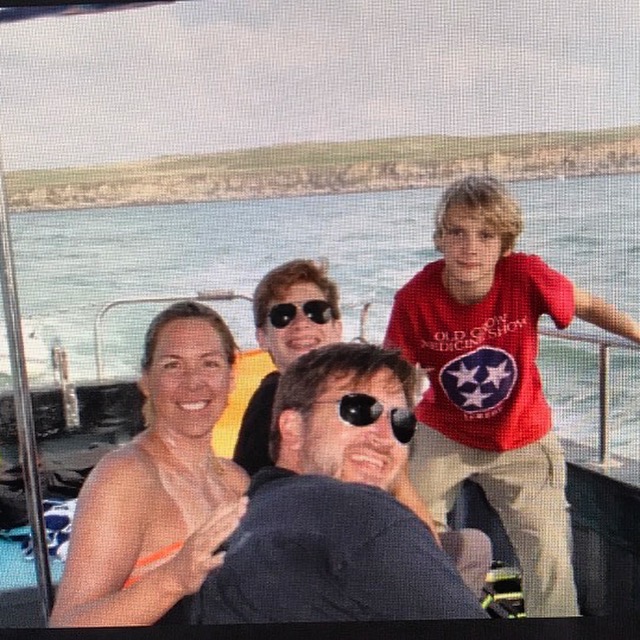
In her English Channel conquest, Will and their sons – Baylor students Max and Zane – were part of her support crew, and she felt the spirit of Anne Cleveland, her personal open-water coach who had died two months earlier.
“It was bittersweet, but it was healing,” Jenny said. “It was a euphoric and surreal swim.”
Harbor porpoises playfully visited her off the coast of France, even though she was told they had “not been seen in the overfished waters for many years,” she related. “And yet one swam right underneath me, belly to belly. It was the encouragement I needed to push through the strong currents off the shores of France and into the Cap Nes Griz. Anne was there in a different form.”
Two months later Smith crossed the Catalina Channel, starting about 9:30 p.m., and had “a magical swim with a pod of dolphins whistling, chatting and playing around me.” They even tried to get the light-stick attached to Smith’s suit.
“There were also enormous manta rays floating up to the escort boat lights, sea lions wrestling under me and two whales circling me, my kayaker and boat,” she said. “And the phosporescense of plankton looked like fireworks shooting off my fingertips.”
The Manhattan swim was different in many ways. Smith was in a group of swimmers there, for one thing, and it covered waters from the East, Harlem and Hudson rivers. Stephanie Davis and Craik Davis from the Baylor Tri Masters were part of her pilot-boat crew for that one, and other friends made it a fun trip beyond the swimming.
Seeing the Statue of Liberty from the water “was very humbling,” Smith said, and the New York skyline was spectacular, but it was much too hot for her liking – air temperature in the high 90s, the water “scalding” at 84-89.
Less than two months later she was in 52-54 degrees in the North Channel, enduring the pain inflicted by the lion’s mane jellyfish, which can be six to seven feet in diameter and trail 70 to 150 tentacles for 100 or more feet from each of eight lobes.
“I was stung on my arms, hands, legs and feet, and the tentacles wrap your limbs,” Smith said, pointing to likely permanent scars on her left calf. “I could not count the stings, and I know I saw over 800 lion’s mane jellyfish during my swim. They’re stunningly beautiful, but they’re monsters out there. You can’t avoid them.”
Noting the nematocysts or “barbs” by which the jellyfish release a neurotoxin in the skin, she described the agonizing “jelly dance” that lasts 24 hours after a swimmer leaves the cold water – in which “it is not possible to sleep or sit still due to the poison moving through the body.”
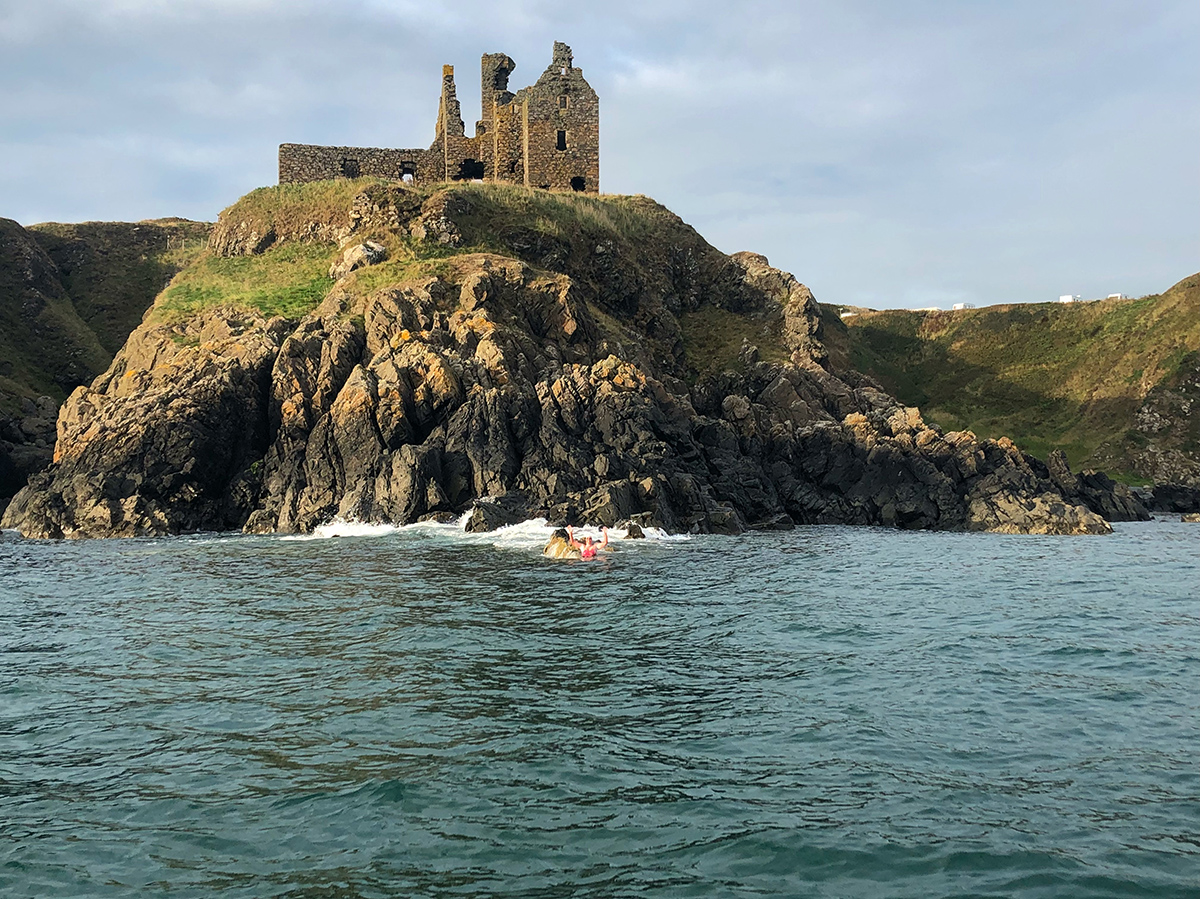
But the experience didn’t stop her, and when she exited the water at Dunskey Castle in Scotland – 13 hours, 6 minutes and 30 seconds after she entered it at Donaghadee in Northern Ireland – Jenny Smith was more elite than ever.
Contact Ron Bush at rbush@timesfreepress.com or 423-757-6291.