
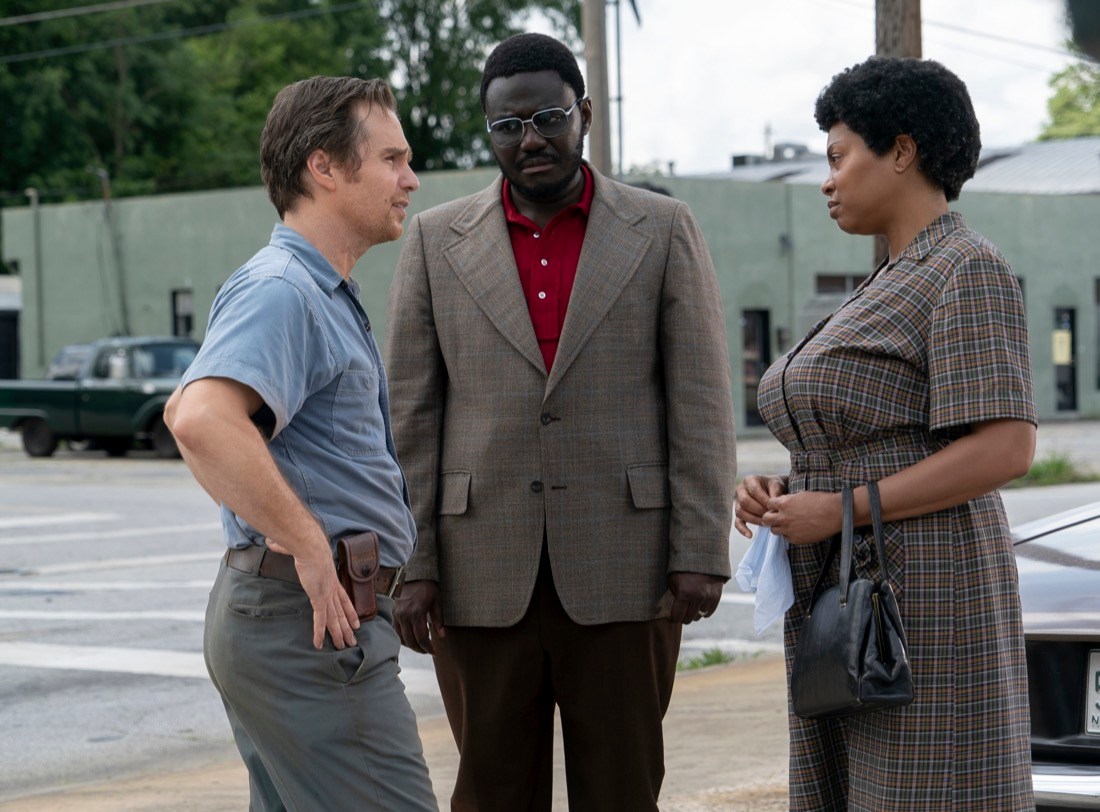
If you didn’t know that “The Best of Enemies” was based on a true story, you’d likely find the premise preposterous, and for a movie, probably ill-advised: A lowbrow Klan leader in North Carolina and a black single mom/community activist are forced into dialogue and become lifelong friends and allies. Really??
Wait, you’d think, is this another sorry effort to make a feel-good film about the history of race relations in the United States? Well, it can’t help but feel good, but the story actually happened: activist Ann Atwater and C.P. Ellis, the Exalted Cyclops of a clan group in Durham, formed an enduring partnership for more than three decades. Atwater even delivered the eulogy at Ellis’ funeral.
“The Best of Enemies,” by writer-director Robin Bissell, is the latest of a series of recent films to tackle the history of racism in America, including the Oscar-winning but divisive “Green Book” and the much, much better “BlacKkKlansman” by Spike Lee. While much of Bissell’s film is poignantly rendered, especially the spirited lead performances by Taraji P. Henson and Sam Rockwell, it has its flaws and its omissions.
For example, we see much more of Ellis’ daily life, with family and friends, than we see of Atwater’s. Though there’s an important subplot involving Ellis’ disabled child and the impact of that challenge on him and his wife, Mary (a sensitive Anne Heche), it seems less than balanced; there’s just a lot more detail about Ellis than about Atwater, or about Durham’s black community at large.
That’s probably because the film needs to find a way to lay the groundwork for how a man like Ellis came to be in the Klan, and then for the most stunning part of the story: his seemingly sudden transformation.