
Both Catoosa and Walker counties received generally positive results from the 2018-19 standardized test scores released July 27, but few had time to celebrate.
“Our folks are all focused on getting schools open, and we really haven’t had the time to finish analyzing them,” said Walker County Schools Superintendent Damon Raines.
Walker County opened schools Aug. 7, while Catoosa County students won’t head back until Aug. 12.
Both districts showed improvement in the important metric of third-grade reading level as well as overall reading proficiency. The independent Chickamauga City Schools district, with a total enrollment of 1,305 students, scored higher in literacy than both of the larger systems.
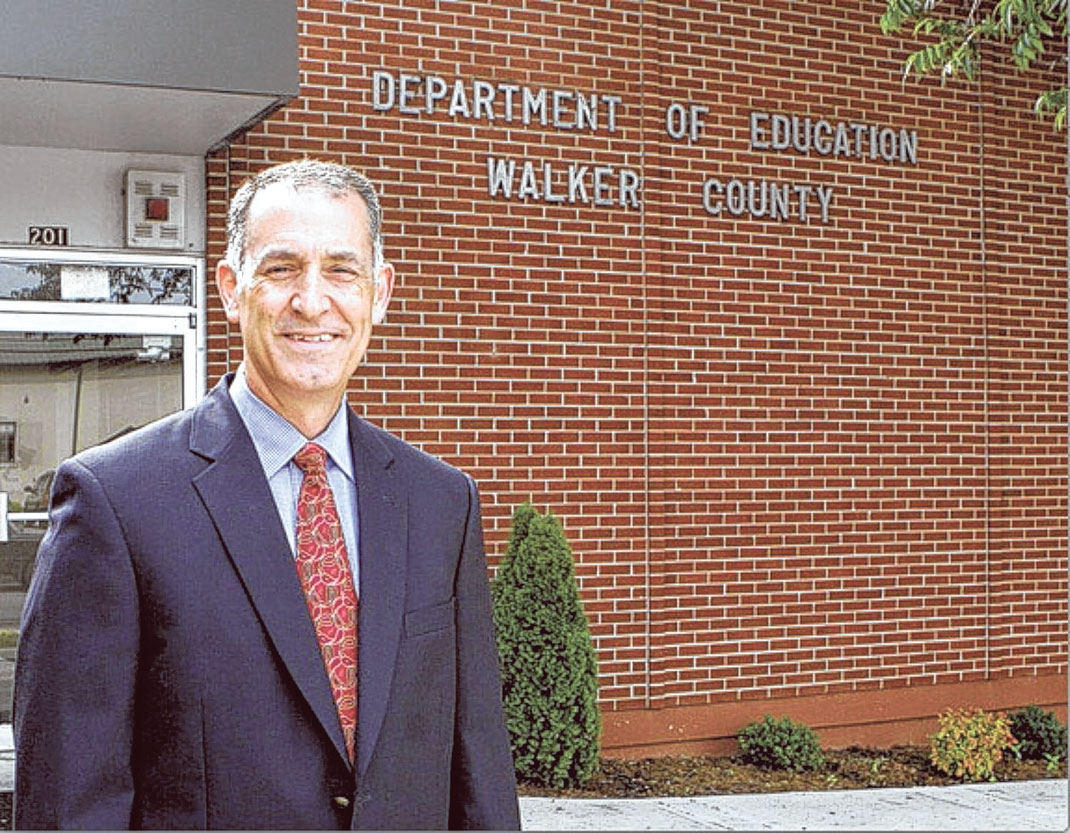 Damon Raines / Staff file photo
The Georgia Milestones testing system began with the 2014-15 school year and is a combination of end-of-grade tests and end-of-course tests. Students in grades 3-8 are tested in English language arts and math each year, and students in grades 5 and 8 also take end-of-grade assessments in science and social studies.
The state of Georgia designates eight end-of-course tests for high school students: ninth-grade literature, American literature, Algebra 1, geometry, physical science, biology, U.S. history and economics. End-of-course tests are 20% of a student’s grade.
End-of-grade tests are broken down into four general categories: beginning learners, developing learners, proficient learners and distinguished learners. School officials in both county systems said the number that educators monitor is the combination of proficient/distinguished learners on the end-of-grade assessments.
The 4,807 Catoosa County students tested in grades 3-8 improved their proficient/distinguished scores in nine of the 12 categories of math and English with one being the same as 2018. Walker County tested 3,902 students and the proficient/distinguished score improved in nine of 12 categories from 2018 test scores.
“I am very pleased with our reading and math scores across all grade levels,” said Catoosa County Schools Superintendent Dr. Denia Reese. “We have focused on these areas, especially in elementary school, and these scores indicate that our strategies are working.” She became superintendent in 2005.
Catoosa County students overall exceeded the state average in 11 of the 16 measured end-of-grade tests and four of the eight end-of-course tests.
With an earlier school starting date, Raines said Walker County had not completed its analysis of its scores against the state average.
The state average in Georgia for reading at or above grade level is 73%. Catoosa County beat the state average as 80% of its third-graders scored at or above grade level, up 6% from 2018-19 results. Walker County also exceeded the state average by 1%, with 74% of its third-graders scoring at or above grade level. Chickamauga City Schools tested 73 students and 89% of them tested at or above grade level.
“We made a conscious decision a few years ago to focus on literacy,” said Dr. Kim Nichols, assistant superintendent in Catoosa County. “We formed a literacy task force and took an in-depth look. It’s good to see it’s making a difference.”
Both Walker and Catoosa counties use benchmark assessments during the school year, a practice used by Hamilton County Schools in Chattanooga. The practice is essentially a quarterly checkup on student progress prior to taking the end-of-course tests.
“One of the great things about teachers is that they want the data, and if it shows they need to make an adjustment, they gladly will,” said Raines, who is entering his eighth year as superintendent. “The three pieces of data we give them throughout the year really helps. After the test scores come out, it’s an autopsy at that point.”
In contrast to the issues Tennessee has experienced with the transition to electronic testing, Nichols and Raines said the process has been implemented smoothly. Both school systems said they were right at 100% electronic testing for the past two years.
“We had a plan to go from paper-and-pencil to technology,” Nichols said. “There was a lot of work done with teachers in the two years prior to the device in the students’ hands.”
All test scores, including school-level data, is available at tinyurl.com/GAMilestones1819.
Contact Davis Lundy at davislundy@aol.com.