
Monday, November 9, 2026Nov 9

Biographer: Statue of Liberty poem embraces migrants from ‘all places’

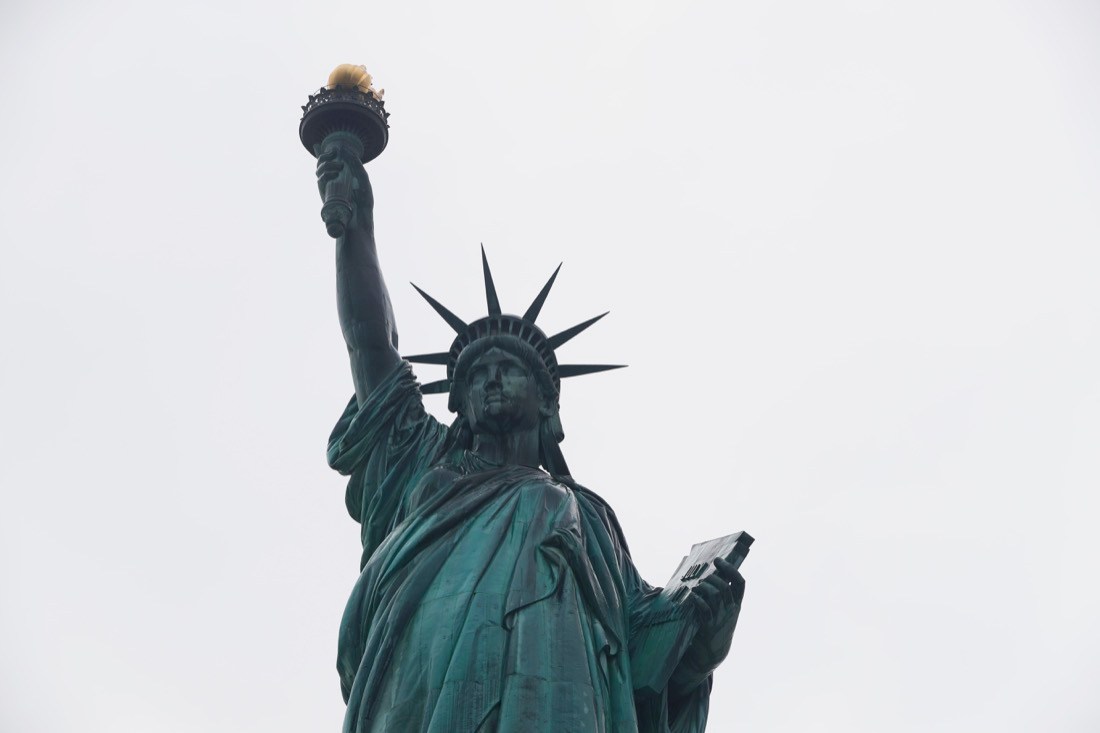
The Statue of Liberty wields her torch, Wednesday, Aug. 14, 2019, on a cloudy day in New York. A biographer of poet Emma Lazarus on Wednesday challenged a comment by the acting director of U.S. Citizenship and Immigration Services, explaining that Lazarus' words were her way of urging Americans "to embrace the poor and destitute of all places and origins." (AP Photo/Kathy Willens)
The Statue of Liberty wields her torch, Wednesday, Aug. 14, 2019, on a cloudy day in New York. A biographer of poet Emma Lazarus on Wednesday challenged a comment by the acting director of U.S. Citizenship and Immigration Services, explaining that Lazarus' words were her way of urging Americans "to embrace the poor and destitute of all places and origins." (AP Photo/Kathy Willens) The Statue of Liberty wields her torch, Wednesday, Aug. 14, 2019, on a cloudy day in New York. A biographer of poet Emma Lazarus on Wednesday challenged a comment by the acting director of U.S. Citizenship and Immigration Services, explaining that Lazarus' words were her way of urging Americans "to embrace the poor and destitute of all places and origins." (AP Photo/Kathy Willens)

Long before a Trump administration official suggested the poem inscribed on the Statue of Liberty welcomed only people from Europe, the words captured America’s promise to newcomers at a time when the nation was also seeking to exclude many immigrants from landing on its shores.

A biographer of poet Emma Lazarus on Wednesday challenged the comment by the acting director of U.S. Citizenship and Immigration Services, explaining that Lazarus’ words were her way of urging Americans “to embrace the poor and destitute of all places and origins.”

Lazarus wrote “The New Colossus” in 1883, one year after Congress passed the Chinese Exclusion Act, which banned laborers from China. The poem is best known for its line about welcoming “your tired, your poor, your huddled masses yearning to breathe free.”

Beginning in the 1930s, supporters of immigration began using the poem to bolster their cause. Biographer Esther Schor said Lazarus was “deeply involved” in refugee causes.

Ken Cuccinelli suggested Tuesday in an interview with NPR that the line should be changed to “give me your tired and your poor who can stand on their own two feet and who will not become a public charge.”