
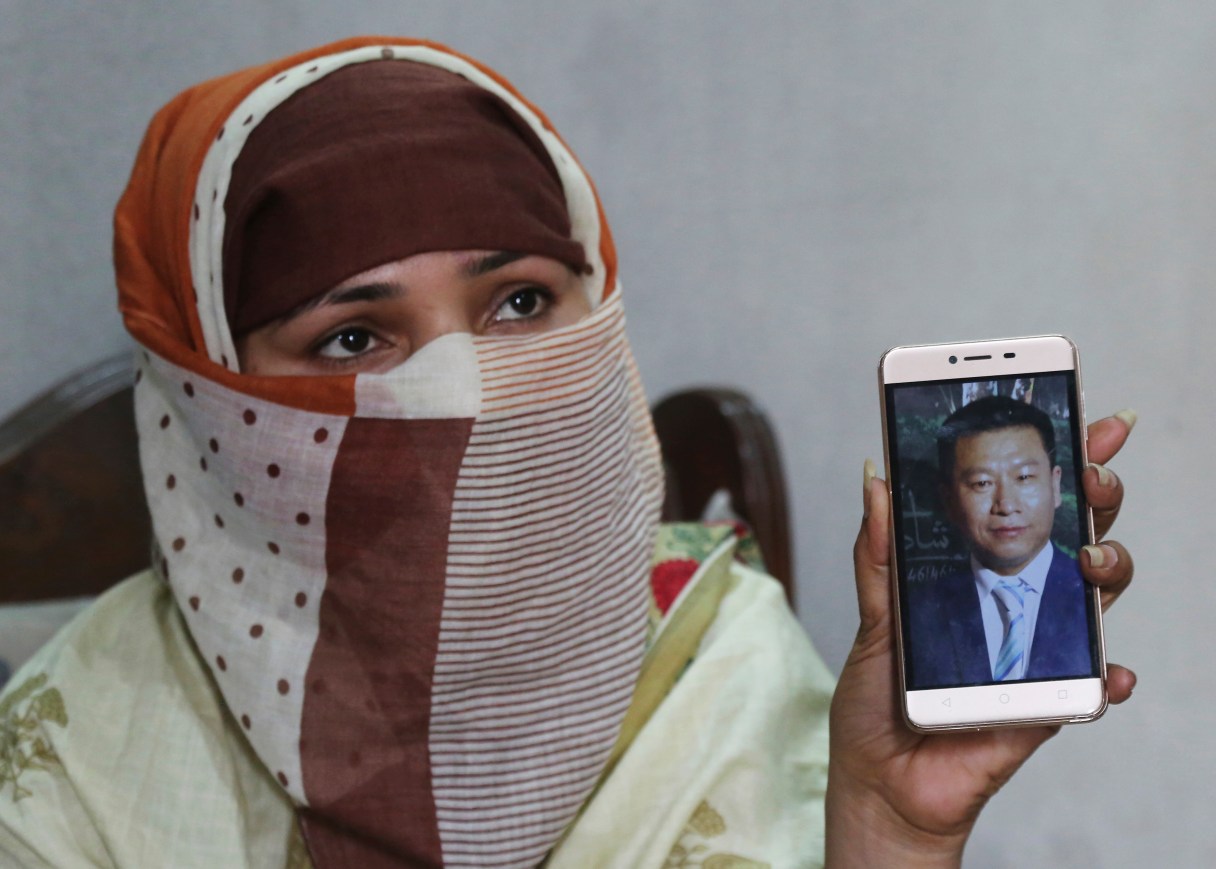
LAHORE, Pakistan (AP) – Page after page, the names stack up: 629 girls and women from across Pakistan who were sold as brides to Chinese men and taken to China. The list, obtained by The Associated Press, was compiled by Pakistani investigators determined to break up trafficking networks exploiting the country’s poor and vulnerable.
The list gives the most concrete figure yet for the number of women caught up in the trafficking schemes since 2018.
But since the time it was put together in June, investigators’ aggressive drive against the networks has largely ground to a halt. Officials with knowledge of the investigations say that is because of pressure from government officials fearful of hurting Pakistan’s lucrative ties to Beijing.
The biggest case against traffickers has fallen apart. In October, a court in Faisalabad acquitted 31 Chinese nationals charged in connection with trafficking. Several of the women who had initially been interviewed by police refused to testify because they were either threatened or bribed into silence, according to a court official and a police investigator familiar with the case. The two spoke on condition of anonymity because they feared retribution for speaking out.
At the same time, the government has sought to curtail investigations, putting “immense pressure” on officials from the Federal Investigation Agency pursuing trafficking networks, said Saleem Iqbal, a Christian activist who has helped parents rescue several young girls from China and prevented others from being sent there.