
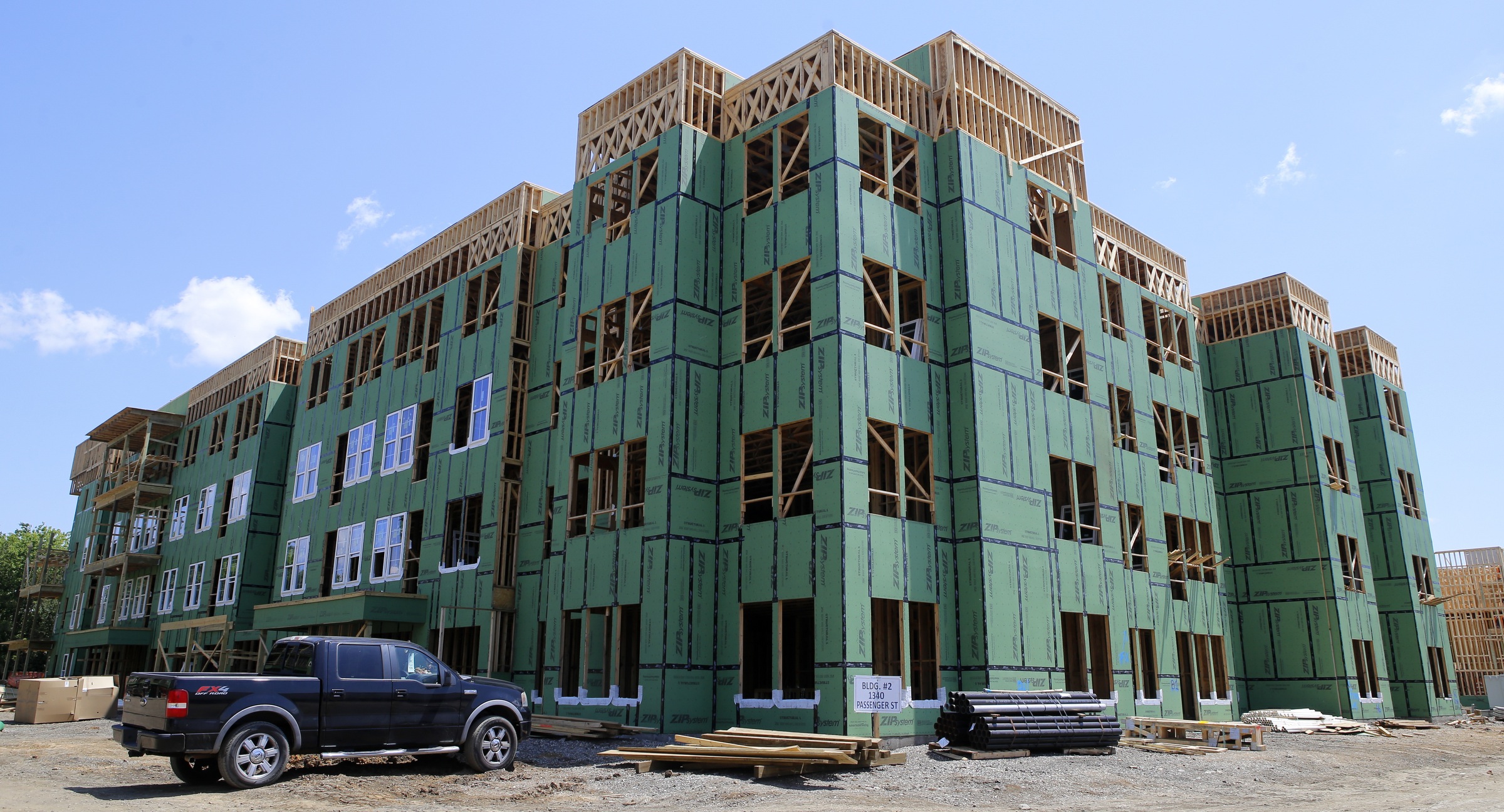
 Construction continues on the Bluebird Row apartment buildings behind the Chattanooga Choo Choo on Tuesday, May 8, 2018 in Chattanooga, Tenn.
With nearly 1,000 apartment units and town homes coming online soon on Chattanooga’s Southside, occupancy rates are falling and new construction of multi-family housing is projected to drop in and around downtown for the next four or five years, according to predictions made Tuesday during an Urban Land Institute seminar.
“The Chattanooga market is not quite as good as we might think it is,” said John Clark, a long-time residential and commercial developer who is president of the Tennessee Development Resources in Chattanooga. “Our occupancy rate is lower than the national average. But we continue to build more units than we can absorb even as our absorption rate is declining.”
Clark told the ULI seminar of developers, builders, investors and architects that he expects the building of new apartments and other housing units in and around downtown Chattanooga will likely drop in half in the next five years until demand catches up with the glut of new projects added as part of nearly $1 billion of downtown construction either completed or ongoing in the past couple of years.
Clark said rents are still rising, but that is due primarily to tenants migrating from older to new and more expensive units, Clark said.
“In the Southside, we’ve just had a tremendous number of units come online or are still being built.” he said. “There are a lot of new and high-quality developers doing these projects and I think they will do well, but filling up these developments is going to be slower than what we saw in the past.”
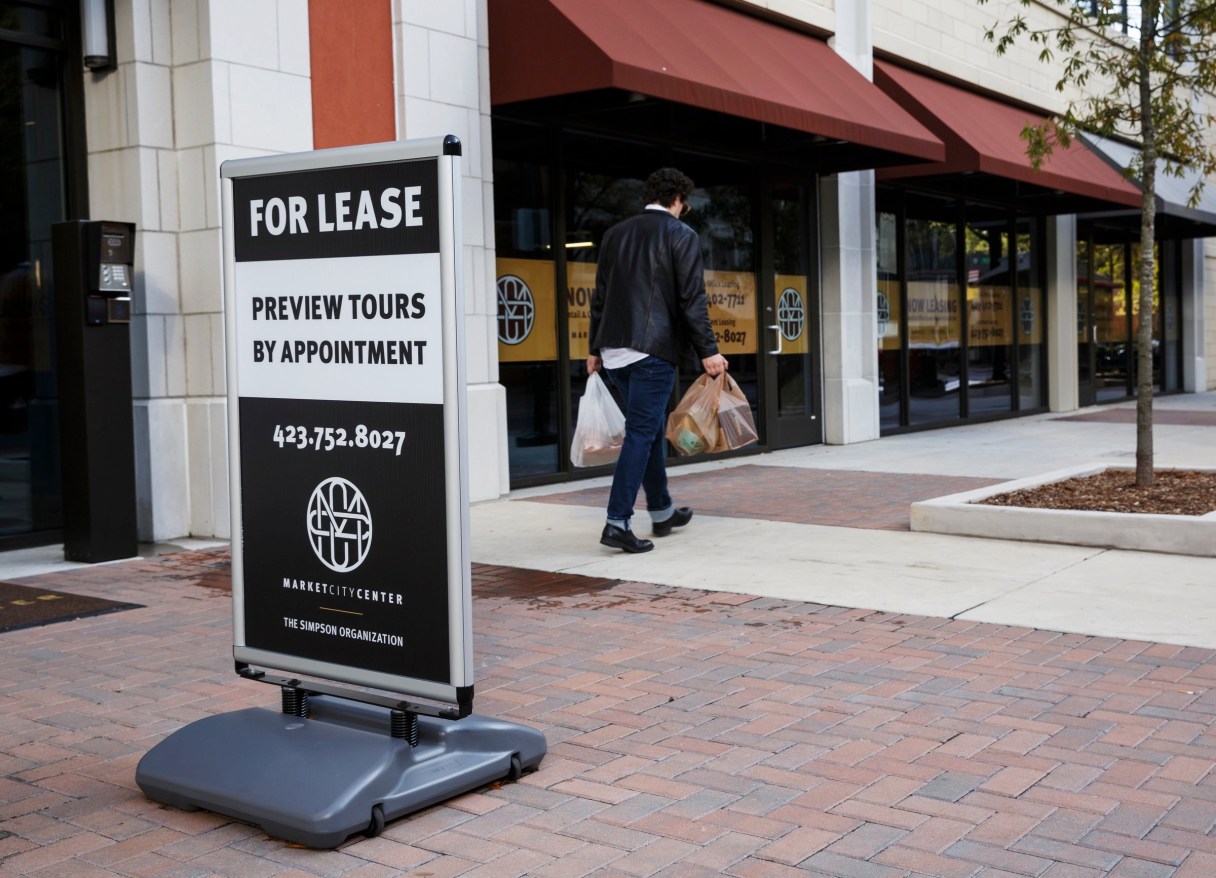
Already, projects such as the residential condominiums planned on the upper floors of the First Tennessee Bank building are not being finished and the nearby Market City Center sits more than half empty more than a year after its opening.
Although Chattanooga’s slowdown in downtown apartment building may be bigger because of the current glut, the Urban Land Institute’s annual forecast does foresee “coming off the peak” in building and a plateau, if not a slight dip, in many construction projects.
Building costs are up; labor markets are tight, and retail brick-and-mortar stores are increasingly being replaced by online retailers, the ULI study found.
“Multifamily business leaders have at last consumed – for the moment, anyway – the low-hanging fruit of a market that had been starved of development for more than a decade prior,” said Anita Kramer, a senior vice president at the ULI Center for Capital Markets and Real Estate.
Population and job growth over the next few decades is projected to be much slower than a generation ago, although the economic cycles are proving to be longer and less cyclical, Kramer said.
One bright spot for development in and around parts of Chattanooga’s downtown is the new Opportunity Zones created in the tax forms adopted by Congress in late 2017. In such low-income targeted zones, capital gains that are invested in real estate or some businesses in the zone give the taxpayer a reduction in the capital gains tax and, if held long enough, exempt the gains on such targeted investments if kept for 10 years or more.
Tiffanie Robinson, CEO of Lamp Post Properties and Second Story Real Estate Management, said her group is working to create a $15 million fund in Chattanooga to invest in the seven targeted areas picked by the state among the Opportunity Zones across Tennessee.
“What I hope we will see is that some of the projects that have tried to get financing in the past will now be able to move forward within these opportunity zones,” Robinson said. “This could really be a kickstarter for a number of projects.”
Robinson expects the biggest investments are likely in areas that already show promise, including South Broad Street, Amnicola Highway and the Glass Street areas which were designated as Opportunity Zones.
“Many of these are in areas where we are already seeing a lot of activity take place,” Robinson said.
But Robinson said the Southeast seems to be lagging the Northeast and the West Coast for investments in Opportunity Funds under the new tax law. Robinson said she only knows of only four active funds targeted for Opportunity Zones established in the Southeast.
“There is still a lot of education that needs to happen and many are waiting for the final regulations to get issued,” she said.
Martina Gulfoil, president of Chattanooga Neighborhood Enterprise, said the Opportunity Zone tax breaks create an opportunity for new investment in low-income area. But she fears that developers might use the tax breaks simply to do the type of projects they might otherwise already do and create unaffordable housing or commercial development in redeveloping areas and help to drive out existing residents who can’t afford the new housing.
“I love the exuberance of calling attention to areas like Alton Park for investment, but on the flip side the residents’ biggest fear is that a flood of investment might come to their neighborhood and change it is a way that they can’t afford to live there,” Gulfoil said. “I really encourage development that works with the community and groups like CNE and the Glass Street groups to ensure we promote the right kind of new development.”
Contact Dave Flessner at dflessner@timesfreepress.com or at 757-6340