
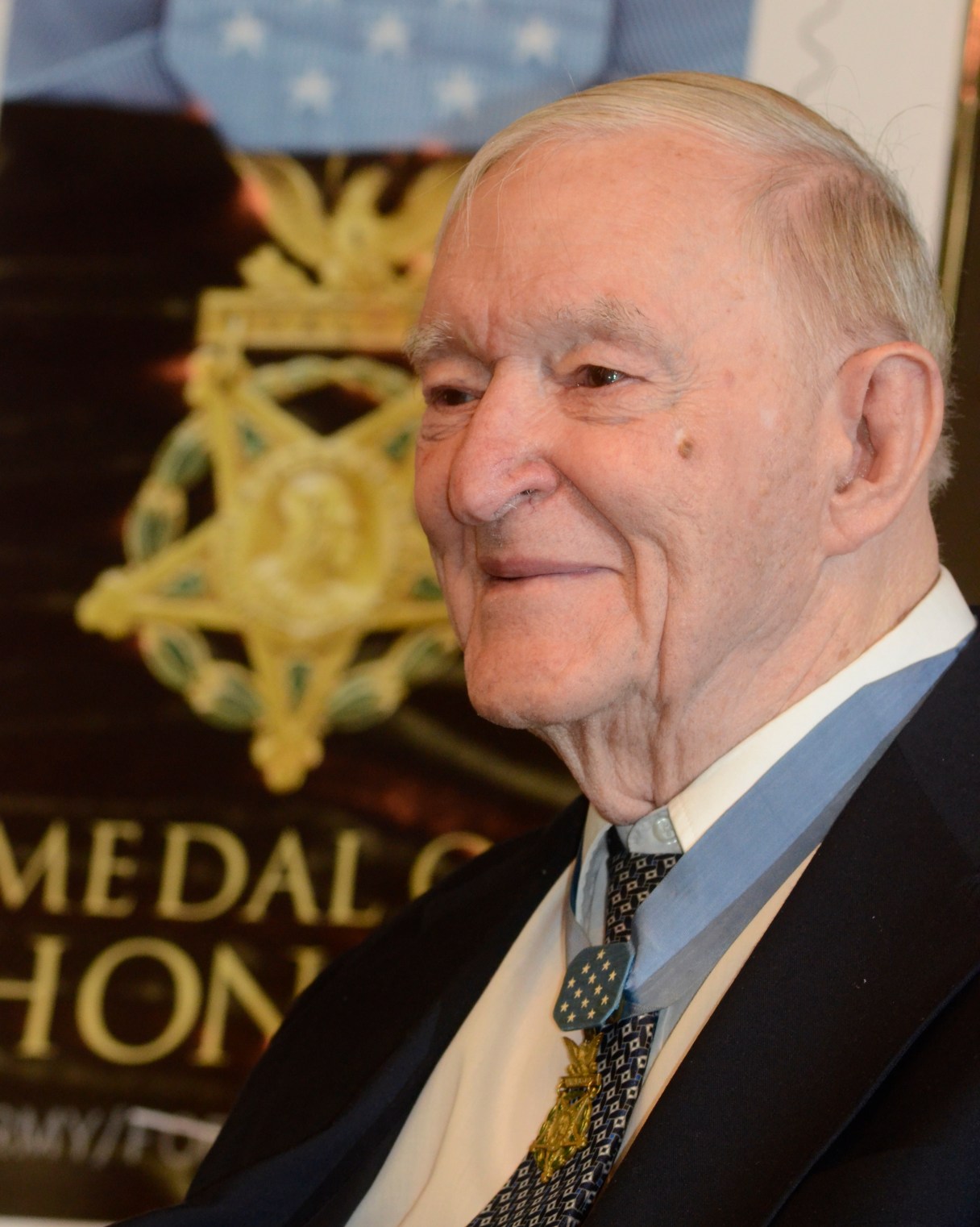
It’s a sure bet that when editors in the newsrooms of the Chattanooga Daily Times and Chattanooga News-Free Press were planning coverage of “Coolidge Day” on Aug. 8, 1945, they never considered that the atomic bomb would be dropped on Hiroshima two days before.
Chattanooga had a daylong event honoring Technical Sgt. Charles H. Coolidge set for Aug. 8, 1945. Coolidge, a 24-year-old resident of Signal Mountain, had been awarded the Medal of Honor seven weeks earlier in Germany for his heroism in World War II.
There would be a luncheon at Hotel Patten (now the deteriorated Patten Towers) for Coolidge featuring Sen. Kenneth D. McKellar, who the News-Free Press described as the “president of the United States Senate and one of the leading men in the national government.” A “procession of cars” would travel through the “flag-draped city” to Memorial Auditorium where Chattanooga Mayor E.D. Bass announced a new park named “Coolidge Riverside Park” to be located between the Walnut and Market street bridges.
But President Truman dropped the atomic bomb and Coolidge became a secondary event.
“The atomic bomb, can you believe that?” said retired Lt. Gen. Charles Coolidge Jr., who would be born a year later. “My dad was overwhelmed by the response.”