
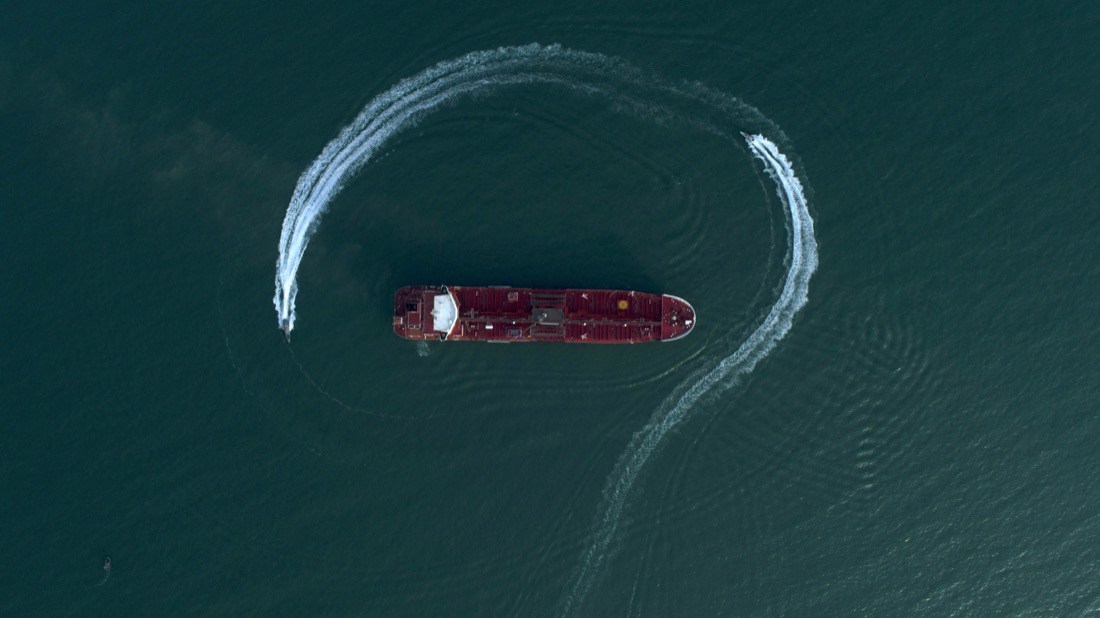
PERSIAN GULF – Capt. Ronald Dowdell was on the starboard side of the bridge, looking toward Iran, as his vessel passed through the Strait of Hormuz on July 18. He’d been monitored by Iranian helicopters and speedboats, but now a drone was closing fast.
Dowdell ordered his crew to disable the drone because it “looked like a potential threat,” he said in an interview on that same bridge Tuesday. The danger signs were the drone’s proximity to the Boxer, its closure rate and the profile detected by the ship’s sensors. The Boxer also targeted a second Iranian drone, but Dowdell’s crew couldn’t confirm that it was destroyed.
This incident, the closest the U.S. has come to a strike on Iran since the confrontation in the Persian Gulf heightened in early May, is often described as a “shootdown.” But nobody aboard the ship describes any shooting. Some crew members say they weren’t even aware of the incident when it happened.
Gen. Kenneth F. McKenzie Jr., who as Centcom commander is Dowdell’s boss, wouldn’t discuss any detail of the Navy and Marine systems aboard the ship that were used. “We brought the Iranian drone down. That really is about all I can say,” he said in an interview aboard the Boxer on Tuesday. McKenzie is concluding a 10-day trip through the region. (Another reporter and I are accompanying him.)
 David Ignatius
The downing of the drone without firing a normal kinetic weapon is one more sign of the measured response the U.S. has adopted through the confrontation with Iran. When Tehran downed an American surveillance drone last month, the U.S. didn’t retaliate by firing missiles on Iranian targets, as many had expected. But it reportedly did launch an invisible cyberattack on some of the Iranian military systems that might have been targeted in a retaliatory strike.