
 In this May 8, 2019, photo, Riley Shaw talks about his family’s internet at his home outside Starkville, Miss. The satellite dish allows a certain amount of high-speed data each month and then slows to a crawl. (AP Photo/Rogelio V. Solis)
HARTFORD, Conn. (AP) – With no computer or internet at home, Raegan Byrd’s homework assignments present a nightly challenge: How much can she get done using just her smartphone?
On the tiny screen, she switches between web pages for research projects, losing track of tabs whenever friends send messages. She uses her thumbs to tap out school papers, but when glitches keep her from submitting assignments electronically, she writes them out by hand.
“At least I have something, instead of nothing, to explain the situation,” said Raegan, a high school senior in Hartford.
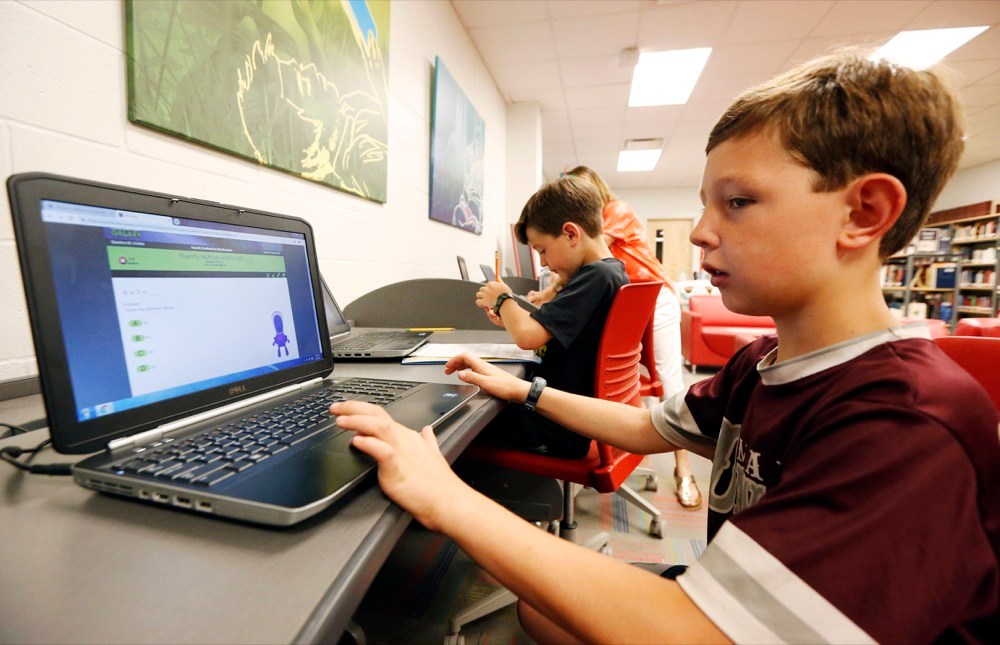
She is among nearly 3 million students around the country who face struggles keeping up with their studies because they must make do without home internet. In classrooms, access to laptops and the internet is nearly universal. But at home, the cost of internet service and gaps in its availability create obstacles in urban areas and rural communities alike.
In what has become known as the homework gap, an estimated 17% of U.S. students do not have access to computers at home and 18% do not have home access to broadband internet, according to an Associated Press analysis of census data.