
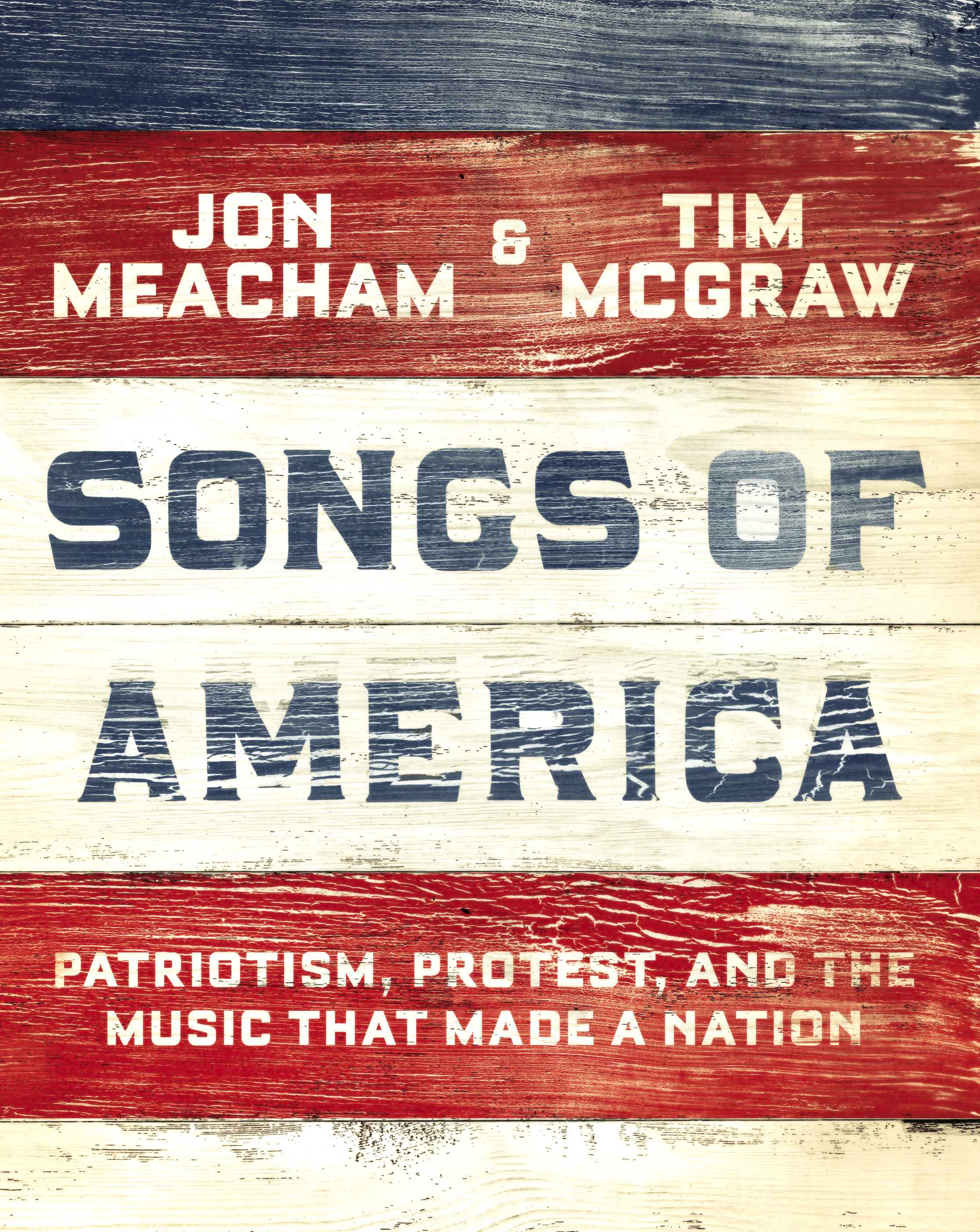
 “Songs of America” book cover / Random House photo
“SONGS OF AMERICA: PATRIOTISM, PROTEST AND THE MUSIC THAT MADE A NATION” by Jon Meacham and Tim McGraw (Random House, 310 pages, $30).
Since the first marches to revolution, Americans have been putting new words to old tunes, inventing genres and blurring the lines between loyalty and liberty, between cries of faith and calls to action. “Songs of America: Patriotism, Protest and the Music That Made a Nation,” the first collaboration between Pulitzer Prize-winning Nashville author Jon Meacham and Grammy Award-winning Nashville musician Tim McGraw, is structured chronologically. Meacham’s narrative details the major movements of American history. McGraw’s contributions are set apart in text boxes, like liner notes, that capture the country’s emotions as the drama unfolds.
Meacham is a measured historian, careful with his conclusions and facts. He draws a wide narrative arc even as he foreshadows each twist and turn in the story. McGraw is the artist, writing from emotion and expressing his opinions in simple verse. In a comment about the World War I-era song “I Didn’t Raise My Boy To Be a Soldier,” McGraw writes, “It’s as though we’re all in an ongoing conversation about the country, about its greatness and its faults, and music is a vital part of that conversation.”
In this song, as in many others, what strikes McGraw is the tension between melody and lyrics, the paradox of anti-war sentiments sung to a marching tune’s call to battle.
Does music temper or inflame our conflicts? Does it help or hurt a nation coming to terms with the failure to live up to its principles?