
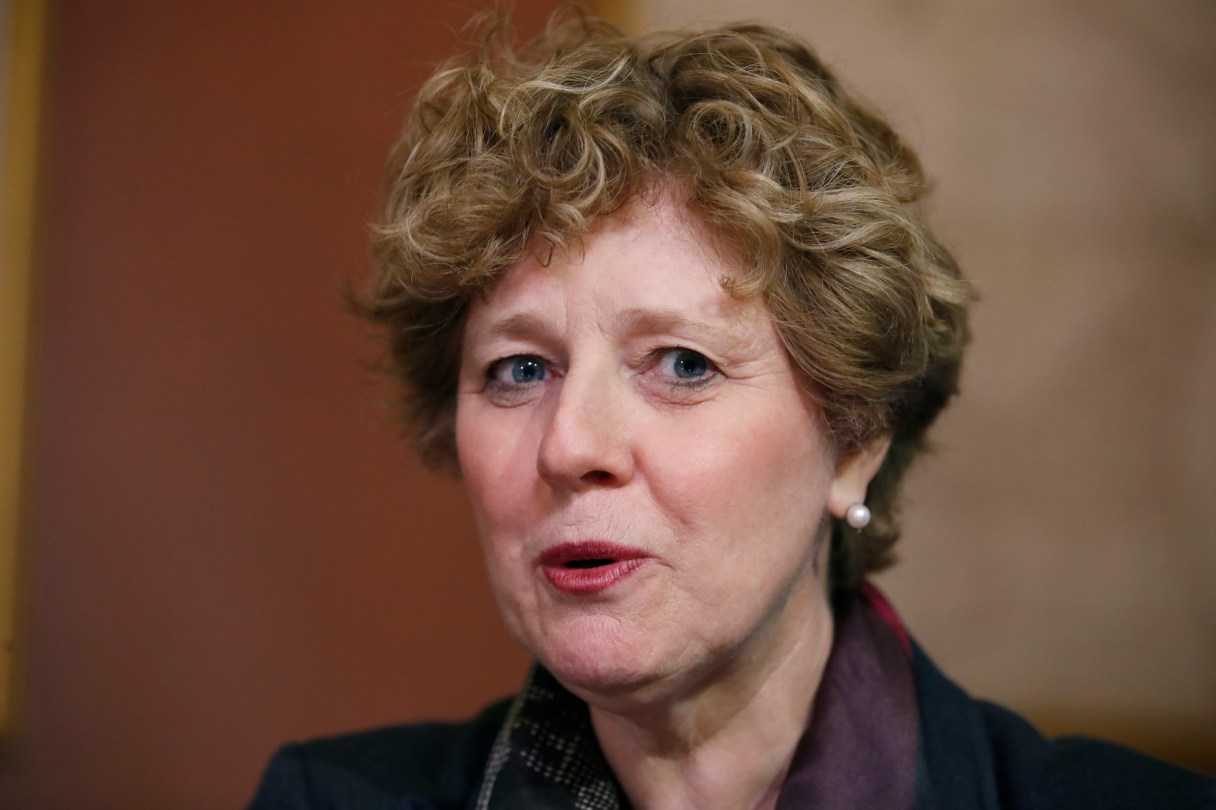
With the announcement last week that Rep. Susan Brooks, R-Indiana, will not run for re-election next year, Republicans in Congress suffered yet another setback in their struggle to convince the American public that they are more than a collection of angry white men.
Brooks’ departure is embarrassing for a party that lost ground among female voters in the 2018 midterms and tilted ever more male in its congressional seats. A fourth-term lawmaker, she is one of only 13 women out of 198 House Republicans. (Of 235 House Democrats, 89 are women.) She is among the more moderate voices in a caucus desperate to win back the educated, affluent, suburban women (and men) who abandoned the party in November. Most awkwardly, as head of recruitment for the National Republican Congressional Committee, or NRCC, she is in charge of persuading women to run for office on the Republican line.
Brooks has repeatedly insisted she’s leaving for strictly personal reasons, and despite her planned departure, she is expected to continue her work at the NRCC.
The Trump era has been rough for the Republican Party’s efforts to address its enduring difficulties in attracting female candidates and voters. Whatever women think of the party’s positions on issues such as reproductive rights, health care and gun safety, many are put off by President Donald Trump’s divisive politics, belligerent style and personal sexism. In the midterms, Democrats claimed 59% of women voters. The shift by white, college-educated women voters away from Republicans played a significant role in handing control of the House to Democrats.
After Republican women watched their numbers in the House drop from 23 to 13 (the lowest in almost a quarter-century) and the gender gap grow (to the biggest in a quarter-century), they hit the panic button. They fear that if women don’t see themselves represented by and as having a voice in the party, their support will continue to slip.