
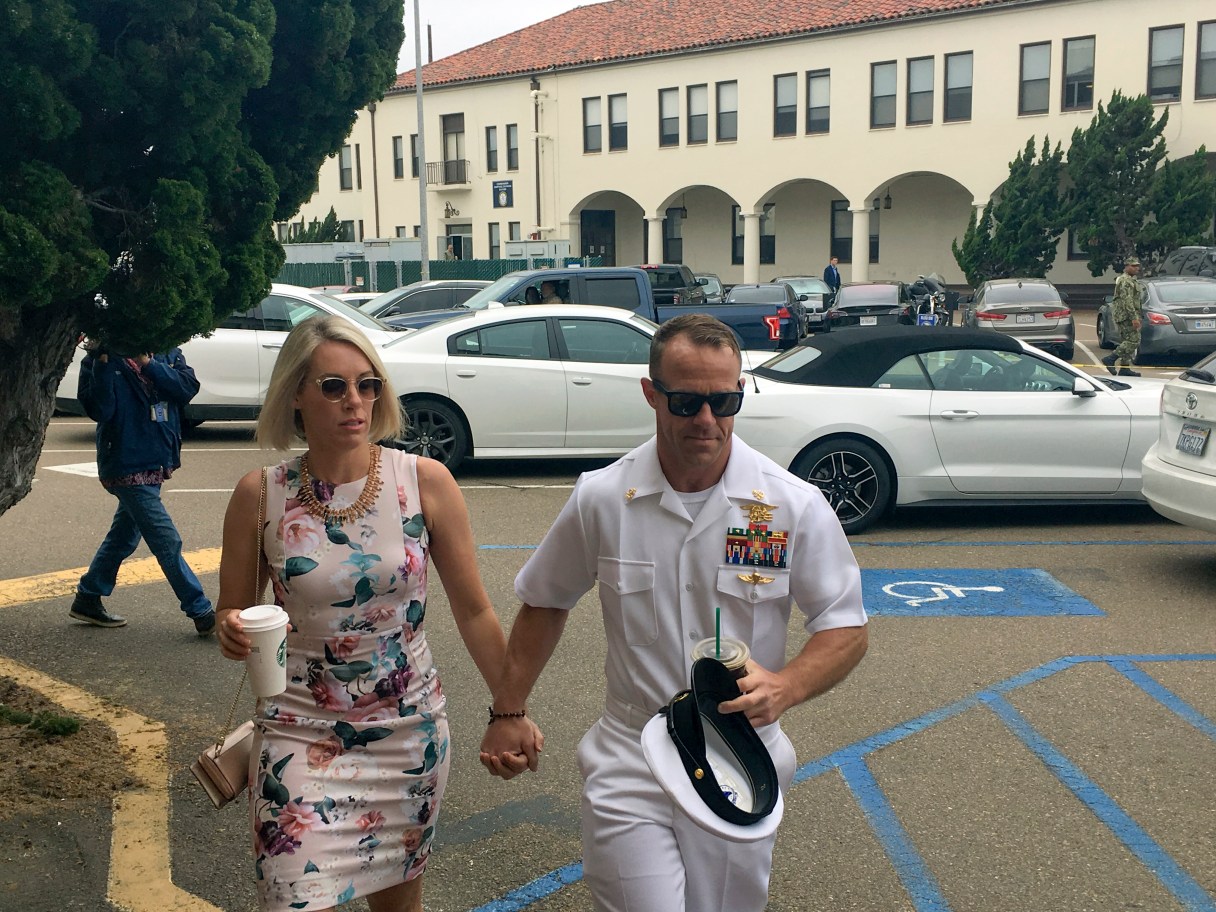
SAN DIEGO – When prosecutors called a special forces medic to testify, they expected him to bolster their case against a decorated Navy SEAL accused of stabbing an Islamic State fighter in his care.
Corey Scott delivered in part, saying Special Operations Chief Edward Gallagher unexpectedly plunged a knife into the adolescent detainee in 2017 after treating his wounds in Iraq.
But the government was floored by what came next: Scott took the blame for the killing, saying he suffocated the boy in an act of mercy shortly after Gallagher stabbed him.
It was a stunning twist in an already tumultuous case – illustrating the challenges of prosecuting war crimes cases, especially those involving members of the secretive special forces. The turn of events also exposed the risk that prosecutors take when immunity is granted to witnesses.
“You’re assuming a certain amount of risk that you know what they’re going to say and that what they’re going to say is truthful,” said Retired Army Maj. Gen. John Altenburg Jr., who has handled or oversaw about 1,000 military trials. “If you get surprised, you get surprised. That’s what can happen when you have cases like this.”