
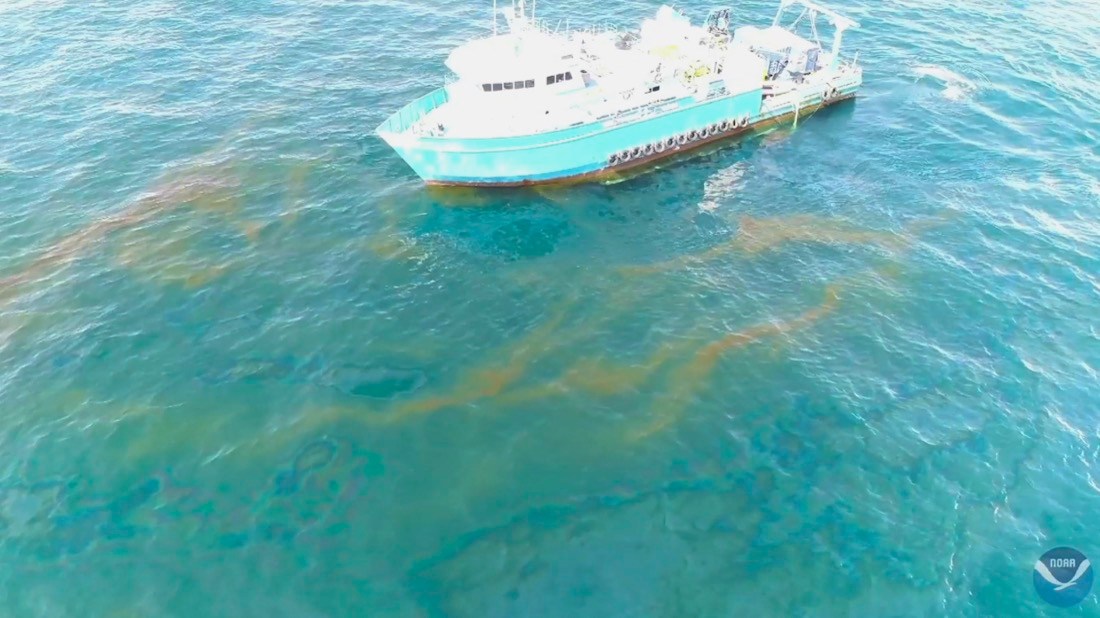
NEW ORLEANS (AP) – A new federally led study of oil seeping from a platform toppled off Louisiana’s coast 14 1/2 years ago found releases lower than other recent estimates, but contradicts the well owner’s assertions about the amount and source of oil.
Oil and gas have been leaking into the Gulf of Mexico since a subsea mudslide caused by Hurricane Ivan on Sept. 15, 2004, knocked over a Taylor Energy Co. production platform, which dragged and broke a bundle of well pipes. Taylor capped nine wells but said it couldn’t cap 16.
The company contends oil sheens on the water’s surface indicate there’s only a dribble of 2.4 to 4 gallons (9 to 15 liters) of oil and gas a day. Taylor Energy, which is fighting a federal order to stop the seepage, also says any oil rising from the site is from oil-soaked sediment and any gas is produced by living organisms.
“The results of this study contradict these conclusions,” said the report paid for by the federal Bureau of Safety and Environmental Enforcement, which oversees offshore drilling, and written by two National Oceanic and Atmospheric Administration scientists and one from Florida State University.
Taylor said in an emailed statement that it wants verifiable scientific data about the leak and a scientifically and environmentally sound solution. The company has said remaining pipes are buried under so much oily and treacherous silt that stopping any leaks would do more environmental damage than letting them be.