
Monday, November 16, 2026Nov 16

Supreme Court strikes down Tennessee liquor sales law

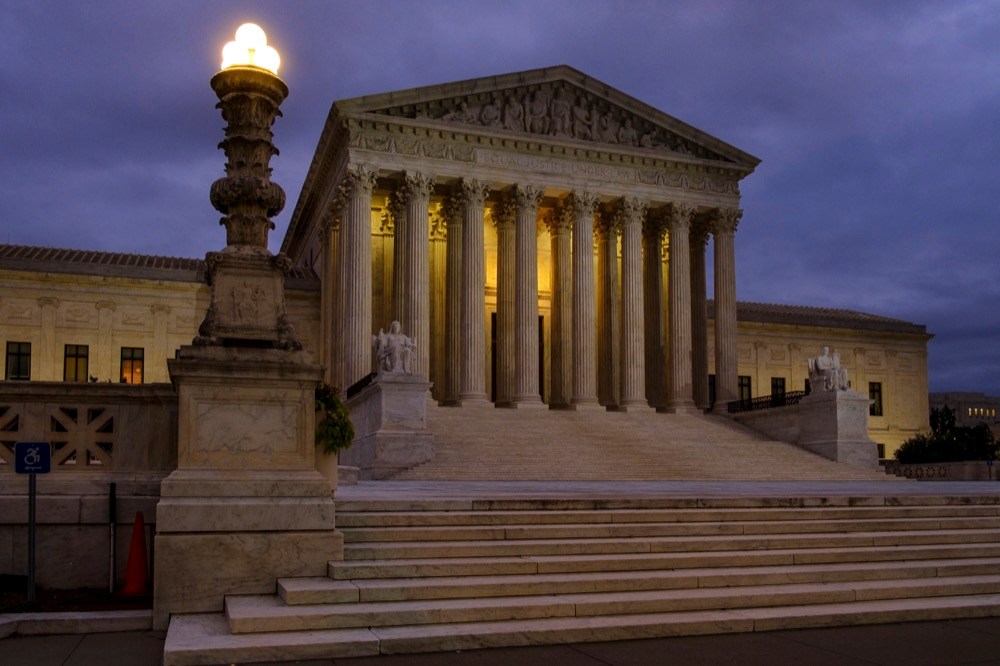
In this Oct. 5, 2018 photo the U. S. Supreme Court building stands quietly before dawn in Washington. The Supreme Court won't let the Trump administration begin enforcing a ban on asylum for any immigrants who illegally cross the U.S.-Mexico border. New Justice Brett Kavanaugh and three other conservative justices sided with the administration. The court's order Friday leaves in place lower court rulings that blocked President Donald Trump's proclamation in November automatically denying asylum to people who enter the country from Mexico without going through official border crossings. (AP Photo/J. David Ake)

WASHINGTON (AP) – The Supreme Court on Wednesday struck down a Tennessee law that makes it hard for outsiders to break into the state’s liquor sales market.

The court voted 7-2 in ruling that a state requirement that someone live in Tennessee for two years to be eligible for a license to sell liquor violates the Constitution.

The outcome was a victory for a family that moved to Tennessee because of their daughter’s disability and a national chain with nearly 200 liquor stores in 23 states.

The case pitted the authority given to states to regulate alcohol sales in the 21st Amendment that repealed Prohibition in the United States against the constitutional principle that only Congress, not the states, can regulate interstate commerce.

Justice Samuel Alito wrote in his opinion for the court that states have considerable power to regulate the sale of alcohol, but they can’t discriminate against out-of-state interests. The predominant effect of the residency requirement is to protect Tennessee liquor sellers “from out-of-state competition,” he wrote.