

With the announcement of a program Thursday that would pay for tuition and fees at University of Tennessee schools for students from low- and moderate-income households, the state has once again become a model for the country.
And it has put to shame the recent promises by socialistic Democratic presidential candidates that the hugely indebted federal government could and should fund college for all.
Tennessee began the trend of state programs in 2015 when then-Gov. Bill Haslam unveiled Tennessee Promise, a plan that would pay the community college tuition of qualified rising high school students using money from the state lottery. He extended that offer in 2017 with Tennessee Reconnect, which would allow qualified adults to return to school and receive free tuition at state community colleges.
Since then, Arkansas, Hawaii, Indiana, Kentucky, Minnesota, Nevada, New York and Rhode Island have started similar programs, although some are limited to certain fields.
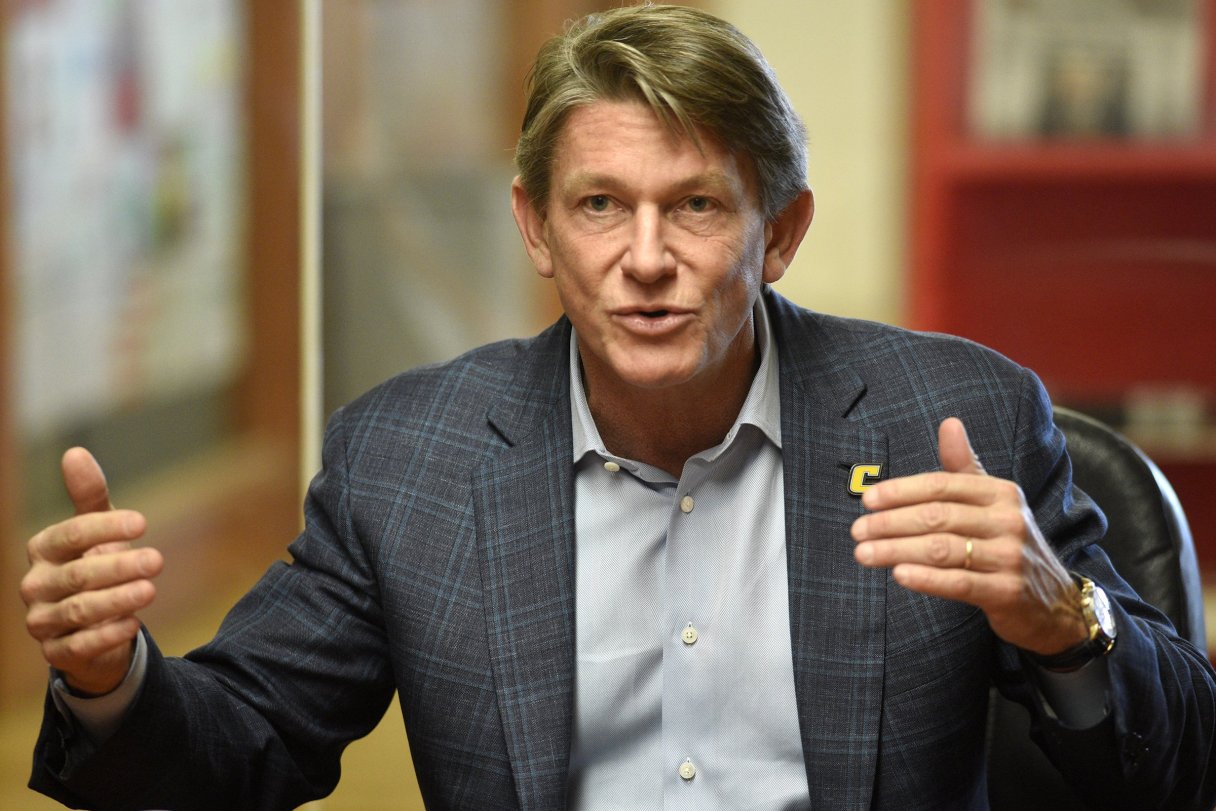
Randy Boyd, the University of Tennessee system interim president who made Thursday’s announcement, was the architect of Tennessee Promise when he was an adviser to Haslam.
The UT Promise program will be available for undergraduate students with a household income of less than $50,000 a year at any UT system campus. The students must be a recipient of the state’s HOPE scholarship, and the program, like Tennessee Promise, would be a “last dollar” scholarship. “Last dollar” scholarships mean a student must obtain and use federal college assistance, such as Pell Grants, and other awards before the program pays the rest.
The program, unlike Tennessee Promise and Tennessee Reconnect, will not use lottery dollars but initially will be funded from internal UT savings and other sources. In the next five years, the University of Tennessee Foundation is expected to create a fundraising campaign to fund the program for the future.
The idea for the program – which does not need UT board or legislative approval – is to help accelerate the state’s goal of 55 percent of its residents having a college degree or certificate by 2025, to cut down on the debt of students leaving school, and, as Boyd said, to create the opportunity for a better life for Tennesseans.
What Tennessee and the University of Tennessee can do, with sound economic policies, can be replicated throughout the country. Yet, Democrats would just add higher education to the federal tab.
Former President Barack Obama, for instance, came to the state in 2015 to praise Haslam’s Tennessee Promise, then turned around and proposed a similar program of two years of tuition for community college students by raising taxes on wealthy Americans and financial institutions. The idea went nowhere.
Most of the announced candidates for the 2020 Democratic nomination have suggested or supported some form of debt-free or tuition-free college, all backed by the federal government.
Yet, Tennessee is showing the way it can be done “in-house.” We hope more states will take note.