
We in the news media often whack politicians for not being serious about policy. And then we ignore their policy proposals.
So here is my Dummy’s Guide to Democratic Policy Proposals. I write it because something fascinating is underway: After decades of incrementalism, Democrats are now proposing a litany of exciting big ideas.
Here’s my take:
* Child allowances are among the best ideas to boost America’s future. They are used very successfully abroad to reduce child poverty. One proposal would give families with children $250 to $300 per month, in the form of a refundable tax credit. Luke Shaefer of the University of Michigan estimates that this would reduce the number of children living in poverty by more than one-third.
The National Academies of Sciences, Engineering and Medicine, in an important new report, calculate that child poverty costs the United States some $1.1 trillion each year. So if you think child allowances are expensive, just look at the cost of child neglect.
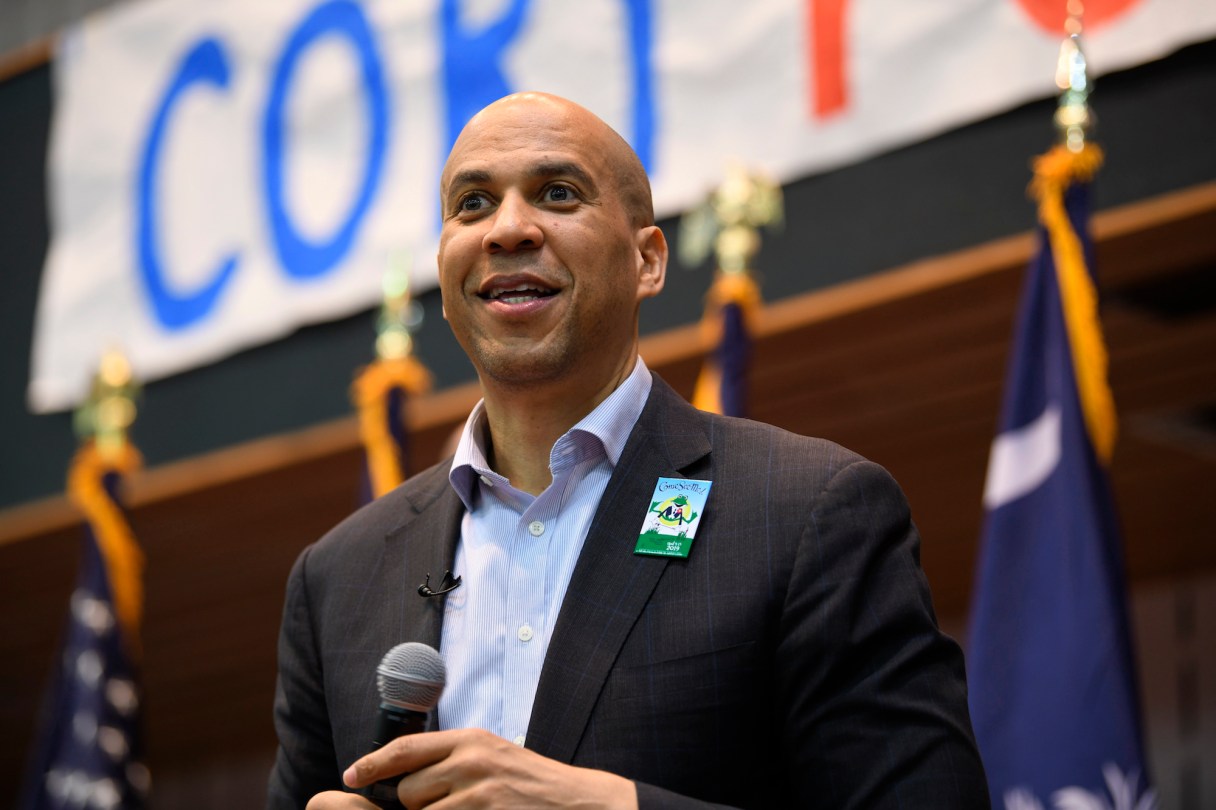
* Baby bonds have been proposed by Sen. Cory Booker and are an excellent way to reduce wealth gaps and help low-income families buy homes, afford college and start businesses. The idea is that every child would get a $1,000 savings account at birth, and then children in low-income households would get an additional $2,000 deposit in the account each year.
At age 18, the person would get control over the account – which at this point could be worth almost $50,000, including interest – but it could be used only for wealth-building purposes, such as education, a down payment on a home or possibly starting a business.
* Child care for at-risk kids is one of the highest-return investments we can make. Sen. Elizabeth Warren has proposed a high-quality child care program that resembles the U.S. military’s outstanding program, paid for on a sliding scale depending on the parents’ income.
The focus of Warren’s program is helping parents find child care while they work, and that’s important. The United States was a world leader in helping women get into the labor force, but we have lagged the last couple of decades.
How do we pay for all this? I like Sen. Bernie Sanders’ suggestion for raising the inheritance tax plus various wonky steps that target the wealthy, like eliminating the step-up basis and ending the gap between capital gains and earned income rates.
* A wealth tax proposed by Warren also is intriguing. It has been tried in Europe and failed, but it may be more workable in a larger country like the United States that people are less likely to cut ties with.
It’s true that the wealth tax would be a challenge for paper billionaires with illiquid private companies. But we already have a wealth tax – the property tax – that hurts low-income widows. If impoverished widows can manage, so can billionaires. I suggest testing at a 1 percent rate for billionaires.
There are some bad Democratic ideas out there, too. Rent control typically backfires by reducing supply and compounding shortages. Legislation that would make companies pay a tax equivalent to the food stamps and school lunch subsidies employees receive would lead companies to avoid hiring people in low-income households, particularly those with children.
There are also many more good ideas, including vigorous antitrust enforcement to break up semi-monopolies, an expanded earned-income tax credit and other job initiatives, plus universal health insurance.
Those policy proposals don’t have the drama of a denunciation by President Donald Trump of his rivals, but they could help reshape America. So let’s treat them as no less important than Trump’s tweets.
The New York Times