
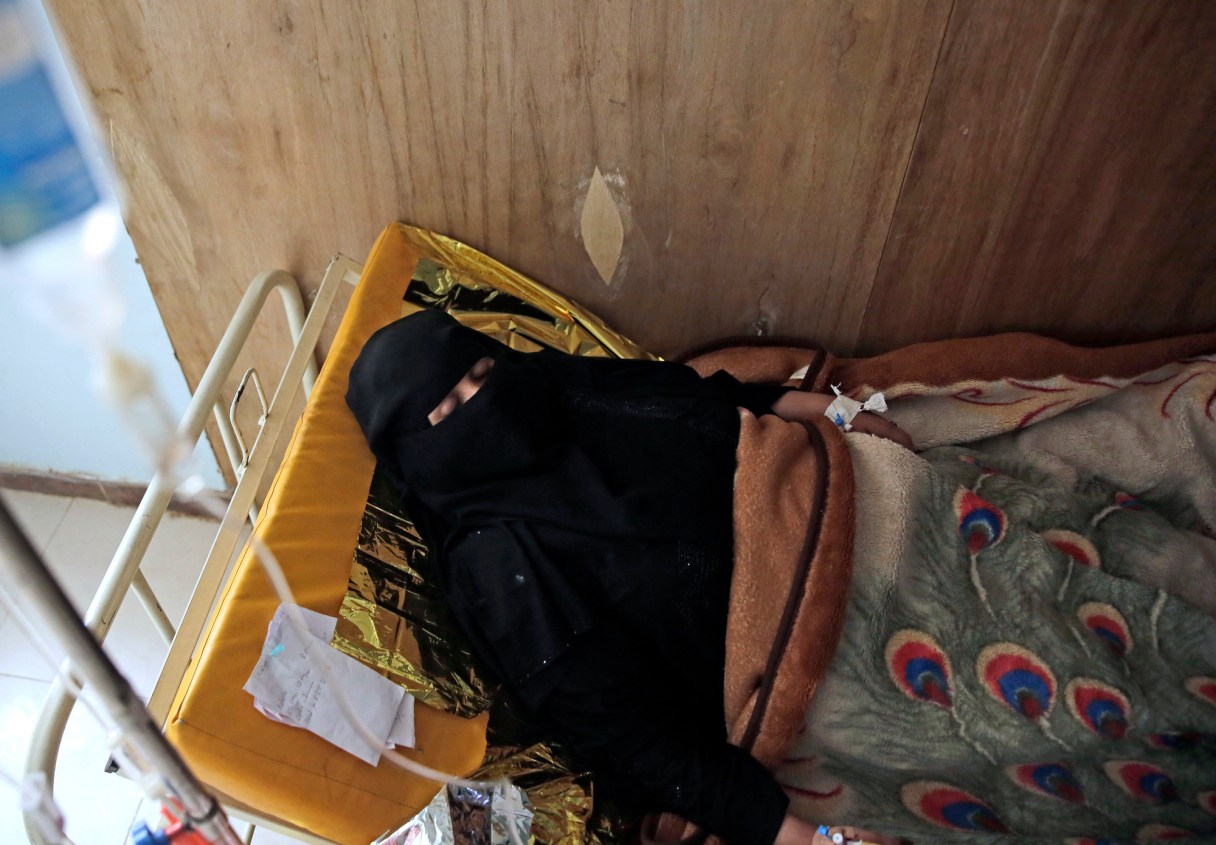
Why concern ourselves with Yemen? That country of 28 million people on the southern Arabian Peninsula has for years been in the throes of civil war. On one side are Iranian-backed, Shiite, Houthi rebels who control much of the country’s north, which borders Saudi Arabia and Oman. Sunni forces in the south are backed by Saudi Arabia and a coalition of other predominantly Sunni, Middle Eastern countries, including Egypt, Jordan, Kuwait and the United Arab Emirates (UAE). The U.S., United Kingdom and France provide logistical and intelligence support for the coalition. U.S. support includes mid-air refueling for Saudi aircraft and training of aircrews from the UAE.
 Clif Cleaveland
After a long and conflicted history, northern and southern portions of the country united as the Republic of Yemen in 1990. Corruption became rampant. The central government had limited success in reconciling religious, sectional and clan factions. Poverty worsened. Food shortages grew. Lack of governmental control led the Yemini branch of al-Qaeda to expand.
On Oct. 12, 2000, al-Qaeda suicide bombers attacked the USS Cole, a missile-bearing destroyer, which was refueling in the harbor of Aden, Yemen. Seventeen sailors were killed; 39 were wounded. U.S. forces began a systematic campaign to capture or kill masterminds of the plot.
Following the Sept. 11, 2001, attacks, U.S. forces have repeatedly employed drone attacks against suspected al-Qaeda bases in Yemen. During the eight years of the Obama administration, 156 drone attacks were launched, giving way in the Trump administration to another 176 drone attacks. Islamic State bases have also been targeted more recently.
Yemen’s president was forced to cede power to his deputy 2011. He, in turn, fled the country in 2015. Fighting intensified afterward and continues.
Meanwhile, the civilian population increasingly suffers. Thousands of civilians have been killed, many in indiscriminate, Saudi air attacks, which employ aircraft and weaponry purchased from U.S. manufacturers. Saudi attacks increased following Houthi rocket attacks on petroleum facilities in Saudi Arabia. Seven million people, including many children, are at risk of famine because of blockades, which prevent imports of food and other humanitarian supplies. More than 1.2 million people have contracted cholera in an epidemic that began in April 2017 (more than 2,500 people have died). The outbreak resulted from the destruction of water and sewage infrastructure in cities targeted in air attacks.
The United Nations brokered a limited peace plan in Stockholm in late 2018. The warring factions agreed to exchange prisoners, establish a demilitarized zone on the Red Sea to allow transport of food and humanitarian supplies, and continue talks for a wider ceasefire. Widespread fighting continues.
Matthew 5:19 in the King James version of the Bible states, “Blessed are the peacemakers for they shall be called the children of God.” This verse from Jesus’s Sermon on the Mount does not necessarily call for pacifism – a rejection of violence whatever the circumstances. The peacemaker seeks reconciliation among enemies. The role requires patience to convene and to mediate disputes among warring parties. By default, the UN undertakes this role in the civil wars of recent decades. Once ceasefires are negotiated, demilitarized zones can be established and manned by UN-recruited forces. Historically, those truces are fragile.
What is the U.S. role in Yemen? Do we continue to launch drone attacks with disregard for civilian casualties? Will we remain the principal supplier of arms to Saudi Arabia?
Is there another pathway, that of peacemaker? Could we use our influence among coalition members to create a broader, durable ceasefire so a lasting peace could be negotiated? Could we replace arms with humanitarian aid?
Is it not time to take the side of civilians and end this disaster?
Contact Clif Cleaveland, a retired physician, at ccleaveland@timesfreepress.com.