
When an older loved one or adult with a disability needs caring support at home, it can feel daunting to know which professional care services are best. Who can help with bathing and meals? Is a registered nurse needed for wound care? Can hospice care happen at home?
The Global Coalition on Aging and the Home Care Association of America state that almost 70% of Americans who turn age 65 will need assistance at some point to care for themselves. These senior care industry leaders also report that “already 40% of adults aged 65+ need assistance with daily living activities.”1 The fast-growing care needs of the country’s increasingly older population can leave care recipients and their families confused over in-home care options. The complexity of nonmedical and medical services available also may jeopardize a loved one from getting the timely and attentive care they need.
To help simplify the professional in-home care choices, Lorraine Grote Johnson, Director of Care Quality at Right at Home, a leading in-home care agency, notes that it is important to understand the differences between home care and home healthcare. Grote Johnson, a registered nurse for more than 35 years in both hospital and home settings, gives the following overview of common care services available in the home.
Home Care
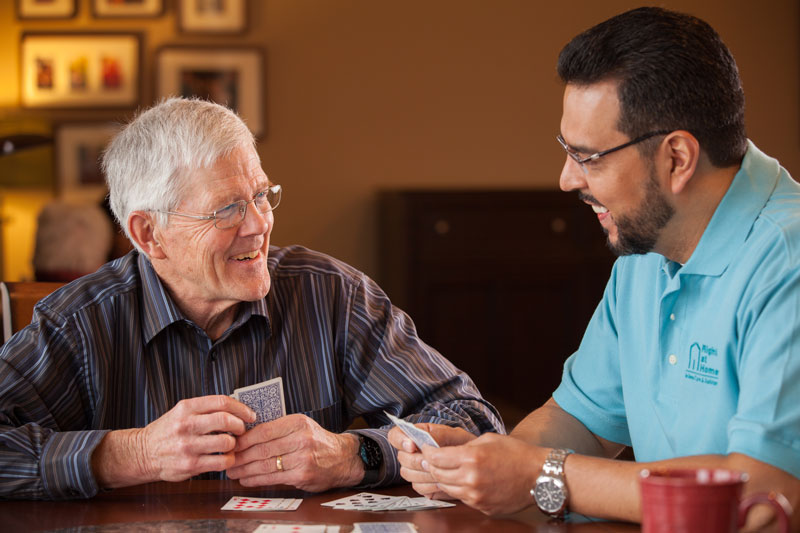
In-home caregivers are the extra hand to provide personalized support to a loved one in their own familiar home surroundings. Home care can be part time, full time or live-in assistance ranging from light housekeeping and meal preparation to personal grooming and toileting. At-home caregivers can provide care services such as being a companion who helps write the grandchildren to driving the care client to medical appointments and to complete errands.