

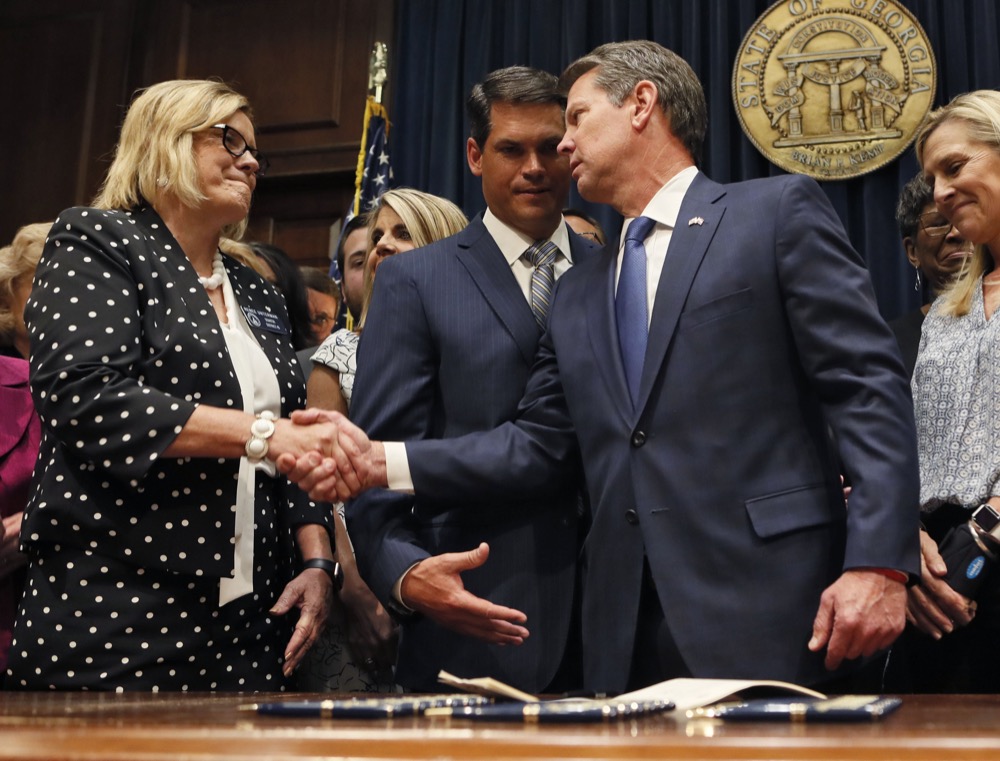
 Georgia s Republican Gov. Brian Kemp, right, shakes hands with state Sen. Renee Unterman, R-Buford, after signing legislation, Tuesday, May 7, 2019, in Atlanta, banning abortions once a fetal heartbeat can be detected, which can be as early as six weeks before many women know they re pregnant. Kemp said he was signing the bill to ensure that all Georgians have the opportunity to live, grow, learn and prosper in our great state. (Bob Andres/Atlanta Journal-Constitution via AP)
Four of the world’s biggest entertainment companies say they may stop, or at least limit, making movies and television shows in Georgia if the state’s new abortion law takes effect.
Officials with Netflix, Disney, WarnerMedia and Comcast’s NBCUniversal said in separate statements and interviews that the spread of anti-abortion bills, if upheld by the courts, might encourage them to go to other states to produce their films and TV shows.
Earlier this month Georgia’s governor, Brian Kemp, signed a bill that would ban abortions if a fetal heartbeat can be detected, usually at about six weeks of pregnancy. The restrictive new law, should it survive court challenges from the ACLU and women’s rights groups, is set to take effect on January 1.
Disney CEO Bob Isner said Georgia’s abortion law, “would strongly impact our decision-making on where we produce our content in the future.”
“I think many people who work for us will not want to work there, and we will have to heed their wishes in that regard. Right now, we are watching it very carefully,” Iger told Reuters news service.