
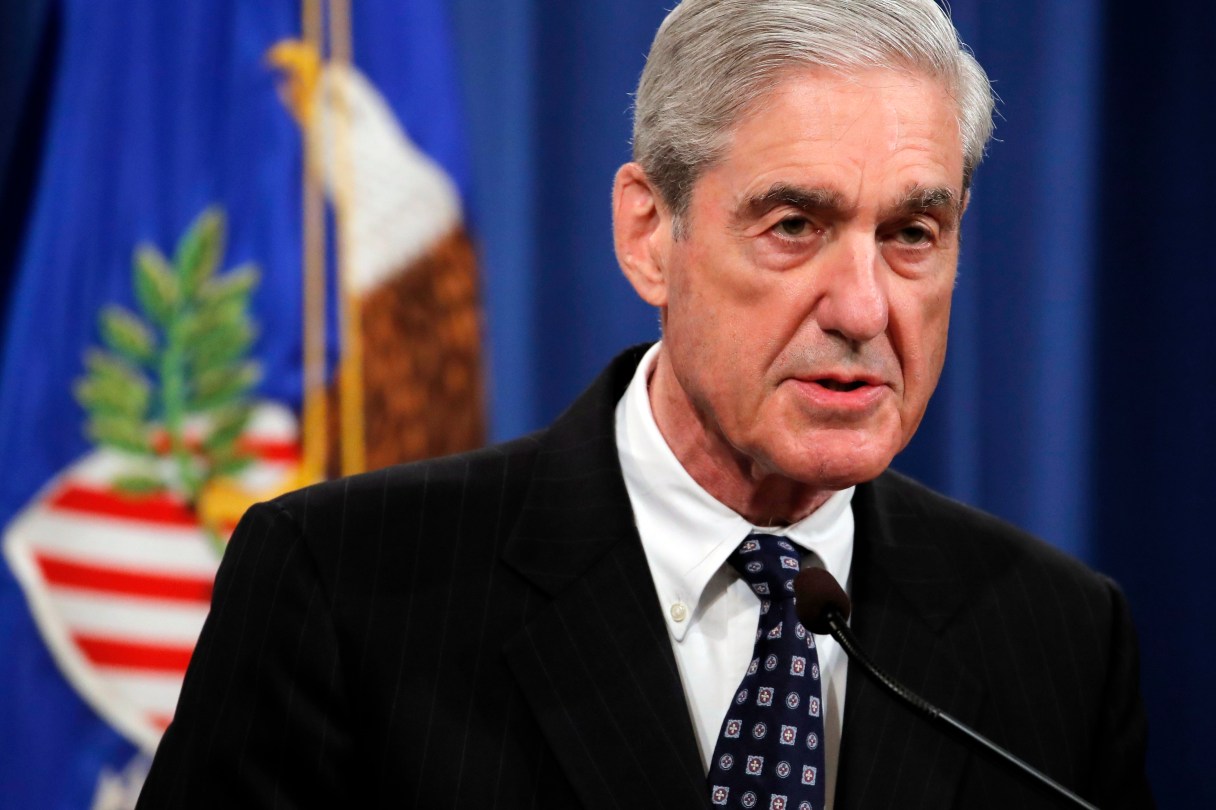

The verbal gymnastics surrounding Special Counsel Robert Mueller’s words on Wednesday about his investigation of Russian interference in the 2016 election remind us of some uttered the last time Congress was sniffing around impeachment charges.
Those would be President Clinton’s during his grand jury testimony on his relationship with White House intern, Monica Lewinsky: “It depends on what the meaning of the word ‘is’ is.”
Mueller, during part of his brief public utterance on his two-year investigation, said Wednesday his report did not exonerate President Donald Trump from potential obstruction of justice charges, and if it could have exonerated him, it would have.
Those words made Democrats leap with excitement, believing they now had something they could take to the bank. But they did not.
What they had was the special counsel saying the very same thing Attorney General William Barr said on March 24, summarizing the special counsel’s report.
His four-page letter, for amped Democrats who may have forgotten, said “while this report does not conclude that the President committed a crime, it also does not exonerate him.”
Hours after Mueller’s live words, representatives from his now-closing office and the Justice Department issued a joint statement.
“The Attorney General has previously stated that the special counsel repeatedly affirmed that he was not saying that, but for the [Office of Legal Counsel] opinion, he would have found the president obstructed justice.
“The special counsel’s report and his statement [Wednesday] made clear that the office concluded it would not reach a determination – one way or the other – about whether the president committed a crime. There is no conflict between these statements.”
In other words, even if the Office of Legal Counsel had not said the president could not be charged, Mueller would not have done so.
“We did not, however, make a determination whether the president did commit a crime,” the special counsel said earlier in the day.
Plain enough.
Perhaps just hearing Mueller say the words himself, though, made pundits and Trump haters believe they heard something they did not.
As such, impeachment talk, which had been tamped down by some party loyalists, made its way back into the headlines.
“What Robert Mueller basically did,” said Sen. Kamala Harris, D-California, a 2020 presidential candidate, “was return an impeachment referral.”
“[O]bstruction of justice … is a serious crime that strikes at the core of our justice system,” said House Judiciary Chairman Rep. Jerry Nadler, D-New York, and that “the Constitution points to Congress to take action to hold the president accountable for his misconduct.”
House Speaker Rep. Nancy Pelosi, D-California, who understands the serious implications for Democrats if they take such a path, tried to continue the long game.
“The decision to go down this path,” she said, “will be determined by the facts and where they take us.”
By that, Pelosi means House Democratic committees will continue to look for evidence the special counsel’s probe, involving 2,800 subpoenas, 500 witnesses, 500 search-and-seizure warrants and nearly 300 records of electronic communication, did not find. It’s why they also have desperately tried to get years of Trump’s income tax returns, looked into his children’s activities and wanted to know more about his business transactions.
If they can find hard evidence of an overdue library book he borrowed when he was 7, it’s likely they’d slap a “high crimes and misdemeanors” tag on it and charge ahead with impeachment proceedings.
Democrats, as we’ve said before, should have learned lessons from the Republicans’ pursuit of Clinton two decades ago.
When many Americans believe, despite what they think about a president’s personal liabilities, that he is trying to pursue an agenda to make things better for his fellow citizens, they’re not in favor of deposing him. Indeed, as with the former Arkansas president, trying to get rid of him only made him more popular.
Democrats also should understand that a Republican Senate, unless it learns something untoward about Trump it doesn’t already know, isn’t going to convict the president of things he may have said or suggested in private about a crime – colluding with Russia – that didn’t occur.
So the longer they go down the impeachment road, the less support they’re likely to find. And they can parse Mueller’s words as many times and in as many ways as they’d like, but they’re never going make them say what they’d like them to say – that the president committed an offense or offenses that are impeachable. And they’re never going to change the result of the 2016 election, their anger over which set this whole sordid affair in motion in the first place.