
TEHRAN, Iran (AP) – Iran on Monday broke further away from its collapsing 2015 nuclear deal with world powers by doubling the number of advanced centrifuges it operates, linking the decision to U.S. President Donald Trump’s withdrawal from the agreement over a year ago.
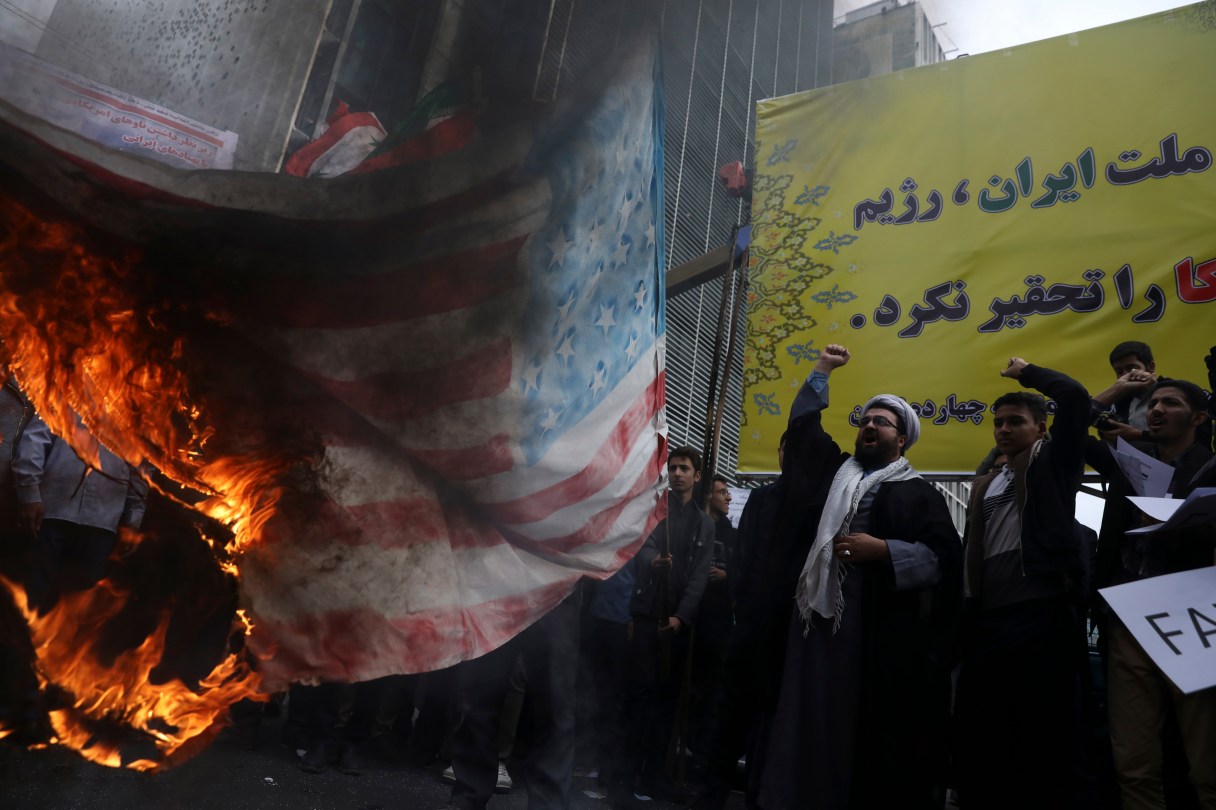
The announcement – which also included Iran saying it now has a prototype centrifuge that works 50 times faster than those allowed under the deal – came as demonstrators across the country marked the 40th anniversary of the 1979 U.S. Embassy takeover that started a 444-day hostage crisis.
By starting up these advanced centrifuges, Iran further cut into the one year that experts estimate Tehran would need to have enough material for building a nuclear weapon – if it chose to pursue one. Iran long has insisted its program is for peaceful purposes, though Western fears about its work led to the 2015 agreement that saw Tehran limit its enrichment of uranium in exchange for the lifting of economic sanctions.
Tehran has gone from producing some 450 grams (1 pound) of low-enriched uranium a day to 5 kilograms (11 pounds), said Ali Akbar Salehi, the head of the Atomic Energy Organization of Iran. Iran now holds over 500 kilograms (1,102 pounds) of low-enriched uranium, Salehi said. The deal had limited Iran to 300 kilograms (661 pounds).
Visiting Iran’s underground Natanz enrichment facility, Salehi dramatically pushed a button on a keyboard to start a chain of 30 IR-6 centrifuges as state television cameras filmed, increasing the number of working centrifuges to 60.