
Adaptive cruise control, once only seen on luxury vehicles, has now become increasingly available on entry-level models. For example, nearly every new Honda and Toyota vehicle comes with this feature as standard equipment. Five years ago, hardly any of them offered it, even as an option.
But not all adaptive cruise systems are made alike. While the overall goal is to keep you at a set speed and distance from the vehicle in front, there are key differences in the technology that car shoppers should be aware of.
HOW ADAPTIVE CRUISE CONTROL WORKS
Traditional cruise control allows you to set a fixed speed, thereby allowing you to take your foot off the gas pedal. Adaptive cruise control, also known as dynamic cruise or smart cruise, goes further by detecting and reacting to the vehicles ahead of you. How it goes about this varies by the automaker and the type of technology used, which ranges from radar-based systems to those with sophisticated cameras.
You set a speed and following distance, which is usually in increments of car lengths. If a vehicle within the set following distance slows down, your vehicle will automatically slow down as well to maintain that set distance. When the vehicle in front speeds up, your vehicle will automatically speed up to keep the same distance. It will only accelerate up to the cruise control speed limit that you set, however.
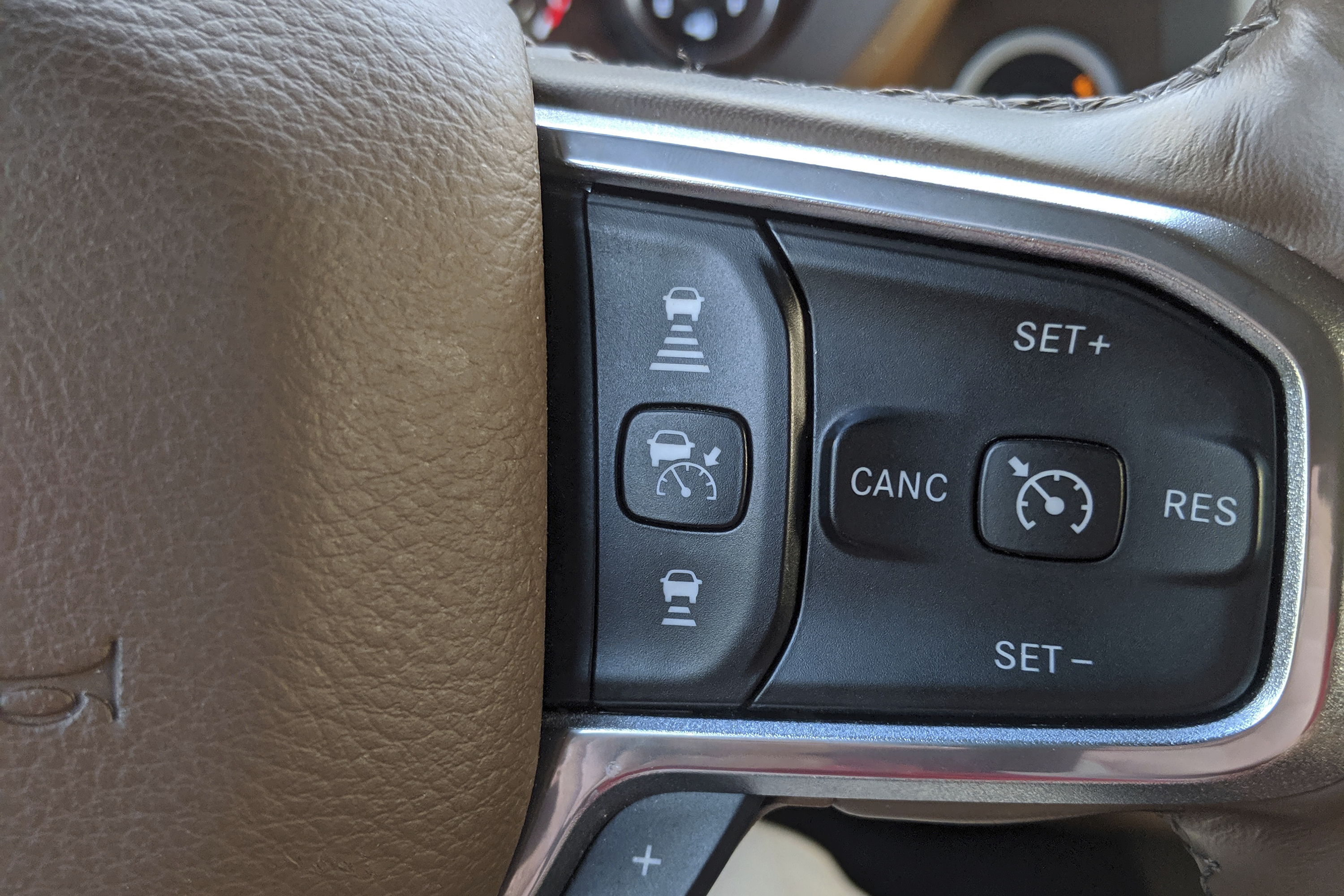 This undated photo provided by Edmunds shows a typical set of controls to set and change the following distance of adaptive cruise control. Adaptive cruise control, once only seen on luxury vehicles, has now become increasingly available on entry-level models. (Rex Tokeshi-Torres/Edmunds via AP)
HOW THEY DIFFER
The systems will differ based on the automaker-programmed behaviors and the sensors on the vehicle. Here are some of the key differences.
– Following distance: Automakers can have varying interpretations of a car length. On the BMW 5 Series for example, it will be closer to one-and-a-half car lengths. More basic systems will be more conservative by following two car lengths behind, as seen in the Lexus GS.
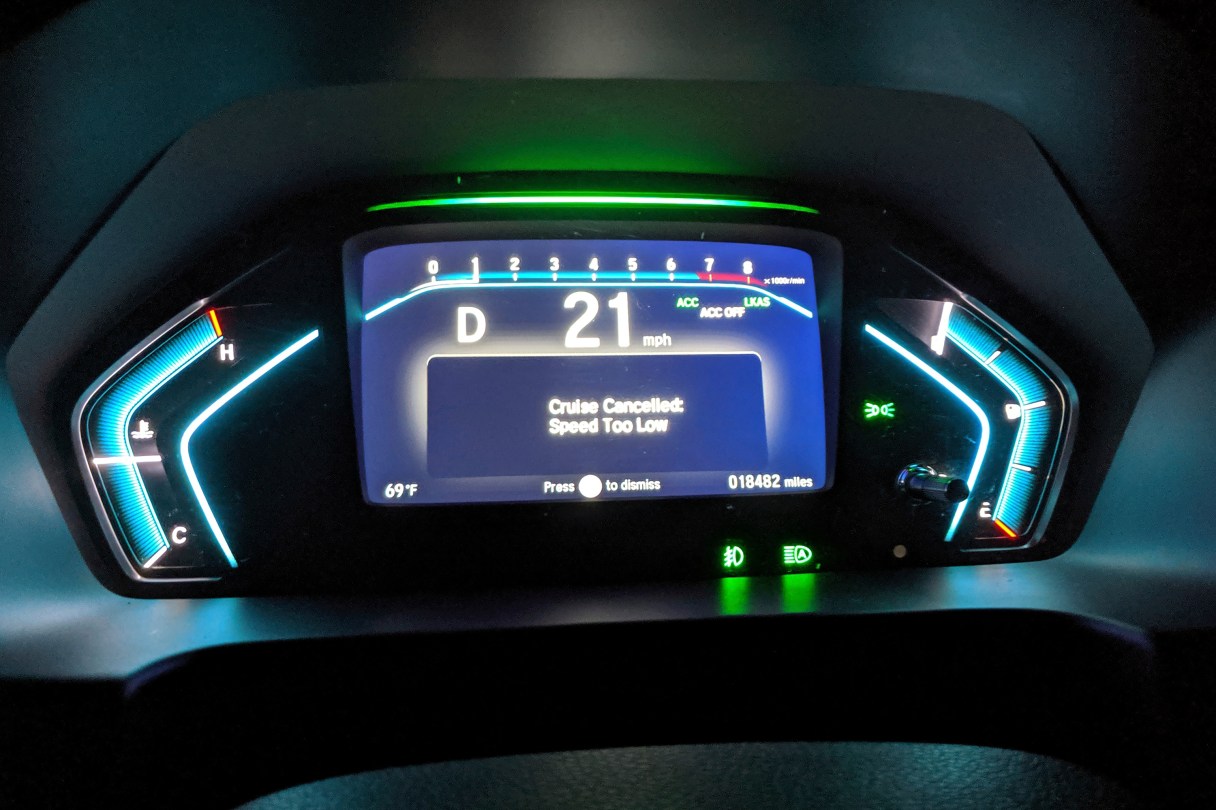
– Minimum speed setting: Some allow you to set the speed at a minimum of 15 mph (or even lower), while others require a minimum of 25 mph and above before you can engage the adaptive cruise, like with the Honda Odyssey.
– Reaction times: Some systems will operate smoothly and naturally, much like a good human driver would. Others can be overly lurchy when applying the brakes or aggravatingly slow when it’s time to accelerate.
– Stop-and-go traffic behavior: When following a vehicle at a set distance, some systems are able to slow down and come to a complete stop like the Volkswagen Atlas with “ACC with Stop and Go,” while others deactivate adaptive cruise if you drop below 25 mph, like the aforementioned Odyssey. Systems that come to a stop might require the driver to push a button or the gas pedal to get going again.
– Predictive/reactionary capabilities: More advanced systems can also see the lanes next to you and begin to slow down when they sense a vehicle beginning to merge into your lane.