
Thursday, November 12, 2026Nov 12

Iran’s top leader warns ‘thugs’ as protests reach 100 cities

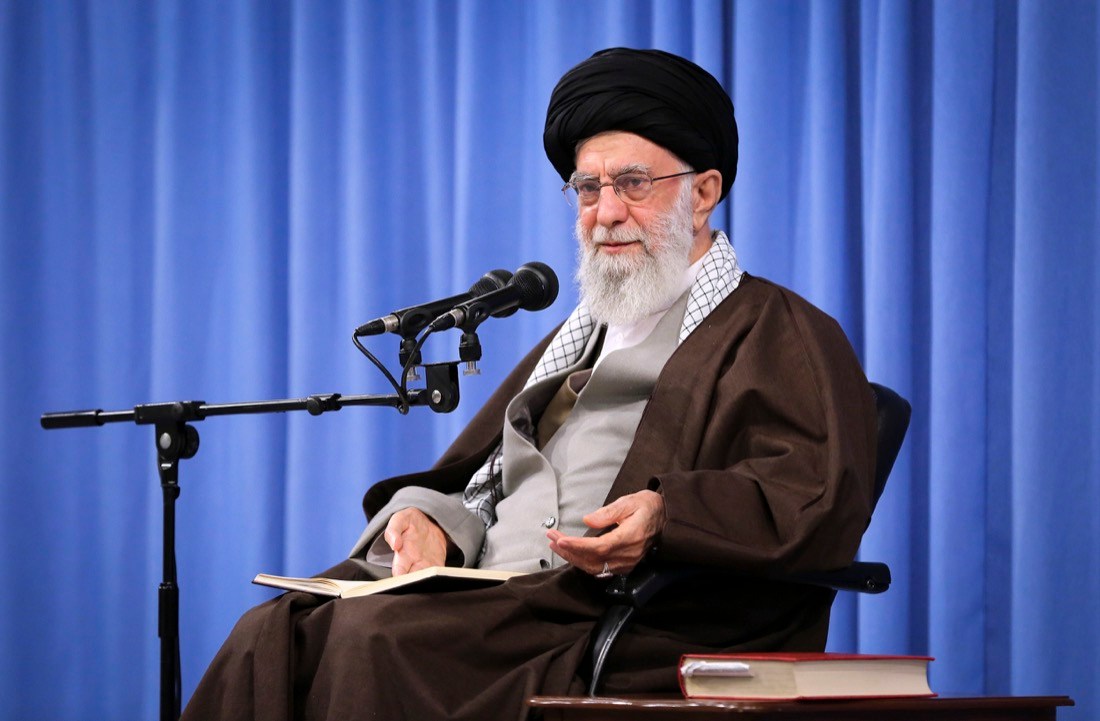
In this picture released by an official website of the office of the Iranian supreme leader, Supreme Leader Ayatollah Ali Khamenei talks to clerics in his Islamic thoughts class in Tehran, Iran, Sunday, Nov. 17, 2019. Iran's supreme leader on Sunday backed the government's decision to raise gasoline prices and called angry protesters who have been setting fire to public property over the hike "thugs," signaling a potential crackdown on the demonstrations. (Office of the Iranian Supreme Leader via AP)
In this picture released by an official website of the office of the Iranian supreme leader, Supreme Leader Ayatollah Ali Khamenei talks to clerics in his Islamic thoughts class in Tehran, Iran, Sunday, Nov. 17, 2019. Iran's supreme leader on Sunday backed the government's decision to raise gasoline prices and called angry protesters who have been setting fire to public property over the hike "thugs," signaling a potential crackdown on the demonstrations. (Office of the Iranian Supreme Leader via AP) In this picture released by an official website of the office of the Iranian supreme leader, Supreme Leader Ayatollah Ali Khamenei talks to clerics in his Islamic thoughts class in Tehran, Iran, Sunday, Nov. 17, 2019. Iran's supreme leader on Sunday backed the government's decision to raise gasoline prices and called angry protesters who have been setting fire to public property over the hike "thugs," signaling a potential crackdown on the demonstrations. (Office of the Iranian Supreme Leader via AP)

DUBAI, United Arab Emirates (AP) – Iran’s supreme leader on Sunday cautiously backed the government’s decision to raise gasoline prices by 50% after days of widespread protests, calling those who attacked public property during demonstrations “thugs” and signaling that a potential crackdown loomed.

The government shut down internet access across the nation of 80 million people to staunch demonstrations that took place in a reported 100 cities and towns. That made it increasingly difficult to gauge whether unrest continued. Images published by state and semiofficial media showed the scale of the damage in images of burned gas stations and banks, torched vehicles and roadways littered with debris.

Since the price hike, demonstrators have abandoned cars along major highways and joined mass protests in the capital, Tehran, and elsewhere. Some protests turned violent, with demonstrators setting fires as gunfire rang out.

It remains to be seen how many people were arrested, injured or killed. Videos from the protests have shown people gravely wounded.

Iranian authorities on Sunday raised the official death toll in the violence to at least three. Attackers targeting a police station in the western city of Kermanshah on Saturday killed an officer, the state-run IRNA news agency reported Sunday. A lawmaker said another person was killed in a suburb of Tehran. Earlier, one man was reported killed Friday in Sirjan, a city some 800 kilometers (500 miles) southeast of Tehran.