
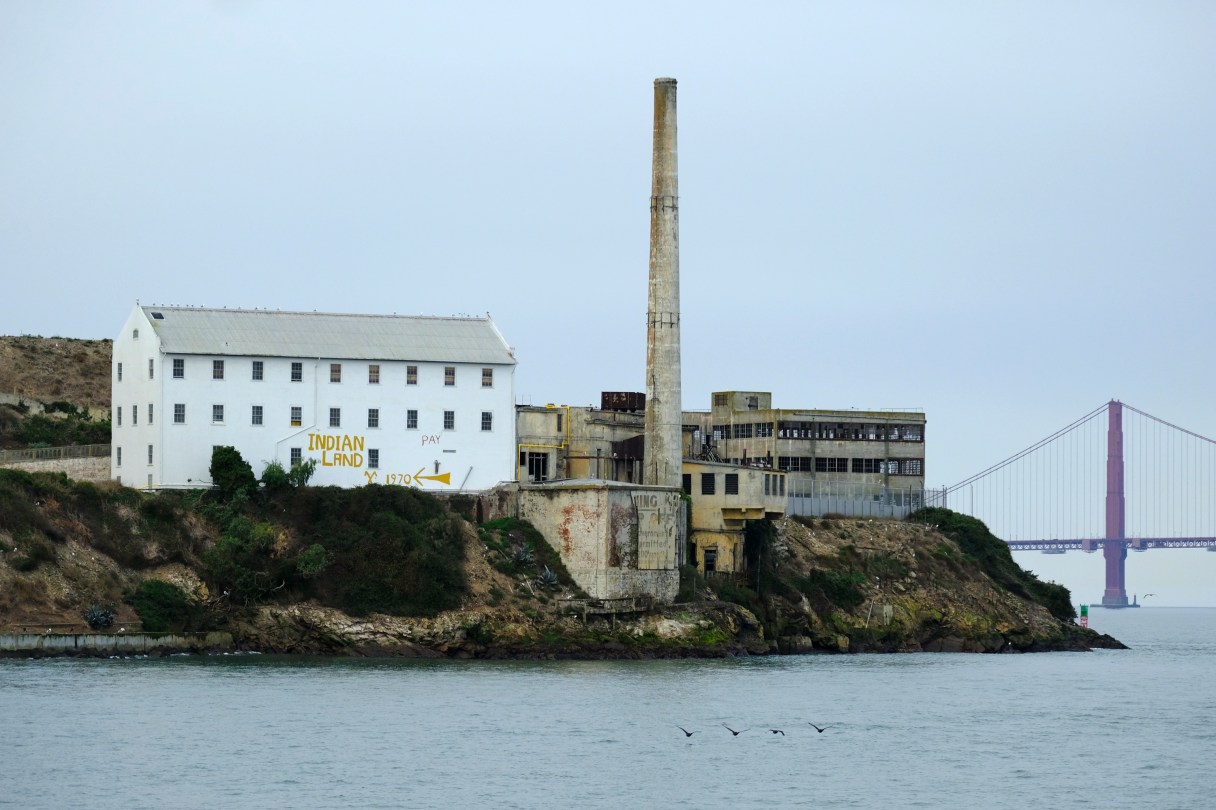
FLAGSTAFF, Ariz. – On a chilly November night 50 years ago, a 7-year-old Peter Bratt and his four siblings accompanied their single mother from their San Francisco home for the pier. From there, they joined a group of indigenous activists on a small boat, bobbing in fog and rolling over what felt like tidal waves.
They eventually landed at their destination – Alcatraz Island. At first, all the young boy could see was a vast, “magical” playground. He and other children roamed the beaches, literally blazing their own trails. They explored buildings that had once housed prisoners, including Native Americans incarcerated there nearly a century earlier. It didn’t matter that there was no electricity or running water.
Despite his age, Bratt quickly comprehended the adventure was the start of a movement. The adults banded together to take back a body of land that they felt didn’t belong to the U.S. government to begin with.
“I remember seeing these young Indian people from all over the country shouting to the world, ‘Red Power! You’re on Indian land,'” said Bratt, 57, and the older brother of actor Benjamin Bratt. “Whoa, that was a game changer. I felt like I was finally home.”
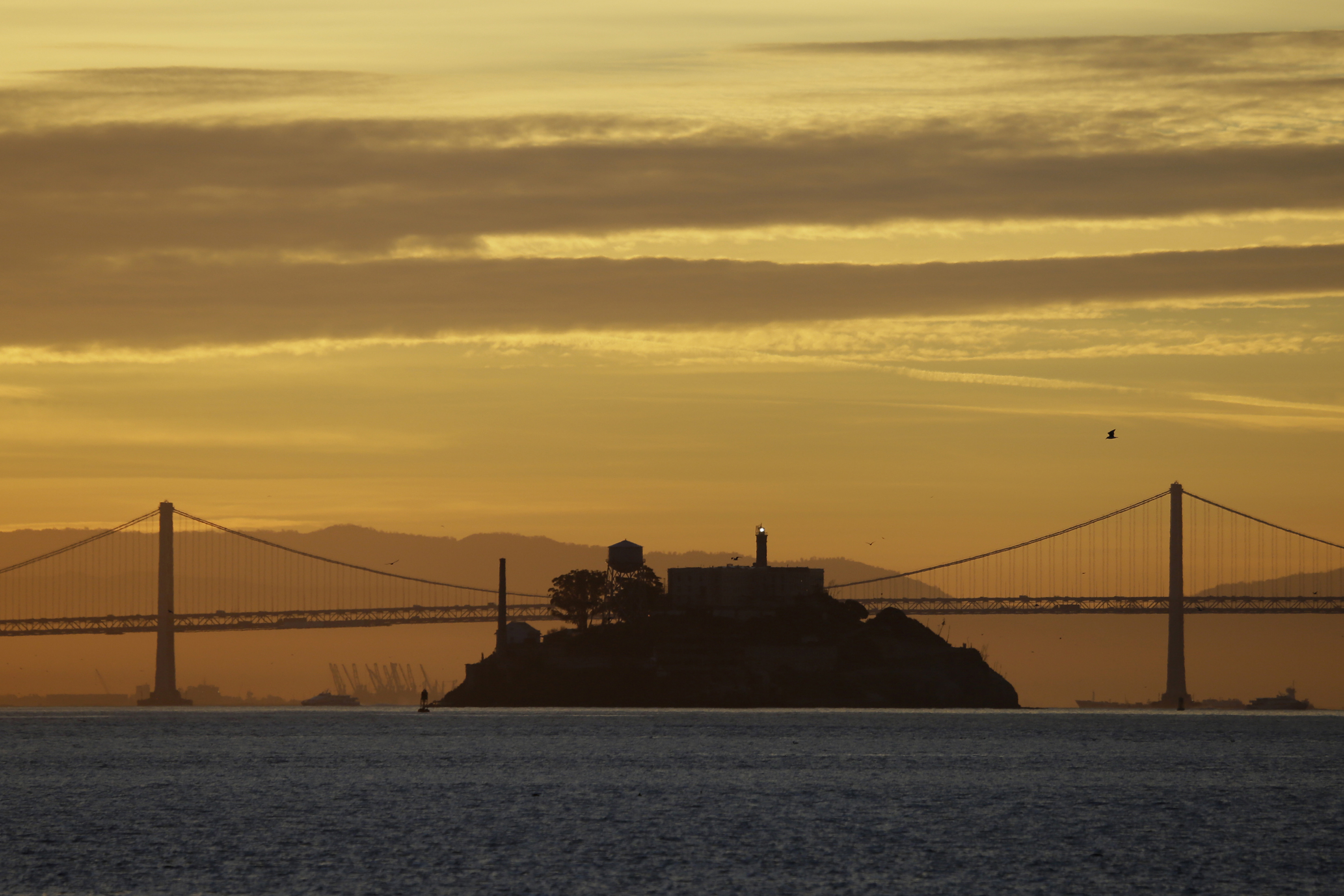 In this photo taken Feb. 1, 2018, Alcatraz Island is seen at sunrise on San Francisco Bay in this view from Sausalito, Calif. In the background is the San Francisco-Oakland Bay Bridge. The week of Nov. 18, 2019, marks 50 years since the beginning of a months-long Native American occupation at Alcatraz Island in the San Francisco Bay. The demonstration by dozens of tribal members had lasting effects for tribes, raising awareness of life on and off reservations, galvanizing activists and spurring a shift in federal policy toward self-determination. (AP Photo/Eric Risberg)
The 19-month occupation of Alcatraz, which started Nov. 20, 1969, is widely seen as a seminal event that reinvigorated tribes to organize in the face of a U.S. government steamrolling over their land, their rights and their identities. Many Native American activists today said they are still struggling to have their voices not only heard but respected. They point to recent examples like their ongoing fight against a proposed oil pipeline near the Standing Rock Reservation in North Dakota that they argued would contaminate water. President Donald Trump went on to permit it early in his term.
Alcatraz was the beginning of something, according to Bratt. His mother was among those keeping the momentum going. Their San Francisco home became a haven for Native American activists who were fighting for everything from fishing rights to treaty recognition. It also provided heroes for younger Natives beyond figures in history books.
“I think movements and events like Alcatraz and the Wounded Knee standoff, I think they gave us new role models and new warriors to look up to,” said Bratt, who visited Alcatraz earlier this month.
The 21-acre rock in the middle of San Francisco Bay was a federal prison for 29 years. Native Americans made up some of its population as far back as the 1870s, when it was a military prison, including 19 Hopi men incarcerated in 1895 after resisting cultural assimilation, according to the National Park Service.
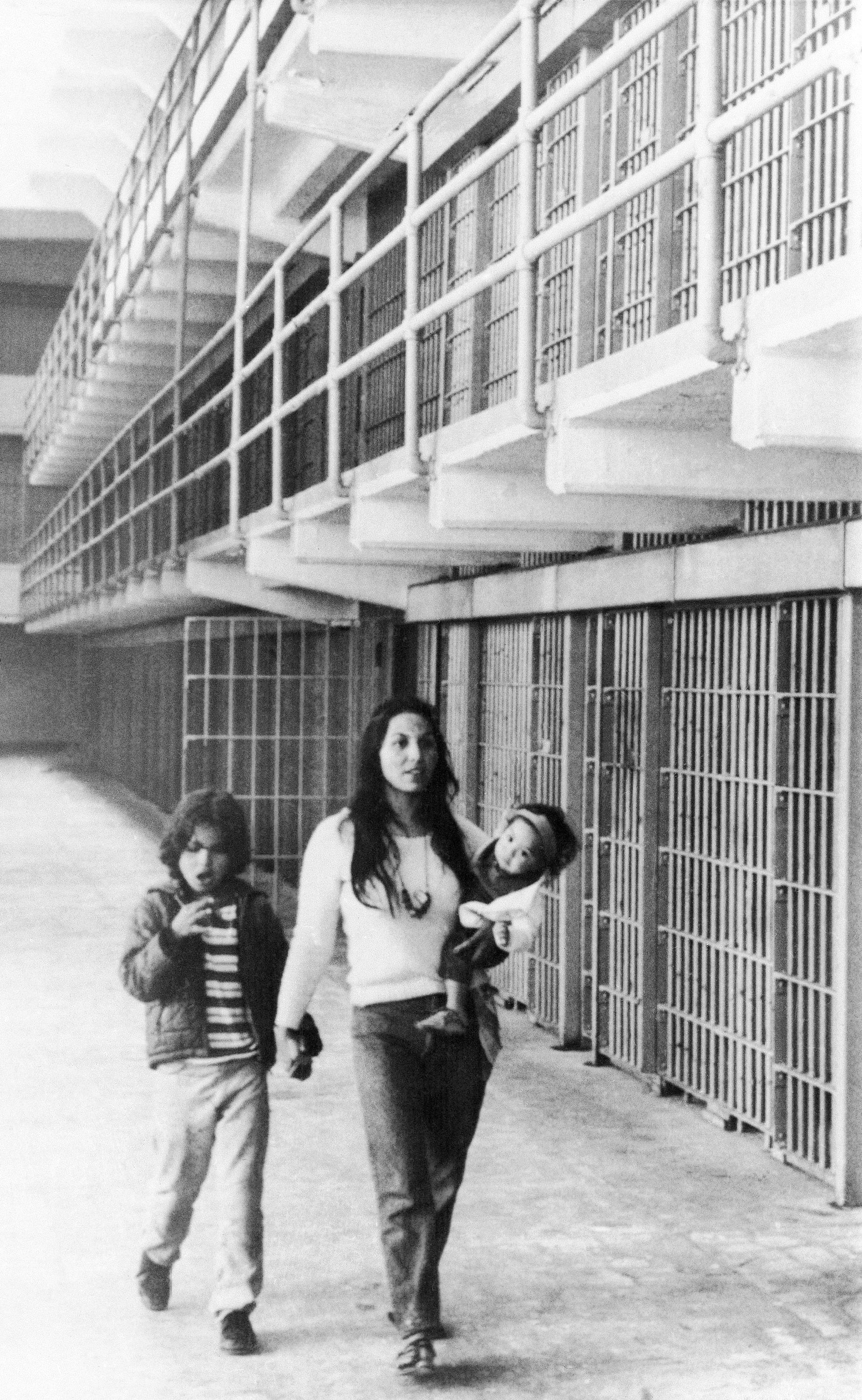 In this photo taken March 26, 1970, Eldy Bratt, 33, walks down the lonely corridor of a cell block on Alcatraz with her son Peter Bratt, left, and one of her daughters in San Francisco. The week of Nov. 18, 2019, marks 50 years since the beginning of a months-long Native American occupation at Alcatraz Island in the San Francisco Bay. The demonstration by dozens of tribal members had lasting effects for tribes, raising awareness of life on and off reservations, galvanizing activists and spurring a shift in federal policy toward self-determination. (AP Photo/Richard Drew, File)
Occupiers argued they had a right to Alcatraz under an 1868 treaty the U.S. government signed with the Sioux that said abandoned government land would be returned to indigenous people. The prison at Alcatraz closed in 1963 and was declared surplus property, a necessary step in selling it or transferring ownership.
Donations came in from around the world, and the occupiers set up a clinic, a live broadcast and a school system for children on the island.
But the coalition of tribes knew it likely wouldn’t get what it wanted: the deed to Alcatraz, a museum, cultural center and university built there, sustained federal funding and a seat at the table in administering national parks.
Over time, the occupiers dwindled. Students returned to college. One of the main organizers, the late Richard Oakes, left after a few weeks when his daughter was killed in an accidental fall from a stairwell. Infighting among demonstrators created factions, and Alcatraz eventually became more of a place for transients looking for a meal and shelter. Armed federal officials removed the last of the occupiers in June 1971.
Still, the occupation marked a pivotal moment – the start of Indian activism during the civil rights movement, said John Echohawk, founder of the Native American Rights Fund.