
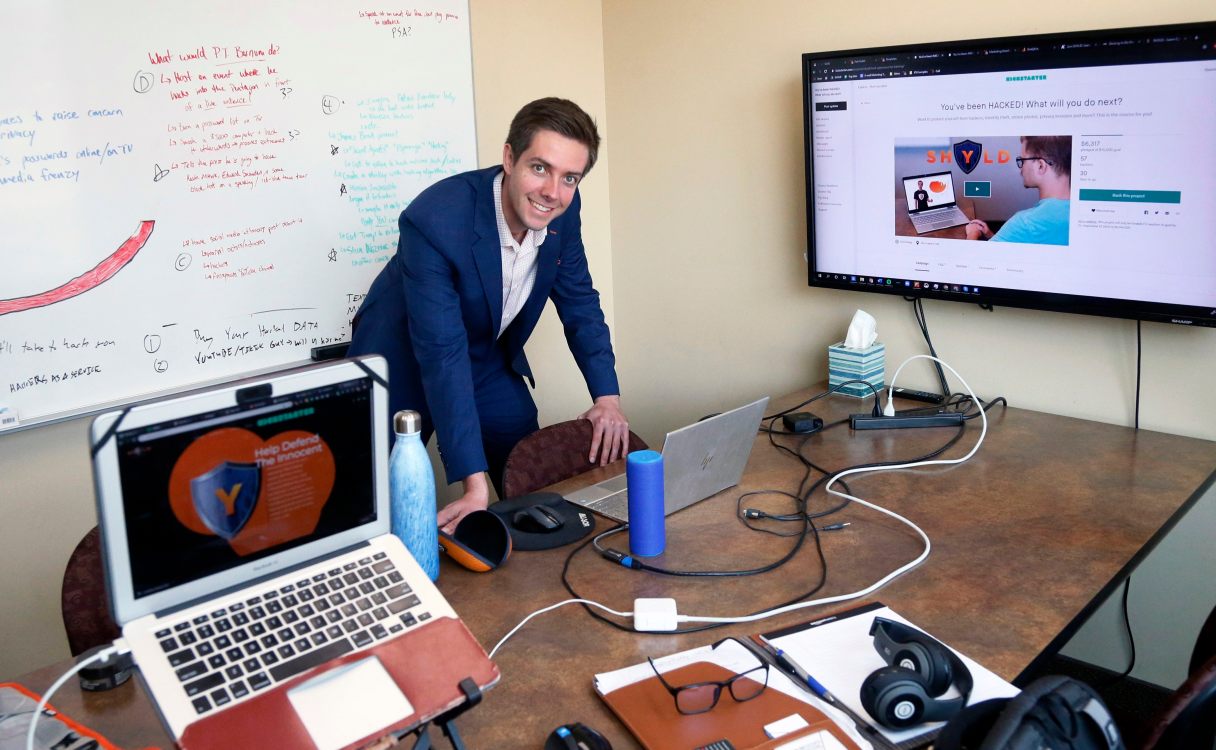
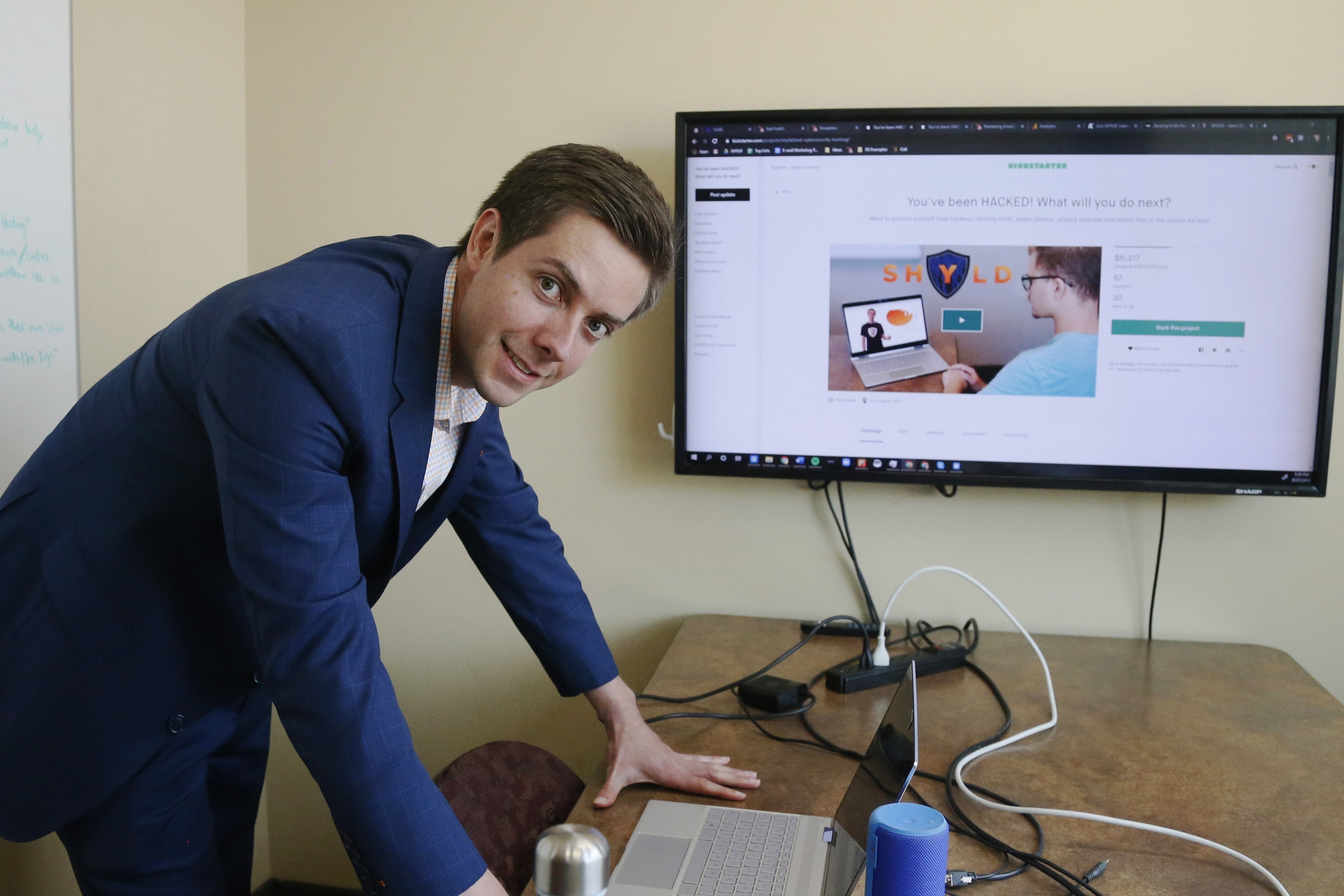
 In this Aug. 27, 2019 photo, Tyler Olson poses in hits office at the University of St. Thomas Minneapolis campus. Olson is just starting a cybersecurity company. (AP Photo/Jim Mone)
The cybercriminal who steals information or money from a small business is probably a master of deception and manipulation as well as a techno-expert.
When Nancy Butler got a call from someone claiming to be from her information technology service two years ago, she assumed it was a routine checkup by a legitimate staffer. So, as she had done many times during such calls, Butler asked the caller to confirm her account number and other information so “I could be sure they were who they said they were.”
“After everything was confirmed I let them into the computer only to find that they immediately locked me out of my computer, accessed and stole from a bank account, credit card and several online accounts,” says Butler, a business coach and motivational speaker based in Waterford, Connecticut. The thieves also demanded payment before they’d let her back into her computer – she didn’t pay, and she found an information technology company that could unlock it.
As cybercriminals step up their attacks on businesses as well as individual computer users, they’re relying more on social engineering, the practice of deceiving or manipulating someone, often with email but also with phone calls, to get personal or financial information. When a business is attacked, customer and vendor data is at risk. Cybersecurity experts say small companies are increasingly being targeted.
Phishing scams often use social engineering. The scams are usually disguised in realistic-looking emails that encourage the recipient to click on a link or attachment; that click downloads malicious software known as malware that can capture information and send it back to the criminal. The emails can look like they come from a company’s bank or another business. Phishing is also a way for ransomware, malicious software that locks up computers, to be planted on a device. While some cybercriminals target small businesses, malware can also be planted when an employee clicks on a personal email on a company machine.