
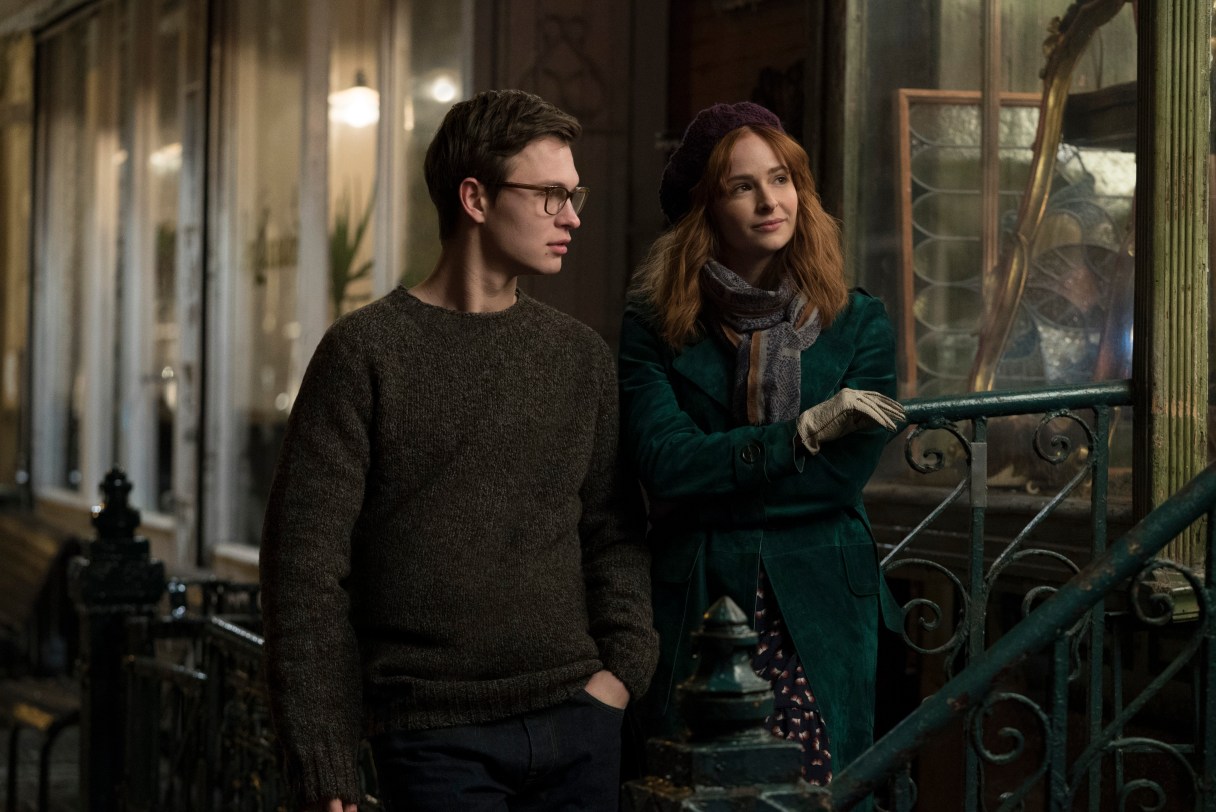
Everything is beautiful in John Crowley’s adaptation of “The Goldfinch,” even the grilled cheese sandwich that a kind stranger makes for a boy who has just lost his mother. It’s easy to get swept up by the refined stateliness surrounding this messy odyssey of grief and trauma. But like its well-pressed and repressed Anglo-Saxon protagonists, the film keeps the drama, the emotion and the catharsis at a tidy and safely compartmentalized distance, making the experience of sitting with this two and a half hour film a unique and perplexing one.
Adapted from Donna Tartt’s Pulitzer Prize-winning novel, “The Goldfinch” isn’t a failure, but it’s not a success either. It’s an ambitious effort from a hoard of talented people, including Crowley, cinematographer Roger Deakins and actors like Nicole Kidman that gets a bit lost in its literary quirks while attempting to do everything and include everyone. It’s the kind of dense, decade-spanning material that perhaps would have been better served by a miniseries like HBO has done with “My Brilliant Friend.”
But they chose the middle ground: A very long movie that requires patience, at least a little knowledge of the book and some forgiveness for the things that just don’t work at all (namely the romantic subplots). “The Goldfinch” is about a man, Theo Decker (played, at 13, by Oakes Fegley and as an adult by Ansel Elgort), who is bound by a childhood trauma that he’s never been able to convince himself was not his fault. His mother died, along with many others, in a bombing of the Metropolitan Museum of Art. The only reason they were there was because he’d been accused of smoking in school and were killing time looking at her favorite paintings before a meeting with the principal.
Two things that happen in the minutes after the devastating explosion that will come to define his life. First, a dying man asks Theo to take his ring back to his business partner Hobie (Jeffrey Wright). Then, Theo takes something else: Carel Fabritius’ 1654 painting “The Goldfinch,” which he smuggles out through the chaos and keeps as a kind of anchor of guilt and shame.
Flashing back between the aftermath of the tragedy and present day, in which Theo is a grief-wracked, drug-addled and bespoke suit wearing New York antique dealer who’s about to get married and contemplating suicide, the film saves showing the explosion till the very end. It’s an interesting storytelling choice, considering it is a prominent part of the trailer. But it may also be the thing that gets in the way of the audience connecting to Theo’s journey from the beginning.