
Monday, November 16, 2026Nov 16

Witnesses clash in Tennessee abortion wait period trial

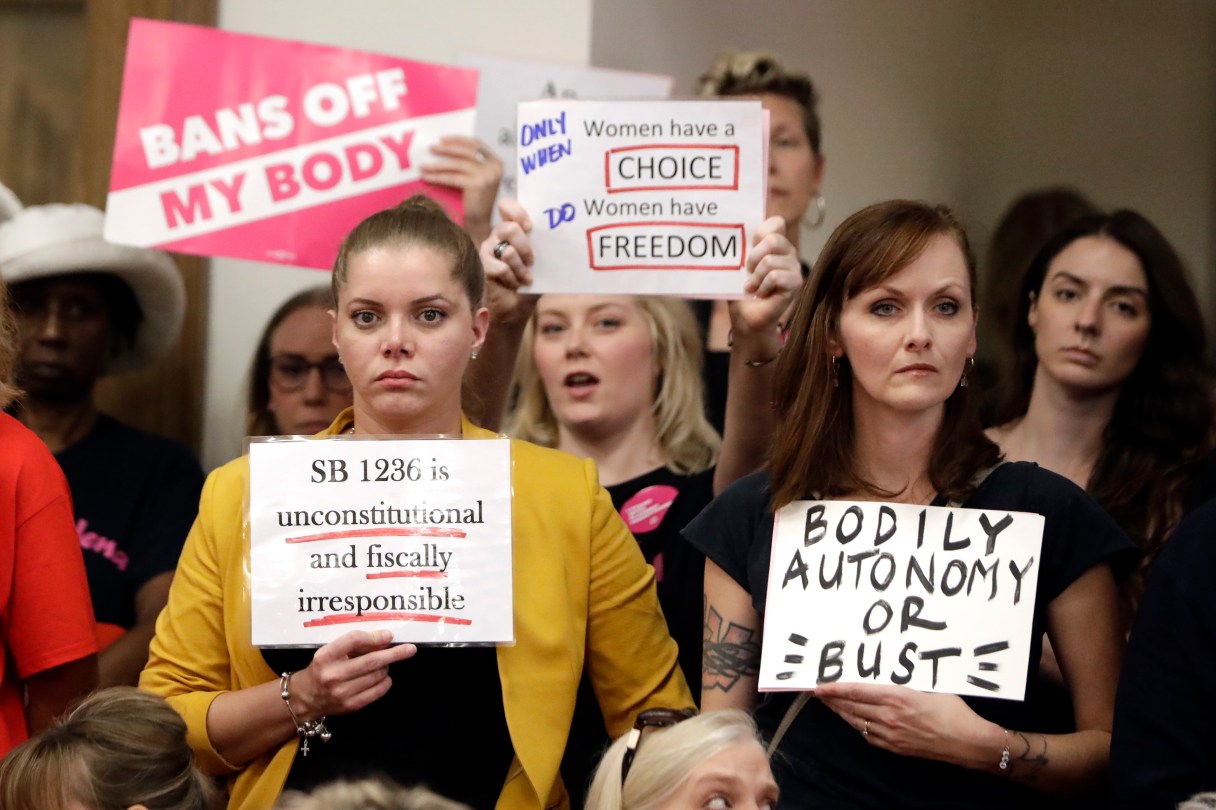
In this Aug. 12, 2019 file photo, people wait for a Senate hearing to begin to discuss a fetal heartbeat abortion ban, or possibly something more restrictive in Nashville, Tenn. Expert witnesses disagree on whether Tennessee's 48-hour waiting period before abortion helps or hinders women's decision making. Testifying in federal court on Wednesday, Sept. 25, 2019, Priscilla Coleman said women seeking abortions experience high levels of ambivalence and uncertainty. The psychology professor at Bowling Green State University said it makes sense that women should be given time to make the decision. (AP Photo/Mark Humphrey, File)

NASHVILLE, Tenn. (AP) – Expert witnesses on Wednesday presented dueling views of whether Tennessee’s 48-hour waiting period before abortion helps or hinders women’s decision making.

Five of Tennessee’s seven abortion clinics are suing in federal court in Nashville over the law, which requires women to make two separate trips to an abortion clinic, first for mandatory counselling and then for the abortion.

Testifying for the state Wednesday, Priscilla Coleman, a psychology professor at Bowling Green State University in Ohio, said research shows women seeking abortion face “fairly high levels of ambivalence and uncertainty” and a number of them experience significant stress.

Although laboratory studies concluding decision making under stressful conditions benefited from a short wait are not “directly analogous” to abortion decisions, Coleman said, she still concluded that, logically, women should be given time to make a decision about abortion.

“I think we want every woman to be as certain as possible,” she said.