
Monday, November 16, 2026Nov 16

Gene change possible cause for deadly dog-lick illness

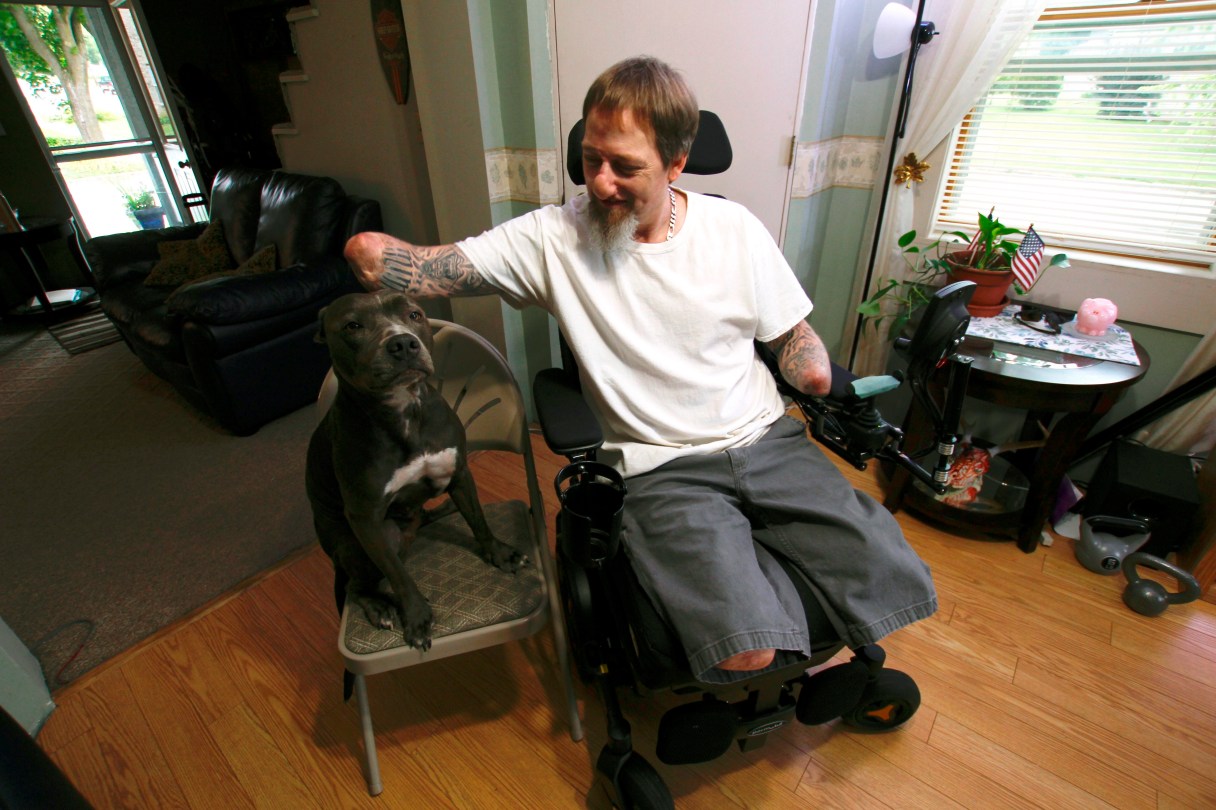
In this Aug. 16, 2019 photo, Greg Manteufel pets his dog Ellie at his home in West Bend, Wis. Manteufel lost parts of his arms and legs, as well as the skin of his nose and part of his upper lip from capnocytophaga, a bacteria commonly found in the saliva or cats and dogs that almost never leads to people getting sick, unless the person has a compromised immune system. He was perfectly healthy when he got sick in June of 2018. Over the last seven years, a team of researchers at Brigham and Women's Hospital in Boston, connected to Harvard Medical School, have tested other healthy people who were affected and developed a theory on why they were affected- a gene change in all the victims. (AP Photo/Carrie Antlfinger)

WEST BEND, Wis. (AP) – It’s hard to regard Ellie as a menace.

When Greg Manteufel is frustrated or feeling down, she sits by him. At night, she sleeps under his covers. At dinner, she’s there next to him, knowing he’ll throw something her way. She belies the stereotype of the vicious pit bull.

“We love her like she’s our daughter,” he said of the dog.

And yet, Ellie may be the reason Manteufel, 49, nearly died.

Gravely ill, he lost parts of his arms and legs, as well as the skin of his nose and part of his upper lip. The cause was capnocytophaga (cap-noh-seye-TOE’-fah-gah), a germ from Ellie’s mouth or from another dog he encountered.