
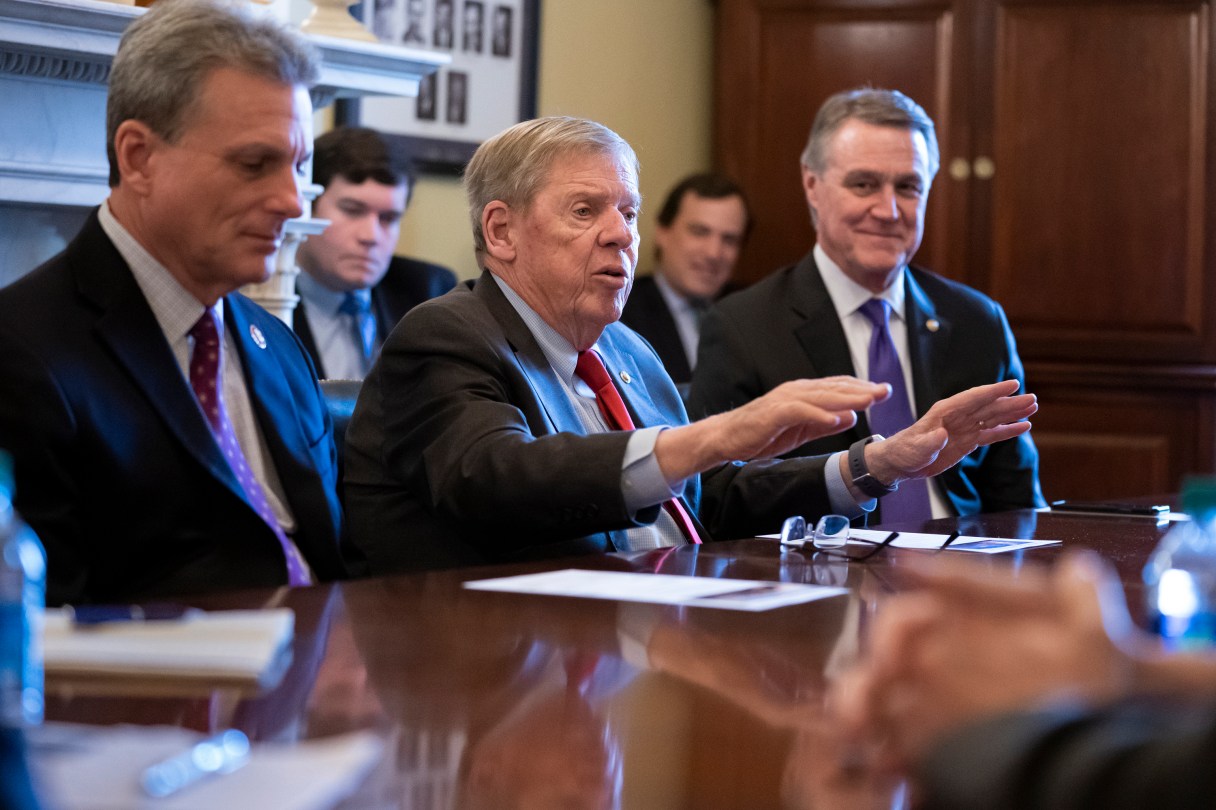
WASHINGTON – Georgia Republican Johnny Isakson plans to devote his final three months in the U.S. Senate to advancing legislation he hopes will help reset Capitol Hill’s fraught debate over gun violence.
The new measure is not a gun control bill, the three-term senator insists. The veteran dealmaker instead wants to take a public health approach to the debate, adopting tactics not unlike those deployed to reduce tobacco use or fight AIDS by collecting and analyzing data that could form the bedrock of future negotiations.
The legislation, which Isakson introduced Thursday, would set aside $75 million a year for the Atlanta-based U.S. Centers for Disease Control and Prevention to study the factors that contribute to mass violence – not just acts carried out with guns, but also knives, explosives and motor vehicles -nd formulate prevention strategies based on data patterns.
“I don’t know anybody that doesn’t feel sympathy for the parent of a child who was killed in an accident at a school or mass murder of any type,” Isakson said in a recent interview. “All of us want to stop that. And the way you stop a disease is you diagnose them and find out what causes them.”
The bill is most likely Isakson’s last shot at brokering a bipartisan deal before he resigns Dec. 31 due to health reasons, ending a political career that’s stretched for 45 years.