
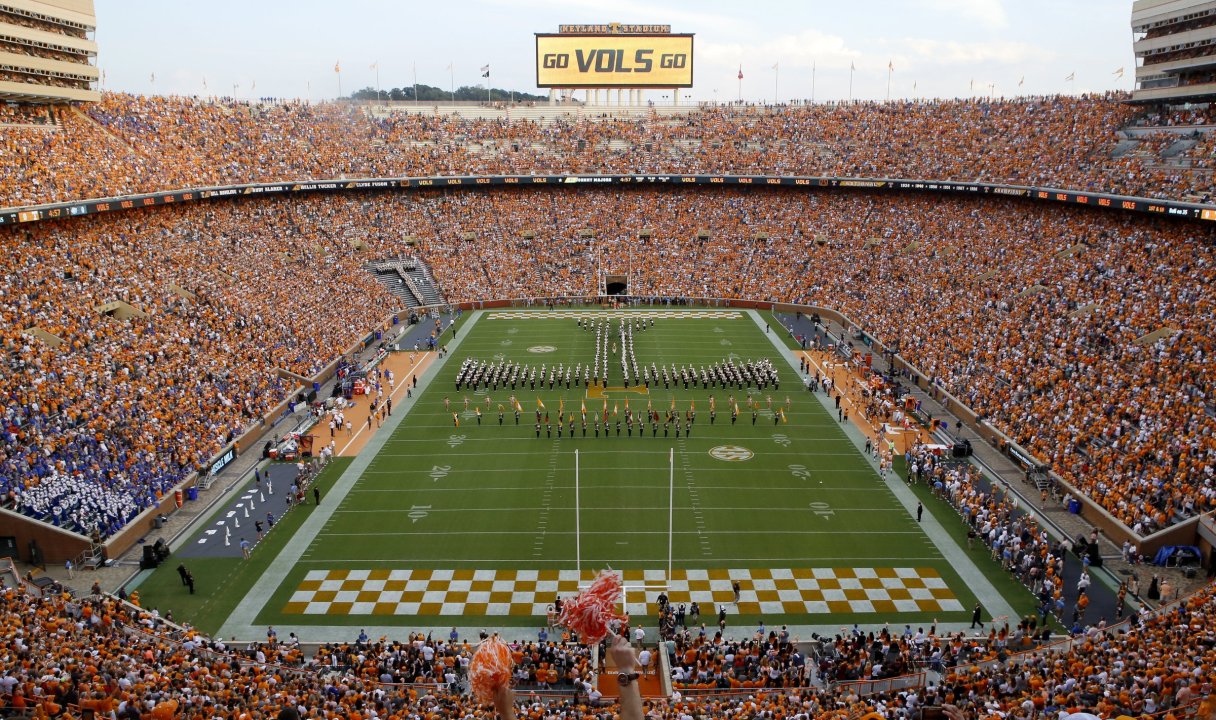

The Tennessee Volunteers capped last football season with six consecutive victories and have seven home games scheduled this year, including visits from top rivals Alabama and Florida.
It’s a 2020 season loaded with optimism for the reigning Gator Bowl champions, but it’s also a 2020 season full of uncertainty due to the ongoing COVID-19 pandemic. As timetables and scenarios are being discussed by college football officials should coronavirus concerns extend into the summer months, one congressman does not want to envision an autumn without Tennessee players running through a giant “T” formed by the “Pride of the Southland” marching band.
Tim Burchett is a Republican who represents Tennessee’s 2nd Congressional District, which includes Knoxville, Alcoa, Lenoir City and Maryville.
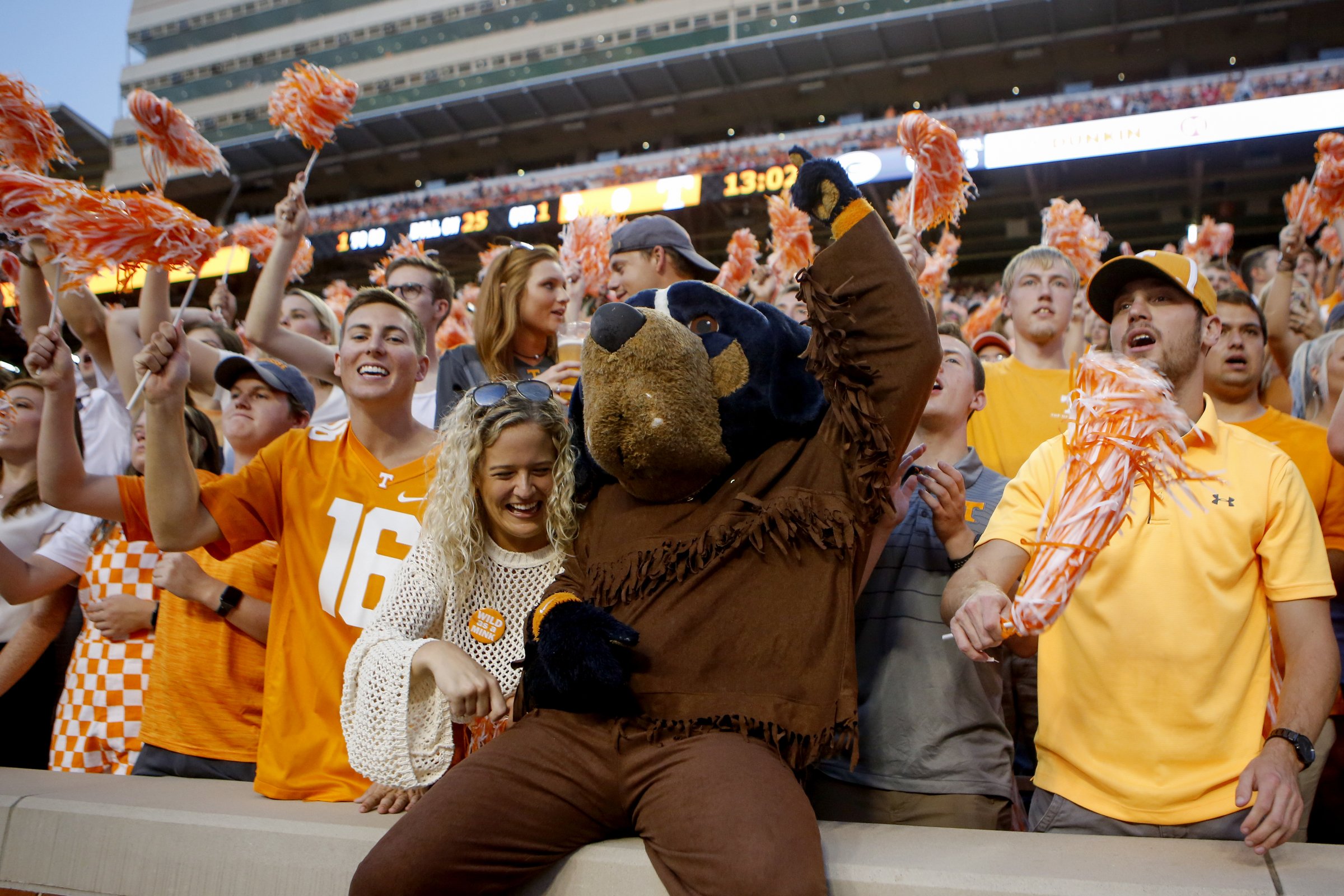 Staff photo by C.B. Schmelter / Tennessee mascot Smokey cheers with fans in the stands at Neyland Stadium during the Vols’ football game against Georgia on Oct. 5, 2019.
“Economically, it would be like an atomic bomb going off,” said Burchett, a Knoxville native who was mayor of Knox County for eight years. “It would be awful. It’s such a huge boost to our community and our area, and I think it would be even worse morale-wise. I couldn’t imagine seven Saturdays a year not being in Neyland Stadium.”
Tennessee last experienced a football hiatus in 1943, when only Georgia, Georgia Tech, LSU, Tulane and Vanderbilt fielded teams within the Southeastern Conference amid the transpiring of World War II.