
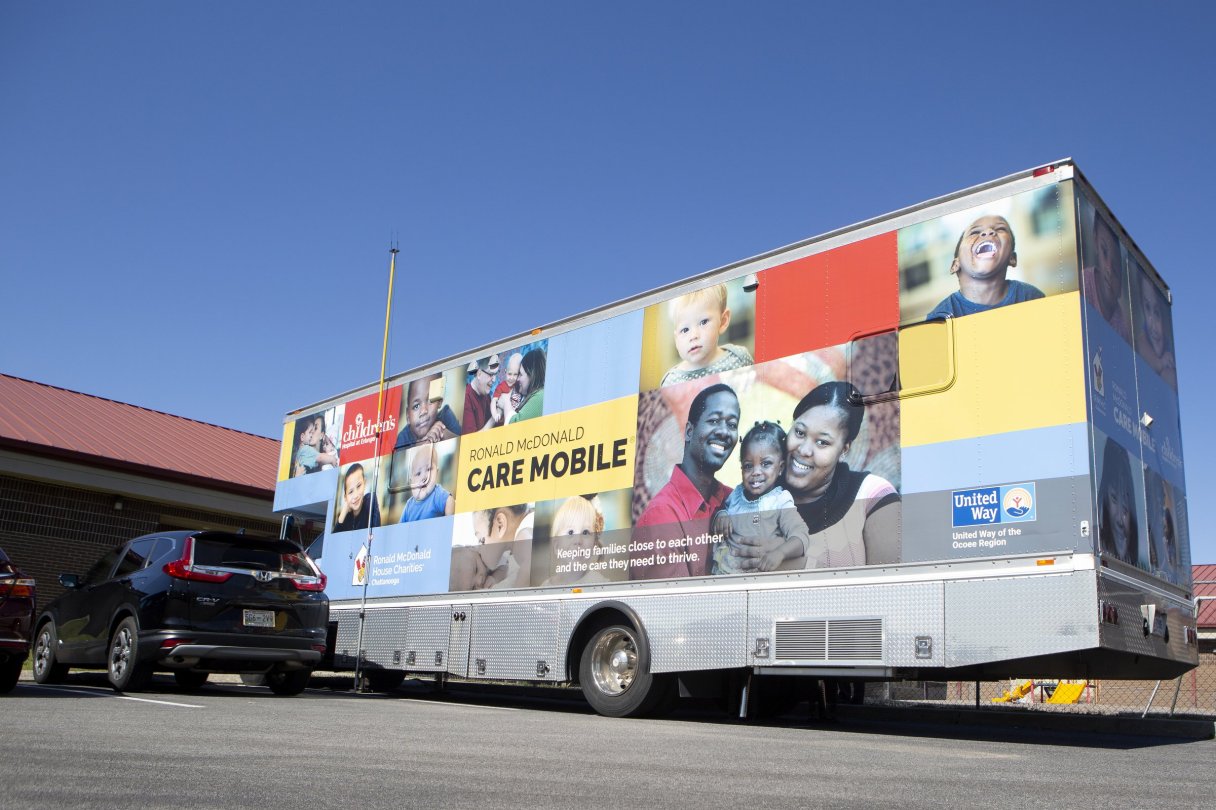
In Tennessee, where 13 hospitals have closed in the last decade (the second most of any state), public transportation is limited, chronic disease and poverty rates are high and physicians are in short supply, technology may be a person’s best chance of receiving needed care. Neighboring Georgia and Alabama face similar challenges.
Tara Padgett, director of clinical informatics and telemedicine at Floyd Medical Center – a roughly 300-bed hospital in Rome, Georgia – says the health system started using telemedicine for psychiatric services about two years ago because behavioral health specialists are in such high demand nationally.
Then, in the fall, Floyd began a “telestroke” program to connect providers in the emergency department to board certified neurologists – physicians who are experts at treating strokes.
“With a stroke patient, you need a doctor to respond very quickly,” Padgett says.
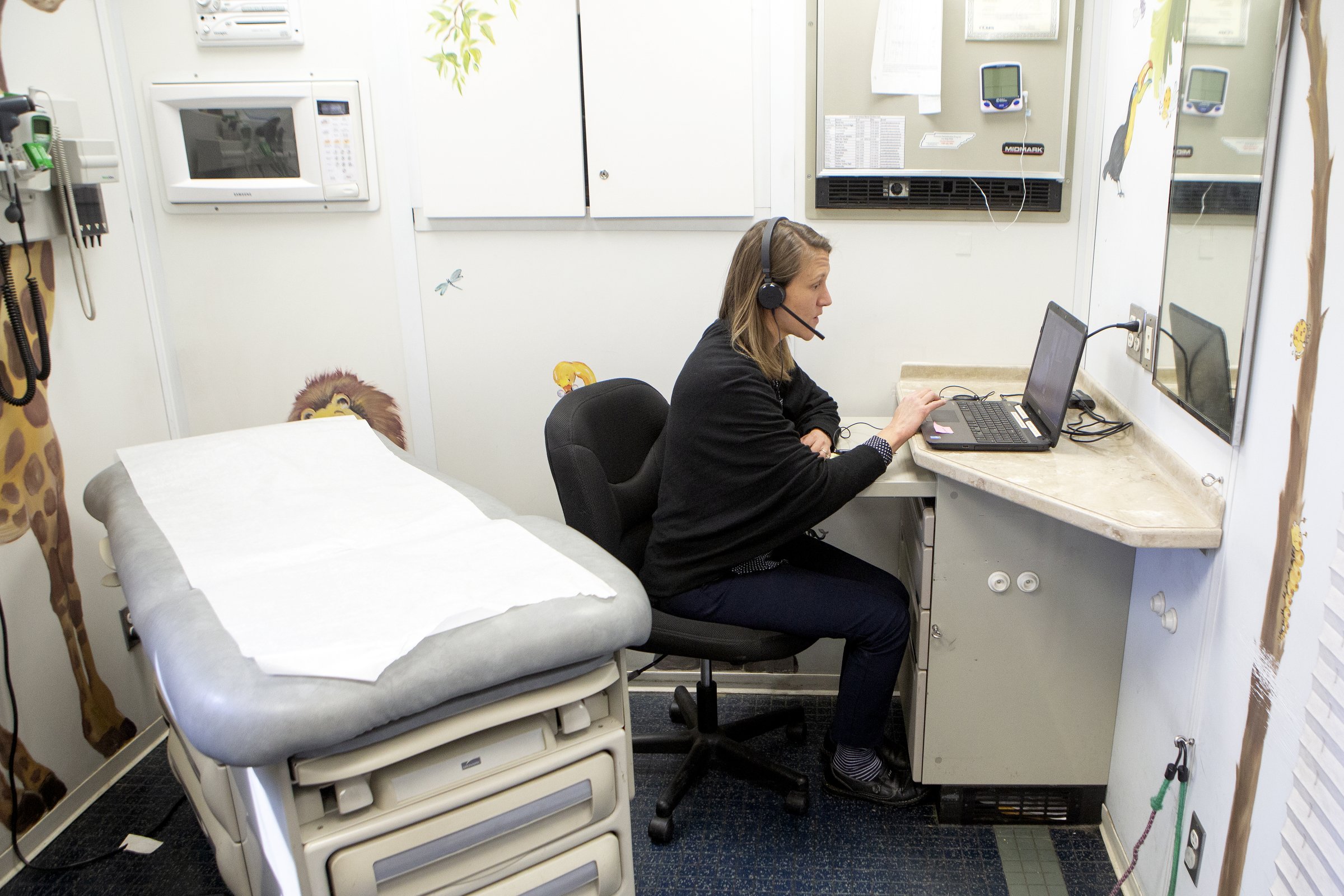 Staff photo illustration by C.B. Schmelter / Family Nurse Practitioner Natalie Pollard demonstrates her end of the telemedicine technology in the Ronald McDonald Care Mobile at Blythe-Bower Elementary School on Thursday, Feb. 27, 2020, in Cleveland, Tennessee.
During a stroke, an estimated 2 million brain cells die each minute that the brain’s blood supply is blocked. Patients have the best chance of successful recovery if providers are able to shorten the time it takes to remove the blood clot – known as the “time to needle.”