
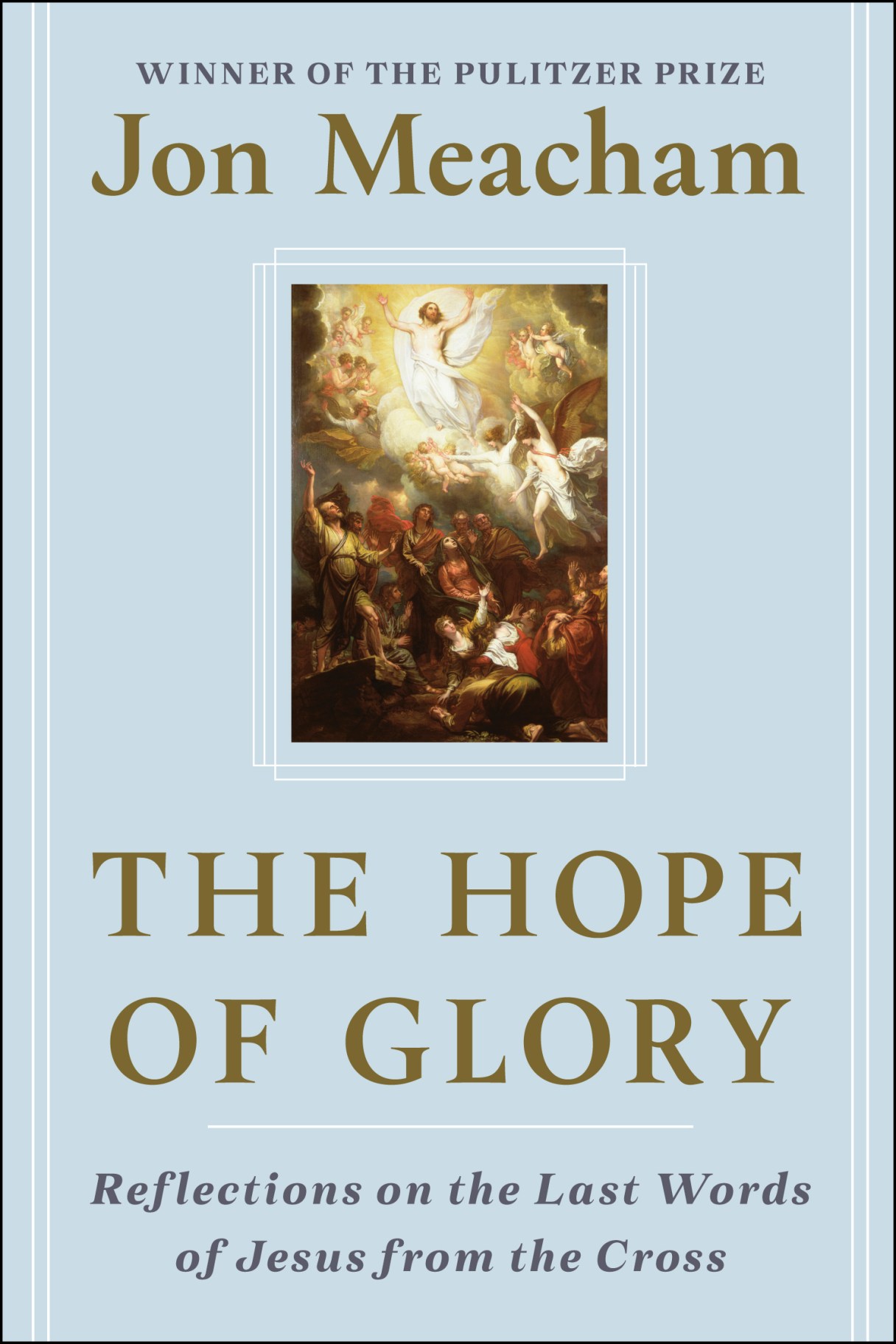
“THE HOPE OF GLORY: REFLECTIONS ON THE LAST WORDS OF JESUS FROM THE CROSS” by Jon Meacham (Convergent Books, 144 pages, $22).
Stripped of the acknowledgments, notes and bibliography, Jon Meacham’s “The Hope of Glory: Reflections on the Last Words of Jesus From the Cross” is just shy of 100 pages. Into this slim volume, the Pulitzer Prize winner has packed a series of personal essays inspired by the last words of Jesus as recorded in the Gospels, the words reportedly spoken as he suffered on the cross. These seven lines inspire Meacham to reflect on the life of Jesus, the meaning of the crucifixion and the impact of faith on his own life.
Meacham, a Chattanooga native and former Chattanooga Times reporter best known for works of history, has created something quite different with “The Hope of Glory.” “It is a devotional work,” he writes, “not a scholarly one.” While his disclaimer is true in the strictest sense, the author of presidential biographies such as “Destiny and Power” and “American Lion” cannot resist the tug of history, quoting everyone from Homer to Albert Schweitzer, Saint Augustine to Benjamin Franklin.
Declaring that the book is not evangelical and he has no desire to impose his Christian faith on others, he quotes Thomas Jefferson, who famously said, “It does me no injury for my neighbor to say there are twenty gods, or no god. It neither picks my pocket nor breaks my leg.” In that spirit of tolerance, Meacham writes that he hopes to “help readers make more sense of the cross in a world too much given to the competing forces of hostile skepticism, blind acceptance or remote indifference.”
 Contributed Photo by Heidi Ross / Jon Meacham
In considering the final worldly words of the Nazarene, Meacham explores the moment when the historical figure of Jesus became the Christ of theology. Those seven final lines range from “Father forgive them; for they know not what they do” to “Father, into thy hands I commend my spirit.” The statements can be taken both literally and figuratively, and Meacham examines them in the context of the times in which they were written and the motivation of the authors of the Gospels. Such examination invites nothing less than a meditation on the origins of Christianity – a religion, he writes, that began “with confusion, not clarity; with mystery, not with certainty.”