
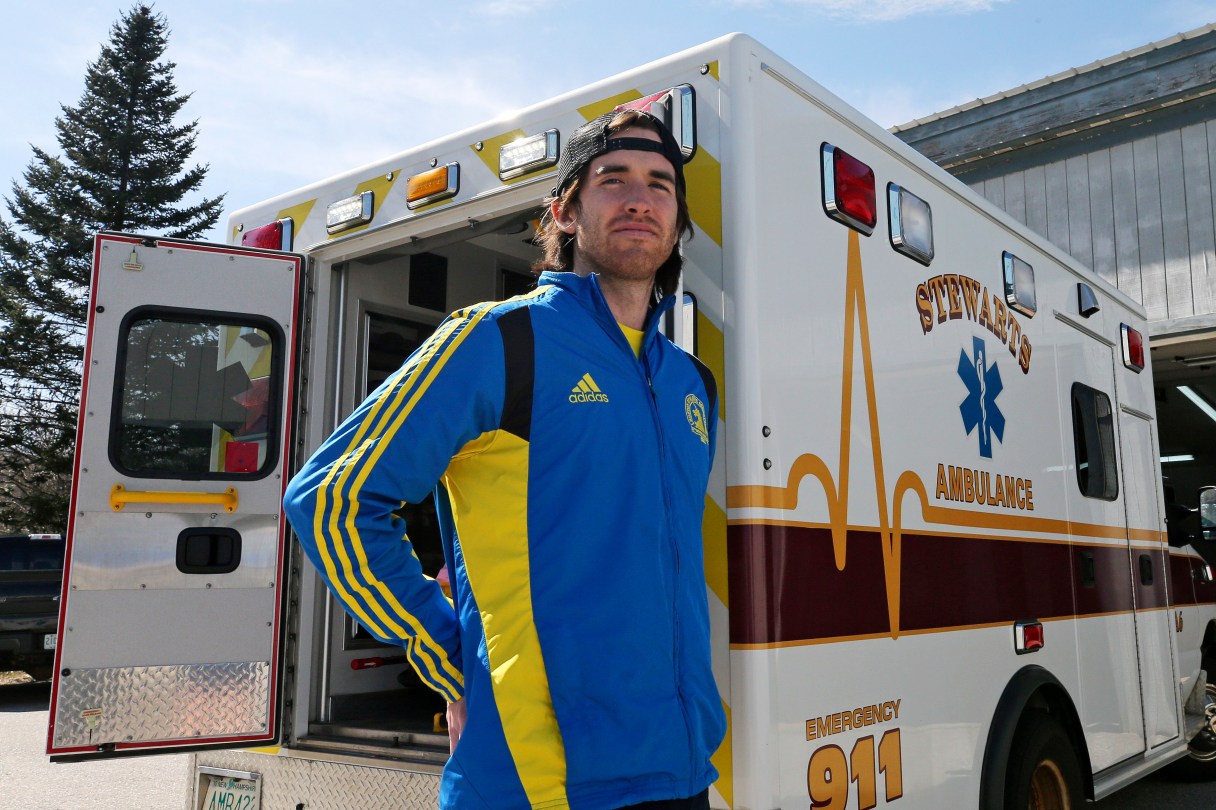
BOSTON (AP) – Seven years ago Wednesday, the unthinkable happened to Bobby O’Donnell: He was nearing the finish line of the 2013 Boston Marathon, where his family was gathered to cheer for him, when terrorist bombs killed three spectators and injured more than 260 others.
His family escaped unscathed. Not O’Donnell, whose wounds were invisible and scarred his soul.
“My injury,” he says, “was in my head.”
It took years for O’Donnell to realize he was suffering from post-traumatic stress disorder. Now 26, he’s the author of “Running Wild,” a newly released memoir of completing marathons or ultramarathons on all seven continents – dodging penguins on Antarctica and bounding along the slopes of Mount Everest – in a quest for inner healing and to rediscover the joy of running.
O’Donnell, a native of Easton, Massachusetts, and a graduate of Saint Anselm College in New Hampshire, was pursuing an advanced degree in Scotland when he and his girlfriend returned to the U.S. to ride out the coronavirus crisis. A part-time paramedic, he’s been transporting COVID-19 patients to hospitals in the state’s Lakes region.