
Monday, November 16, 2026Nov 16

Ventilator from old car parts? Afghan girls pursue prototype

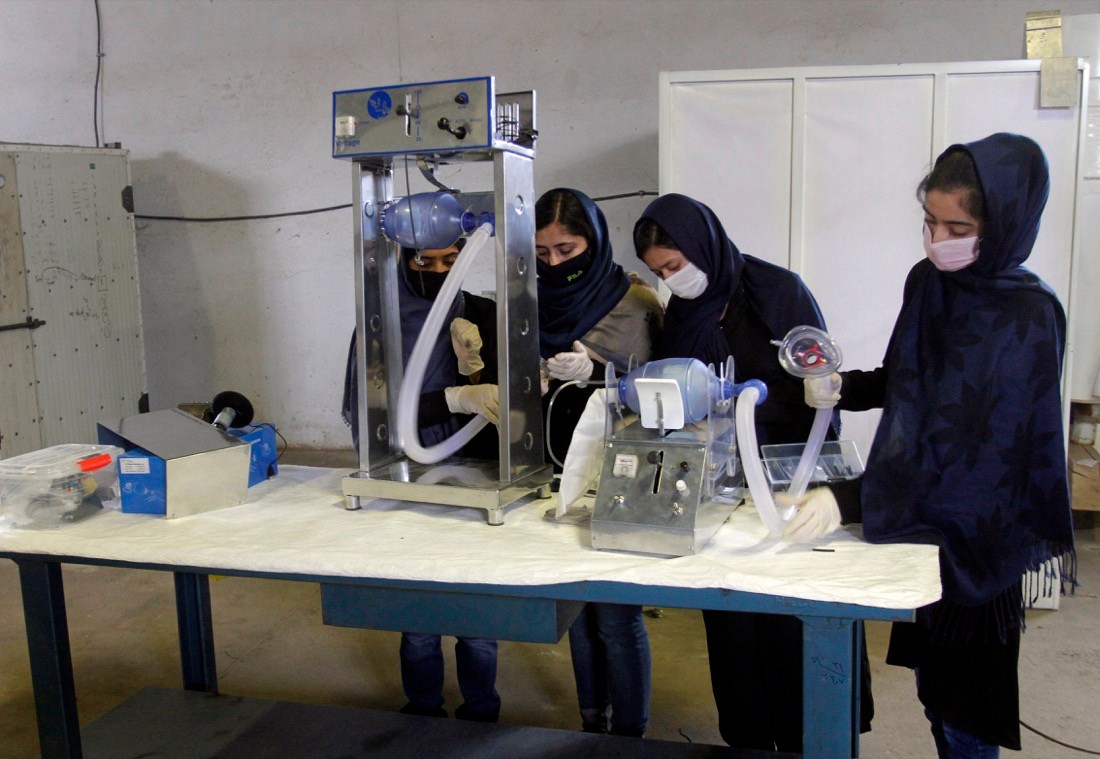
In this Wednesday, April 8, 2020 photo, a group of young girls are developing two types of cheap ventilator devices using Toyota car spare parts to help the fight against the coronavirus pandemic in Herat, west of Kabul, Afghanistan. Afghanistan faces the pandemic nearly empty-handed. It has only 400 ventilators for a population of more than 30 million. So far, it has reported just over 700 coronavirus cases, including 23 deaths, but the actual number is suspected to be much higher since test kits are in short supply. (AP Photo/Hamed Safarazi)

KABUL, Afghanistan (AP) – On most mornings, Somaya Farooqi and four other teen-age girls pile into her dad’s car and head to a mechanic’s workshop. They use back roads to skirt police checkpoints set up to enforce a lockdown in their city of Herat, one of Afghanistan’s hot spots of the coronavirus pandemic.

The members of Afghanistan’s prize-winning girls’ robotics team say they’re on a life-saving mission – to build a ventilator from used car parts and help their war-stricken country battle the virus.

“If we even save one life with our device, we will be proud,” said Farooqi, 17.

Their pursuit of a low-cost breathing machine is particularly remarkable in conservative Afghanistan. Only a generation ago, during the rule of the Islamic fundamentalist Taliban in the late 1990s, girls weren’t allowed to go to school. Farooqi’s mother was pulled from school in third grade.

After the U.S. invasion of Afghanistan in 2001, girls returned to schools, but gaining equal rights remains a struggle. Farooqi is undaunted. “We are the new generation,” she said in a phone interview. “We fight and work for people. Girl and boy, it does not matter anymore.”