
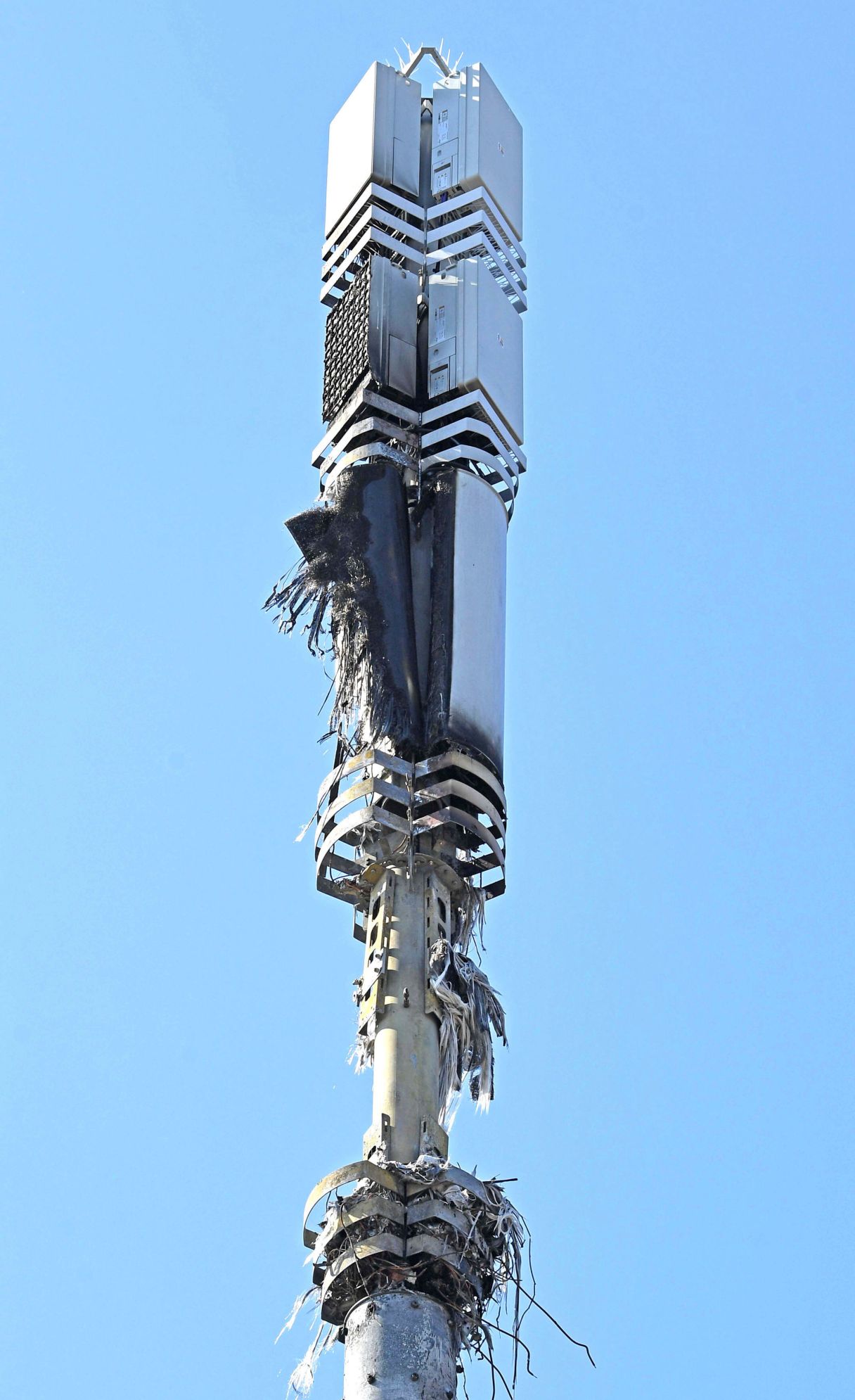
LONDON (AP) – The CCTV footage from a Dutch business park shows a man in a black cap pouring the contents of a white container at the base of a cellular radio tower. Flames burst out as the man jogs back to his Toyota to flee into the evening.
It’s a scene that’s been repeated dozens of times in recent weeks in Europe, where conspiracy theories linking new 5G mobile networks and the coronavirus pandemic are fueling arson attacks on cell towers.
Popular beliefs and conspiracy theories that wireless communications pose a threat have long been around, but the global spread of the virus at the same time that countries were rolling out fifth generation wireless technology has seen some of those false narratives amplified.
Officials in Europe and the U.S. are watching the situation closely and pushing back, concerned that attacks will undermine vital telecommunications links at a time they’re most needed to deal with the pandemic.
“I’m absolutely outraged, absolutely disgusted, that people would be taking action against the very infrastructure that we need to respond to this health emergency,” Stephen Powis, medical director of the National Health Service in England, said in early April.