
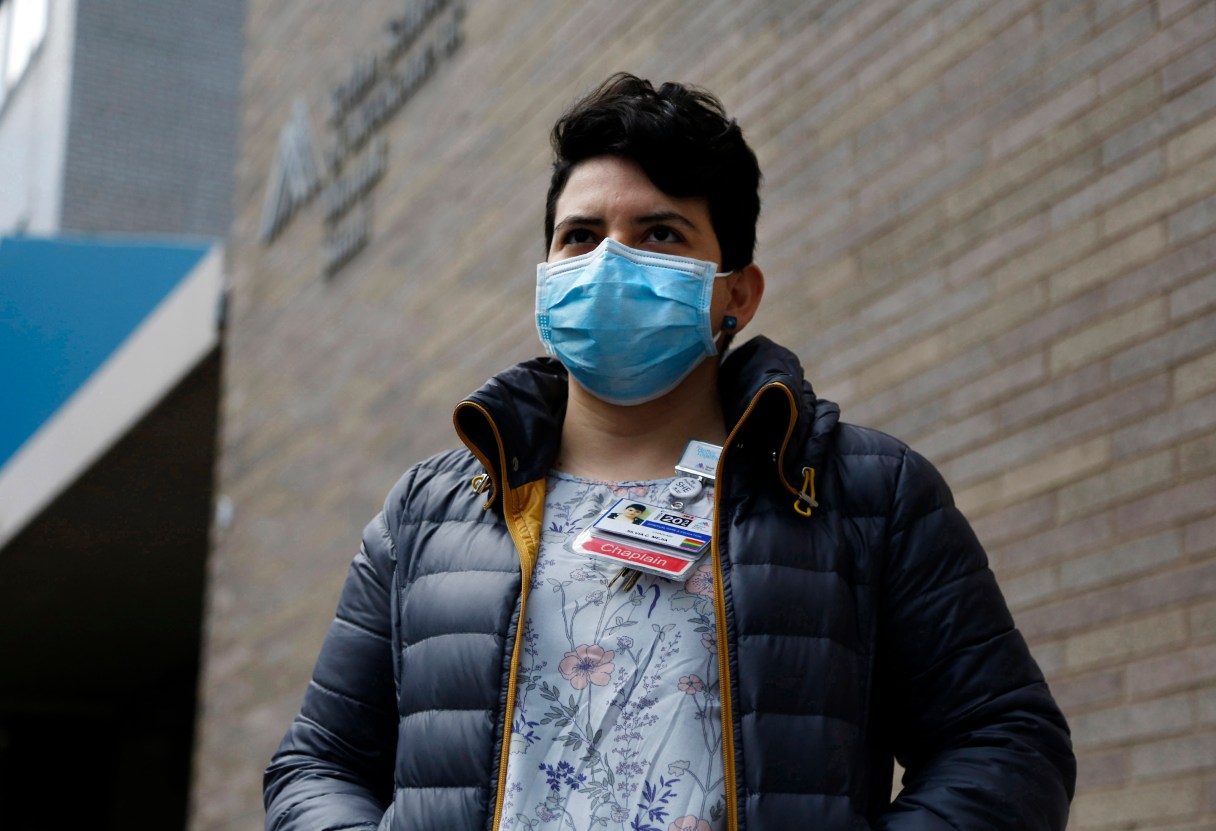
NEW YORK (AP) – Esther Roman wasn’t even in the room when she witnessed what she describes as “probably the holiest thing I’ve ever seen.”
A doctor whose patient was suffering from COVID-19 had used an iPad to connect with Roman, a 38-year-old staff chaplain at Manhattan’s Mount Sinai Morningside hospital, and members of the patient’s family. As the patient’s family told him that if they could, they would be in the room to comfort him, Roman saw – in the digital frame – the doctor reach out and stroke his hair.
“I don’t think that image will ever leave me,” Roman said. During the pandemic, she added, “the sense of purpose and the solidarity, and bearing witness to each other, are things that help us to fill our tank.”
As the coronavirus claims tens of thousands of American lives, spiritual counselors like Roman are facing an already daunting job, rendered life-altering by the pandemic: bringing faith and connection to the sick and bereaved and honoring the dead. Younger religious leaders have stepped into bigger leadership roles, assuming more risk or wielding more technological know-how, but the virus has taken a toll on the pastoral care of clergy, rabbis and imams of all ages.
Depending on the area, religious leaders are limited in or restricted from giving any in-person care to those battling COVID-19. Father Matthew O’Donnell, a pastor at Chicago’s St. Columbanus Church, is one of 24 younger Catholic priests who have volunteered to safely administer sacraments and provide other care to those in the region suffering from the virus.