
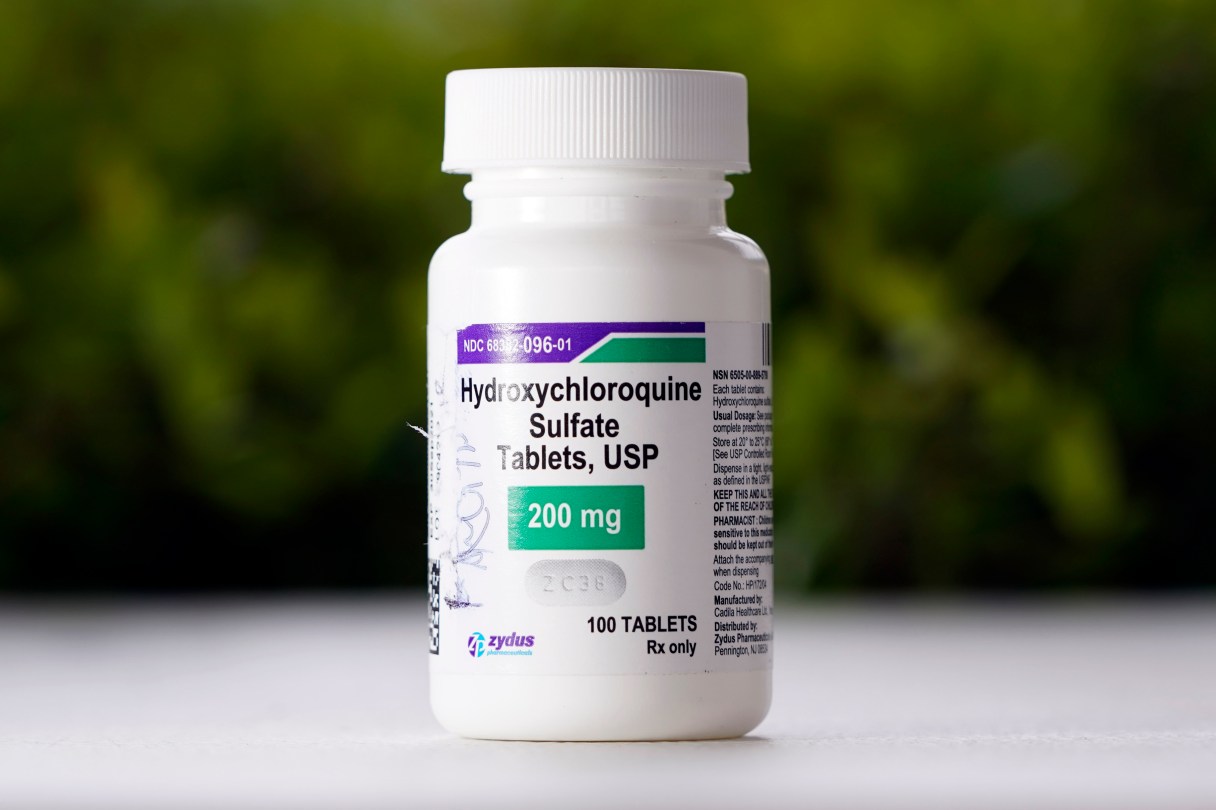
WASHINGTON (AP) – The U.S. Food and Drug Administration on Friday warned doctors against prescribing a malaria drug touted by President Donald Trump for treating the new coronavirus except in hospitals and research studies.
In an alert, regulators flagged reports of sometimes fatal heart side effects among coronavirus patients taking hydroxychloroquine or the related drug chloroquine. The decades-old drugs, also prescribed for lupus and rheumatoid arthritis, can cause a number of side effects, including heart rhythm problems, severely low blood pressure and muscle or nerve damage.
The warning comes as doctors at a New York hospital published a report that heart rhythm abnormalities developed in most of 84 coronavirus patients treated with hydroxychloroquine and the antibiotic azithromycin, a combo Trump has promoted.
Both drugs are known to sometimes alter the heartbeat in dangerous ways, and their safety or ability to help people with COVID-19 is unknown. A National Institutes of Health experts panel earlier this week recommended against taking that drug combo except in a formal study because of the side effects potential.
Last month, the FDA authorized limited use of the malaria drugs for hospitalized patients with COVID-19 who aren’t enrolled in ongoing research. The FDA said the drugs’ risks are manageable when patients are carefully screened and monitored by doctors. A number of studies are testing hydroxychloroquine as a treatment or for prevention of COVID-19.