
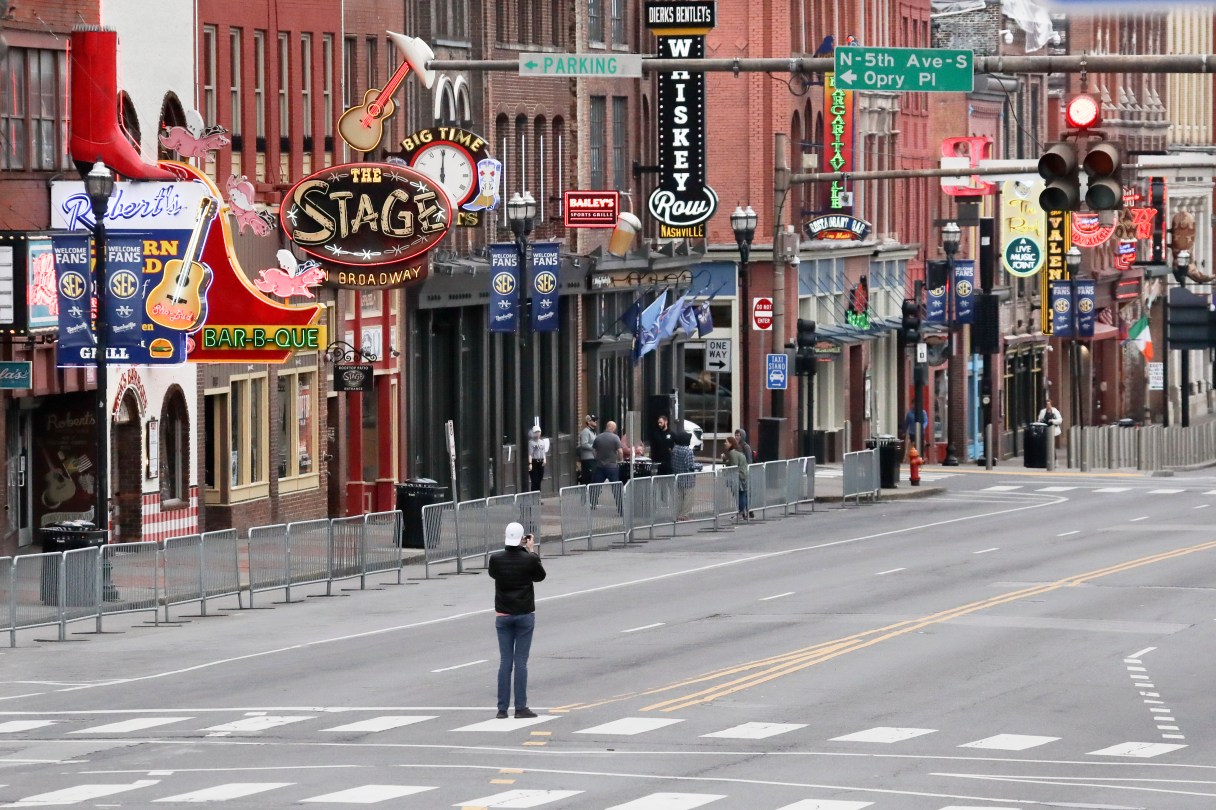
NASHVILLE, Tenn. (AP) – Colin Poulton moved to Nashville in 2008 to study commercial guitar. He dropped out of college but stuck with the city and the guitar, first playing in a series of original bands and more recently making his living in the honky-tonks of Lower Broadway along with “a few wedding bands and some other bands.”
All those gigs ended abruptly when the coronavirus hit. The clubs shut down on March 16 to slow the spread, and Nashville’s normally packed downtown streets are all but deserted. Poulton applied for unemployment as soon as Congress passed the federal relief bill extending benefits to nontraditional workers. He’s been without steady work for five weeks now but so far has received nothing.
“A lot of us went from having anywhere from four to seven gigs a week to nothing,” Poulton said.
With its vibrant music industry, Nashville is a magnet for people like Poulton. Music City is known as the home of country music in the U.S., but tens of thousands of professional musicians of all kinds live there, drawn to the plentiful job opportunities and the camaraderie of a community of artists. Now they’re caught up in an unemployment system that’s not geared toward them.
“There’s a lot of confusion and, frankly, fear rampant in the community because they don’t know if they’re going to get something and, if so, how much,” said Dave Pomeroy, president of the Nashville Musicians Association, the local union. Pomeroy said probably 100,000 people in Nashville play music professionally, although they may not all be full-time musicians.