
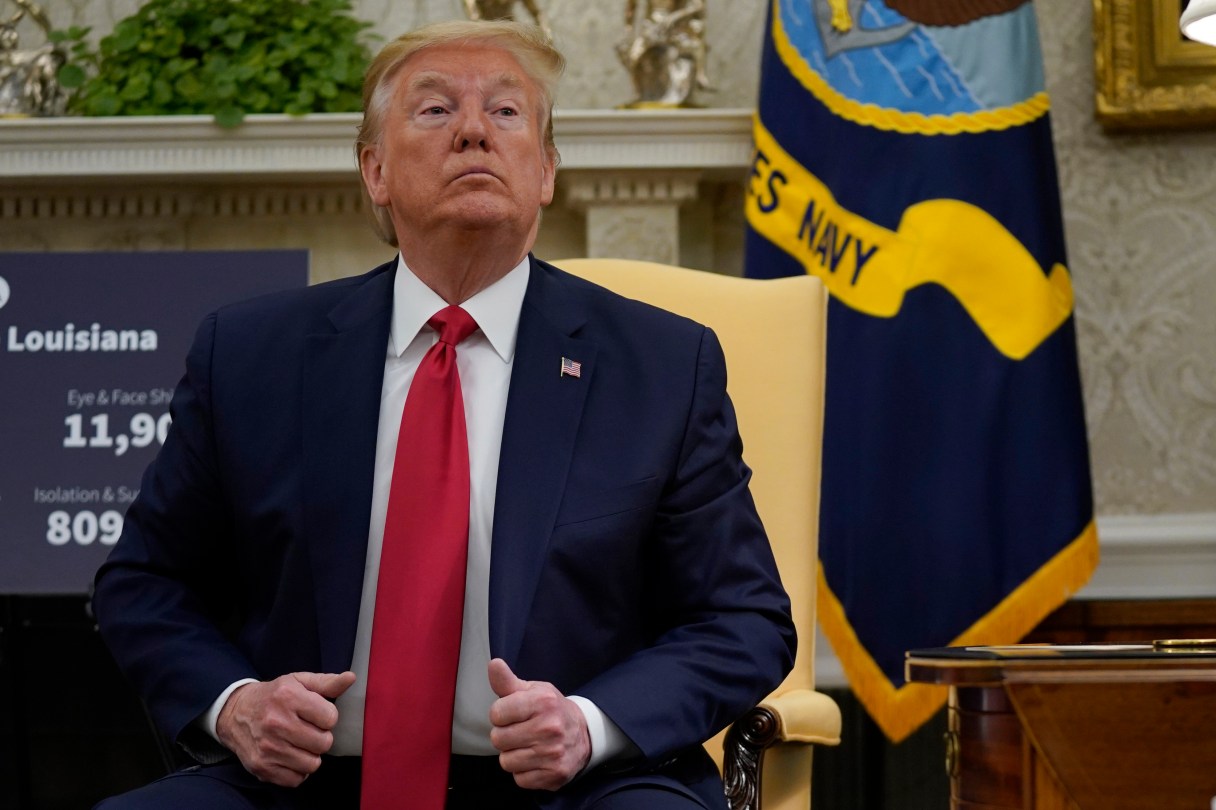
When terrorists struck the United States on Sept. 11, Nicholas Burns was the U.S. ambassador to NATO, and one memory still stands out: how swiftly America’s allies invoked Article Five of the organization’s charter, that an attack on one member was an attack on all.
It was a kinship among nations nurtured over decades and a muscular display of collective defense that has defined much of the post World War II era. It is also a worldview that Burns finds starkly at odds with President Donald Trump’s “America First” foreign policy as NATO’s members and other countries suffer from the deadly weight of the coronavirus pandemic.
America First has been a ready applause line for Trump, but now it is also a philosophy being put to a life-or-death test, with much of the world still looking to the U.S. for leadership and assistance.
Burns, a Harvard professor and a former top U.S. diplomat who served Republican and Democratic presidents, said it was “entirely reasonable and rational” to focus inward “in the first weeks of the crisis in March. The president’s job is to protect the people of the United States. … Having said that, I think it is abundantly clear that we cannot succeed in fighting the pandemic and confront the global economic collapse if we are not cooperating globally.”
“The America First attitude is a very fixed set of beliefs about the world and our role in it,” said Burns, who is also an informal adviser to former Vice President Joe Biden, the presumptive Democratic presidential nominee. “He thinks that alliances and partnerships weaken us and slow us down. He’s not an isolationist. He’s a unilateralist. That has not worked well the last three years.”