
Saturday, November 14, 2026Nov 14

India’s residency law in Kashmir amplifies demographic fears

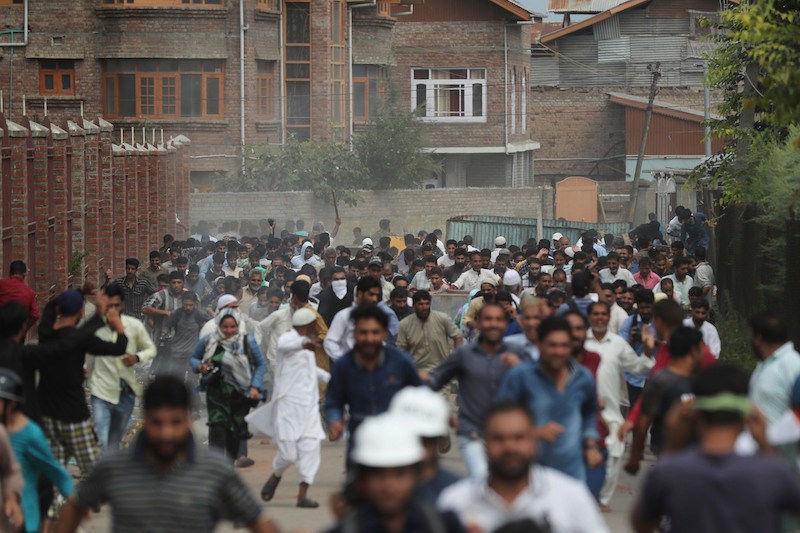
In this Aug. 30, 2019, file photo, Kashmiris protesting against Indian government stripping the Himalayan state's semi-autonomous powers run for cover as Indian police use tear gas and pellets to disperse them in Srinagar, Indian controlled Kashmir. A year after India ended disputed Kashmir's semi-autonomous status and downgraded it to a federally governed territory, authorities have begun issuing residency and land ownership rights to outsiders for the first time in almost a century. Many Kashmiris view the move as the beginning of settler colonialism aimed at engineering a demographic change in India's only Muslim-majority region. (AP Photo/Mukhtar Khan, File)

SRINAGAR, India (AP) – For almost a century, no outsider was allowed to buy land and property in Indian-controlled Kashmir.

That changed Aug. 5 last year when India’s Hindu nationalist government led by Prime Minister Narendra Modi stripped the Himalayan state’s semi-autonomous powers and downgraded it to a federally governed territory. It also annulled the long-held hereditary special rights its natives had over the disputed region’s land ownership and jobs.

Since then, India has brought in a slew of changes through new laws. They are often drafted by bureaucrats without any democratic bearings and much to the resentment and anger of the region’s people, many of whom want independence from India or unification with Pakistan.

A year later, things are swiftly changing on the ground.

Under a new law, authorities have begun issuing “domicile certificates” to Indians and non-residents, entitling them to residency rights and government jobs. Many Kashmiris view the move as the beginning of settler colonialism aimed at engineering a demographic change in India’s only Muslim-majority region.