
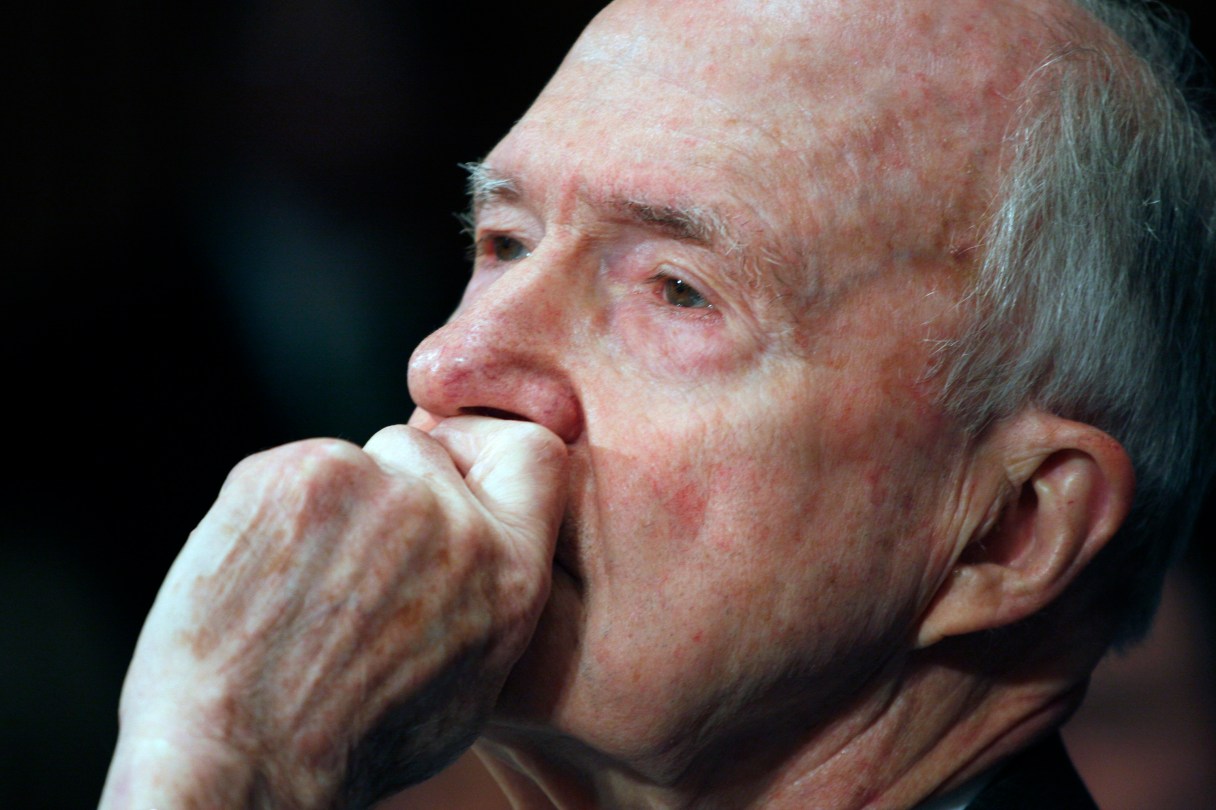
WASHINGTON (AP) – Brent Scowcroft, who played a prominent role in American foreign policy as national security adviser to Presidents Gerald Ford and George H.W. Bush and was a Republican voice against the 2003 invasion of Iraq, has died, a Bush spokesperson said Friday. He was 95.
Scowcroft died Thursday of natural causes at his home in Falls Church, Virginia, spokesperson Jim McGrath said.
Scowcroft was the only person to serve as national security adviser to two different administrations. His appointment by Ford in 1975 came as Scowcroft retired from the Air Force with the rank of lieutenant general. He advised Bush, by then a close friend, during the four years of the Bush administration, 1989-93.
In a study of Scowcroft’s career, historian David F. Schmitz noted that Scowcroft had been at the center of numerous post-Vietnam War discussions of American foreign policy. He was part of the presidential administrations that grappled with U.S. responses to the collapse of communism in Europe, the crackdown in China after the Tiananmen Square protests, and Saddam Hussein’s invasion of Kuwait and the subsequent Gulf War.
“The key tenets of his thinking, shaped by the Second World War, were that national security policy had to protect the nation from aggression, provide international stability, control arms while maintaining preparedness, and shape an international environment that was conducive to America’s goals and needs,” Schmitz wrote.