
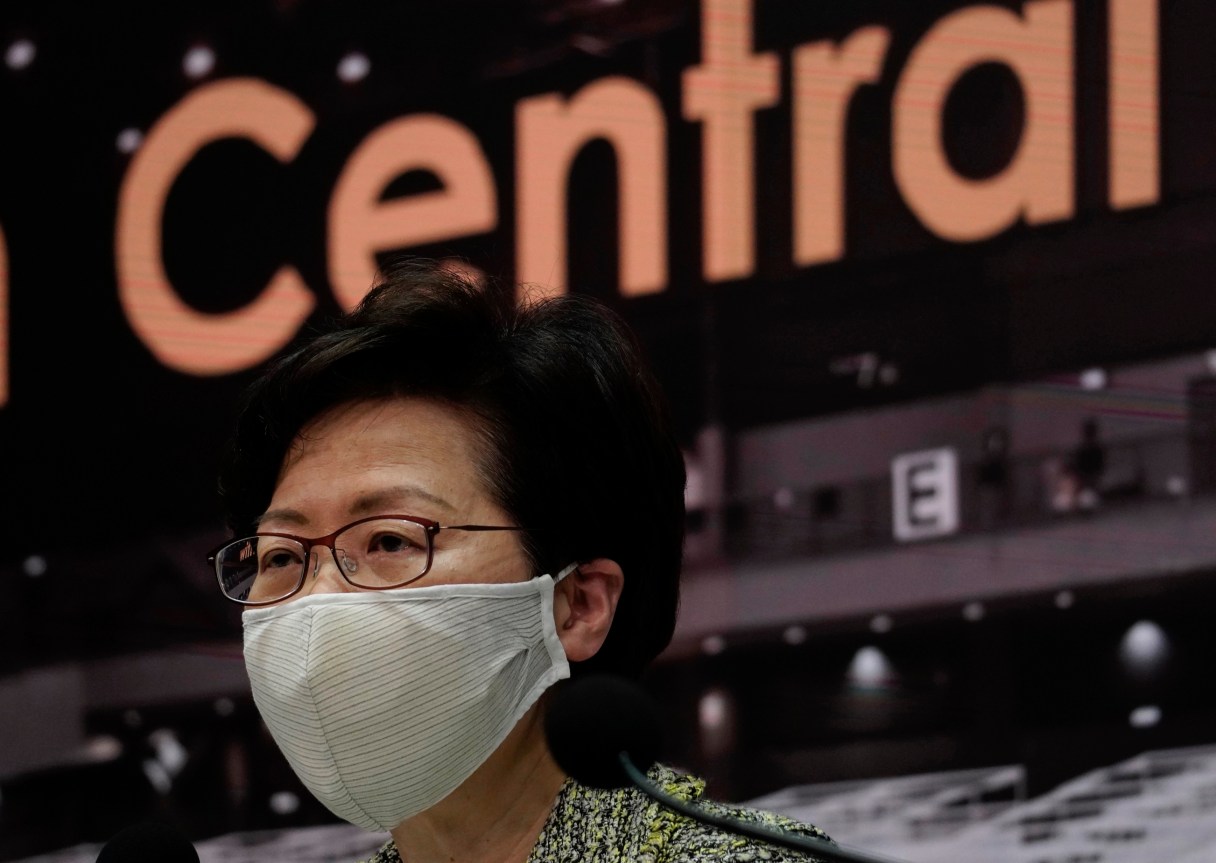
WASHINGTON (AP) – The U.S. on Friday imposed sanctions on Hong Kong officials, including the pro-China leader of the government, accusing them of cooperating with Beijing’s effort to undermine autonomy and crack down on freedom in the former British colony.
The sanctions are the latest in a string of actions the Trump administration has taken targeting China as tensions between the two nations rise over trade, COVID-19 and other issues. President Donald Trump’s offensive against China comes as he assigns full blame to Beijing for the coronavirus outbreak in the U.S., deflecting criticism of his own handling of the pandemic that threatens his re-election.
The Treasury Department announced sanctions on Carrie Lam, the leader of the government in Hong Kong, and 10 other officials. The sanctions were authorized by an executive order that Trump signed recently to levy penalties against China for its efforts to curtail anti-government protesters in Hong Kong.
Hong Kong has long enjoyed civil liberties not seen in mainland China because it is governed under a “one country, two systems” principle in place since it reverted to Chinese rule in 1997.
However, Beijing imposed a sweeping national security law on Hong Kong earlier this year, raising widespread concerns about the Chinese government cracking down on the anti-government protests.