
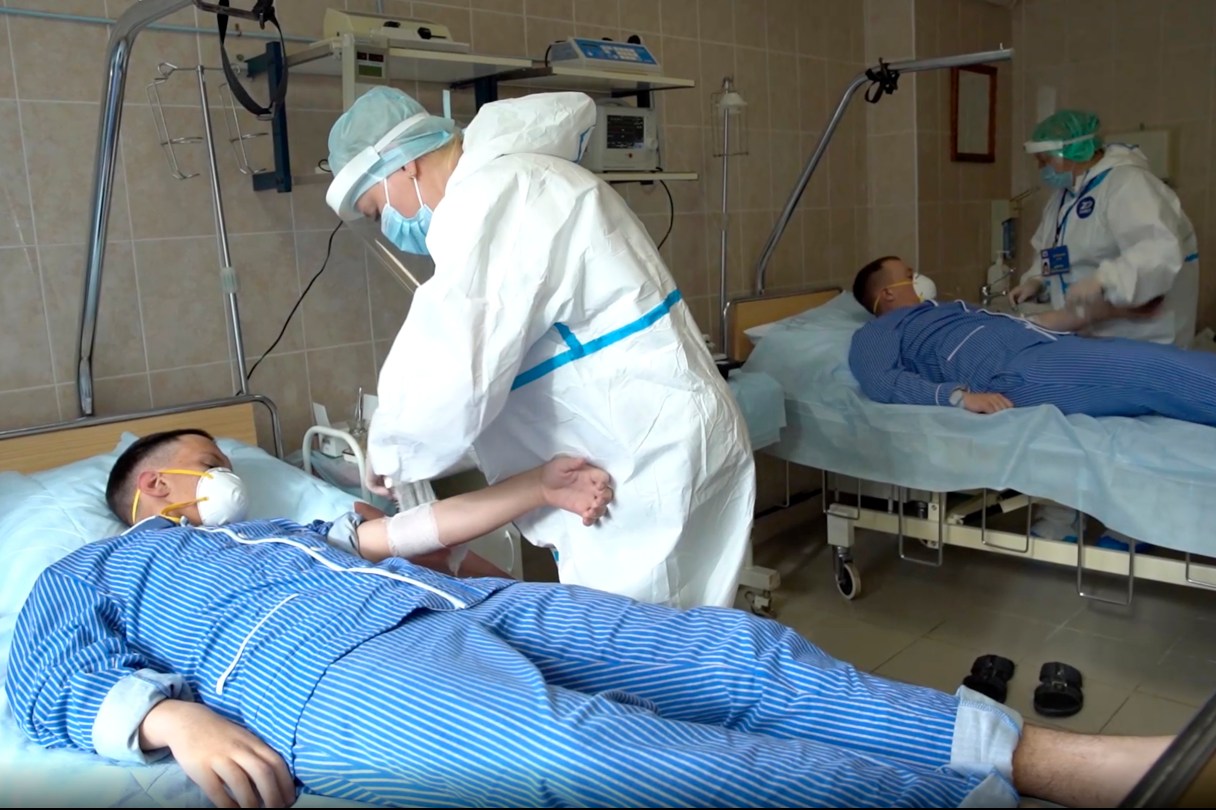
MOSCOW (AP) – Russia boasts that it’s about to become the first country to approve a COVID-19 vaccine, with mass vaccinations planned as early as October using shots that are yet to complete clinical trials — and scientists worldwide are sounding the alarm that the headlong rush could backfire.
Moscow sees a Sputnik-like propaganda victory, recalling the Soviet Union’s launch of the world’s first satellite in 1957. But the experimental COVID-19 shots began first-in-human testing on a few dozen people less than two months ago, and there’s no published scientific evidence yet backing Russia’s late entry to the global vaccine race, much less explaining why it should be considered a front-runner.
“I’m worried that Russia is cutting corners so that the vaccine that will come out may be not just ineffective, but also unsafe,” said Lawrence Gostin, a global public health law expert at Georgetown University. “It doesn’t work that way. … Trials come first. That’s really important.”
According to Kirill Dmitriev, head of Russia’s Direct Investment Fund that bankrolled the effort, a vaccine developed by the Gamaleya research institute in Moscow may be approved in days, before scientists complete what’s called a Phase 3 study. That final-stage study, usually involving tens of thousands of people, is the only way to prove if an experimental vaccine is safe and really works.
 Volunteers Georgy Smirnov, Dmitry Tolkachev and Sergey Semenikhin pose for a photo after their joint news conference at Sechenov University in Moscow, Russia, Monday, July 20, 2020. Russia is boasting that it’s about to be the first country to approve a COVID-19 vaccine, but scientists worldwide are sounding the alarm that the headlong rush could backfire. (Alexander Avilov/ Moscow News Agency via AP)
Health Minister Mikhail Murashko said members of “risk groups,” such as medical workers, may be offered the vaccine this month. He didn’t clarify whether they would be part of the Phase 3 study that is said to be completed after the vaccine receives “conditional approval.”