
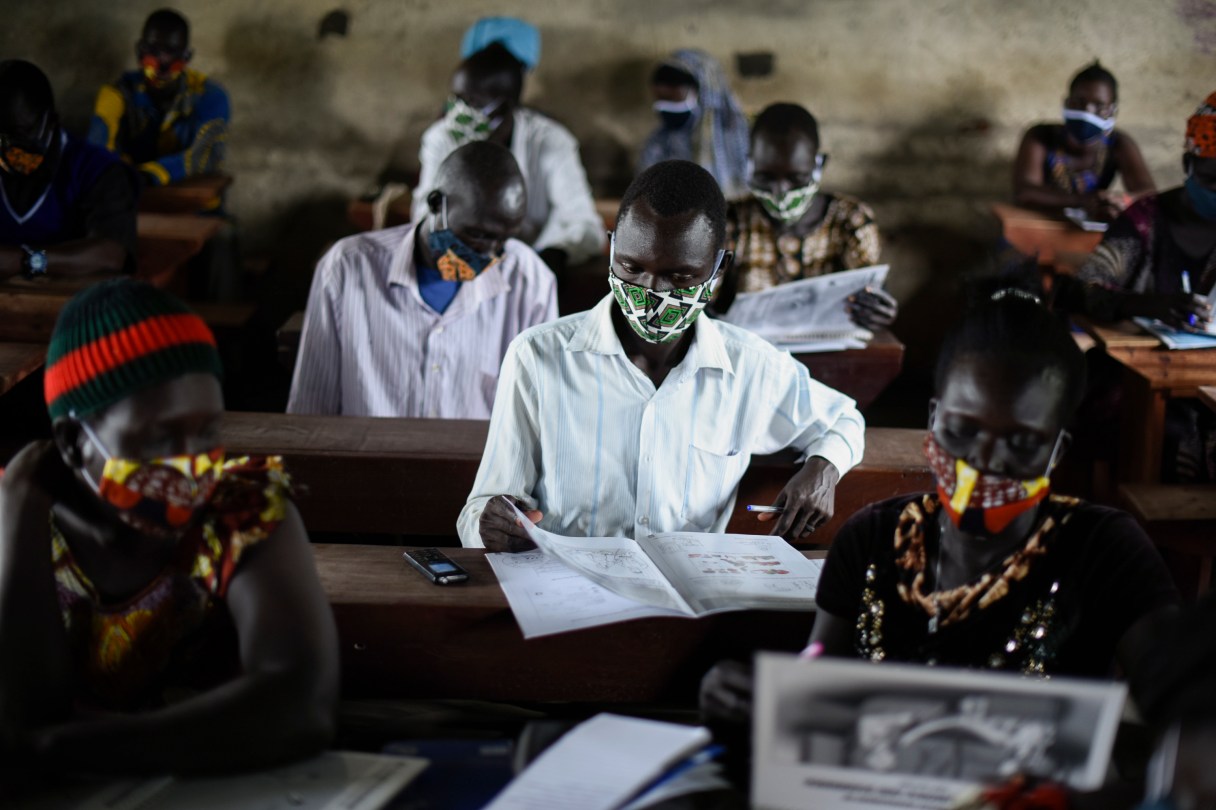
JOHANNESBURG (AP) – The coronavirus is exposing an uncomfortable inequality in the billion-dollar system that delivers life-saving aid for countries in crisis: Most money that flows from the U.S. and other donors goes to international aid groups instead of local ones. Now local aid workers are exposed on the pandemic’s front lines with painfully few means to help the vulnerable communities they know so well.
Often lacking protective equipment, the groups are carrying a bigger burden than ever as COVID-19 adds to the already vast challenges of conflict, drought and hunger in places like Somalia and Afghanistan.
At times, they tell communities they have nothing to give.
“Our hands are tied,” a South Sudanese aid leader, Gloriah Soma, told an online event last month. She described foreign aid workers being evacuated early in the pandemic or working from home as many feared infection.
“Is this a humanitarian response?” she asked, saying she hopes the crisis will spark more help “at this critical moment.” Her country can hardly bear another disaster: A five-year civil war killed nearly 400,000 people, and hunger stalks half the population.