
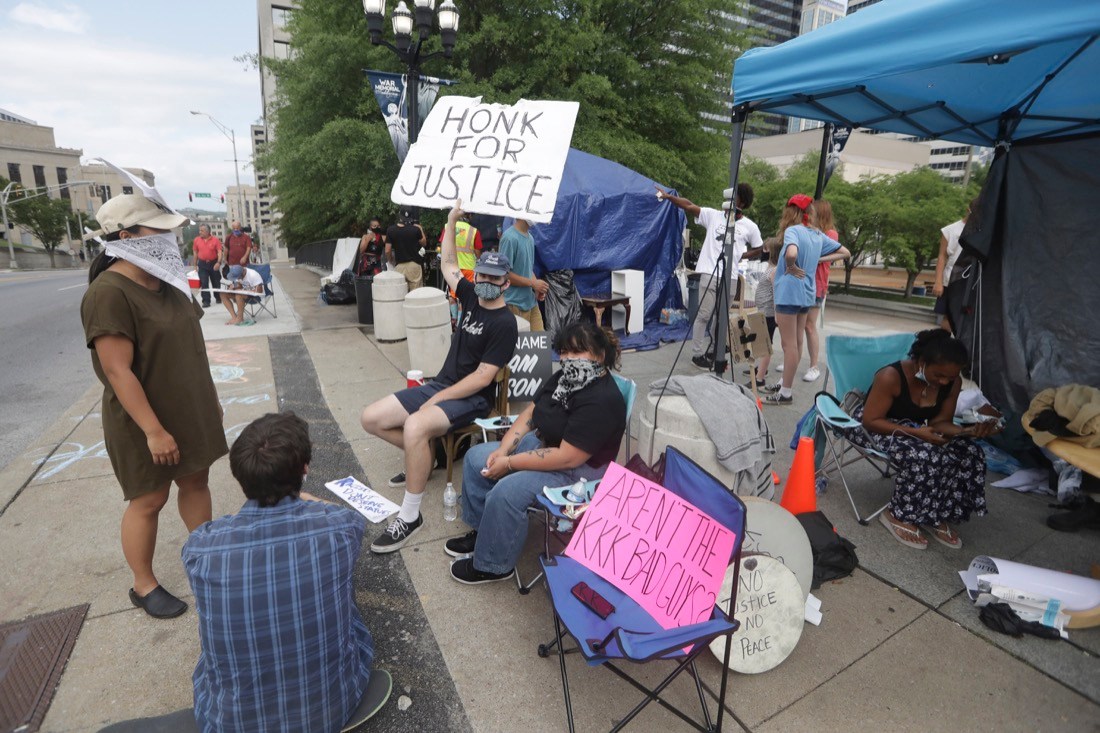
NASHVILLE, Tenn. (AP) – Tennessee now leads the nation in criminalizing common protest tactics, with penalties including the denial of voting rights for pitching a tent on the Capitol grounds. But outrage over racial injustice isn’t going away, and civil rights advocates say the law was pulled from an age-old playbook that hasn’t stood up to history.
Just like the Southern politicians who strained to maintain segregation in the 1950s and 60s, contemporary elected leaders vexed by the Occupy Wall Street movement, demonstrations against oil and gas pipelines and this year’s protests against racial injustice have often sought to use the criminal justice system to suppress mass movements.
Tennessee’s new law increases penalties, fines and jail time for a wide range of protest activities, from marching in the street to encouraging what police call riots. Displaying a weapon while “causing physical contact” with a first-responder in a provocative way is now a felony.
The most contentious portion, imposed in response to the demonstrators who camped outside the Capitol this summer to raise pressure on lawmakers, changes”illegal camping” on state property from a misdemeanor to a felony, punishable by up to six years in prison. Felony convictions result in a loss voting rights in Tennessee.
That alarms advocates, who are all too aware that restoring voting rights after felony convictions is an uphill battle in Tennessee. But they’re not going away, said Justin Jones, a young Black activist. He was repeatedly arrested outside the Capitol this summer, charged with various misdemeanors that would now be felonies.