
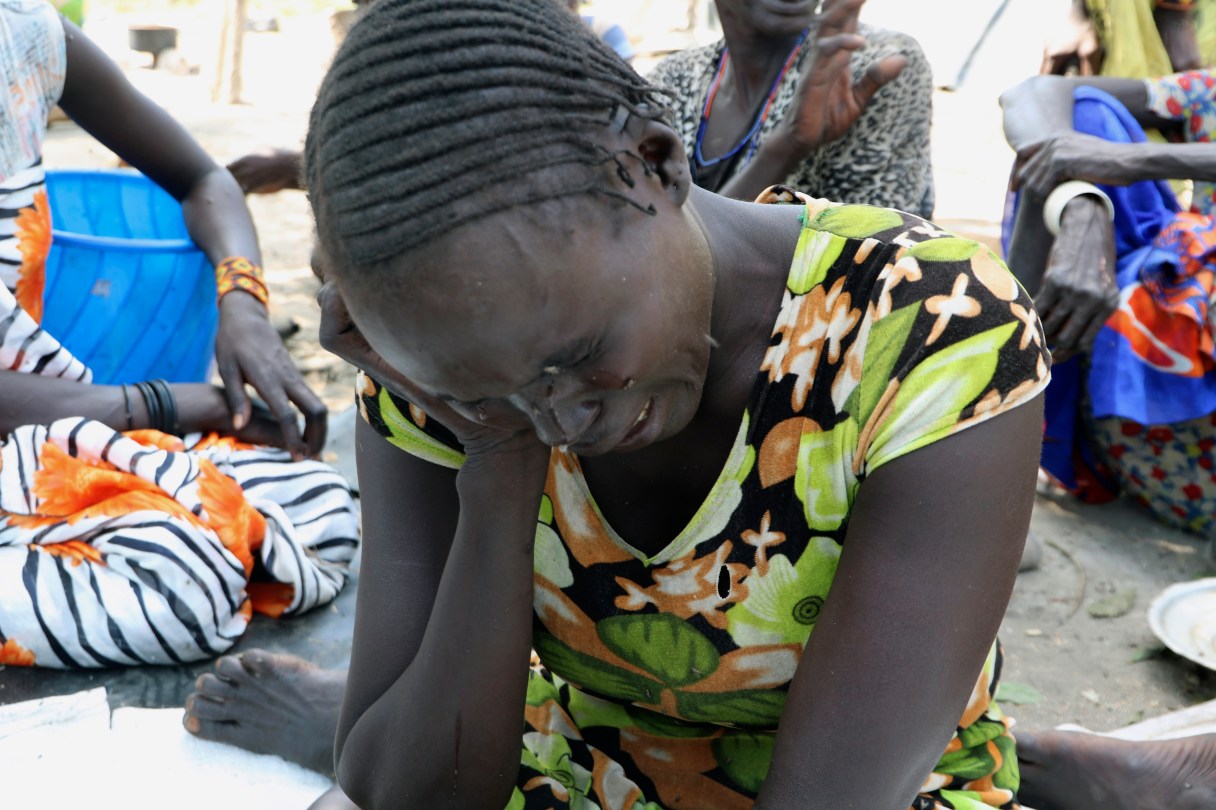
LEKUANGOLE, South Sudan (AP) – After nearly a week of hiding from conflict, Kallayn Keneng watched two of her young children die. “They cried and cried and said, ‘Mom, we need food,'” she said. But she had nothing to give. Too frail to bury her 5-year-old and 7-year-old after days without eating, she covered their bodies with grass and left them in the forest.
Now the mourning 40-year-old awaits food aid, one of more than 30,000 people said to be in likely famine in South Sudan’s Pibor county. The new finding by international food security experts means this could be the first part of the world in famine since one was declared in 2017 in another part of the country then deep in civil war.
South Sudan is one of four countries with areas that could slip into famine, the United Nations has warned, along with Yemen, Burkina Faso and northeastern Nigeria.
Pibor county this year has seen deadly local violence and unprecedented flooding that have hurt aid efforts. On a visit to the town of Lekuangole this month, seven families told The Associated Press that 13 of their children starved to death between February and November.
The head of Lekuangole’s government, Peter Golu, said he received unprecedented reports from community leaders that 17 children had died from hunger there and in surrounding villages between September and December.